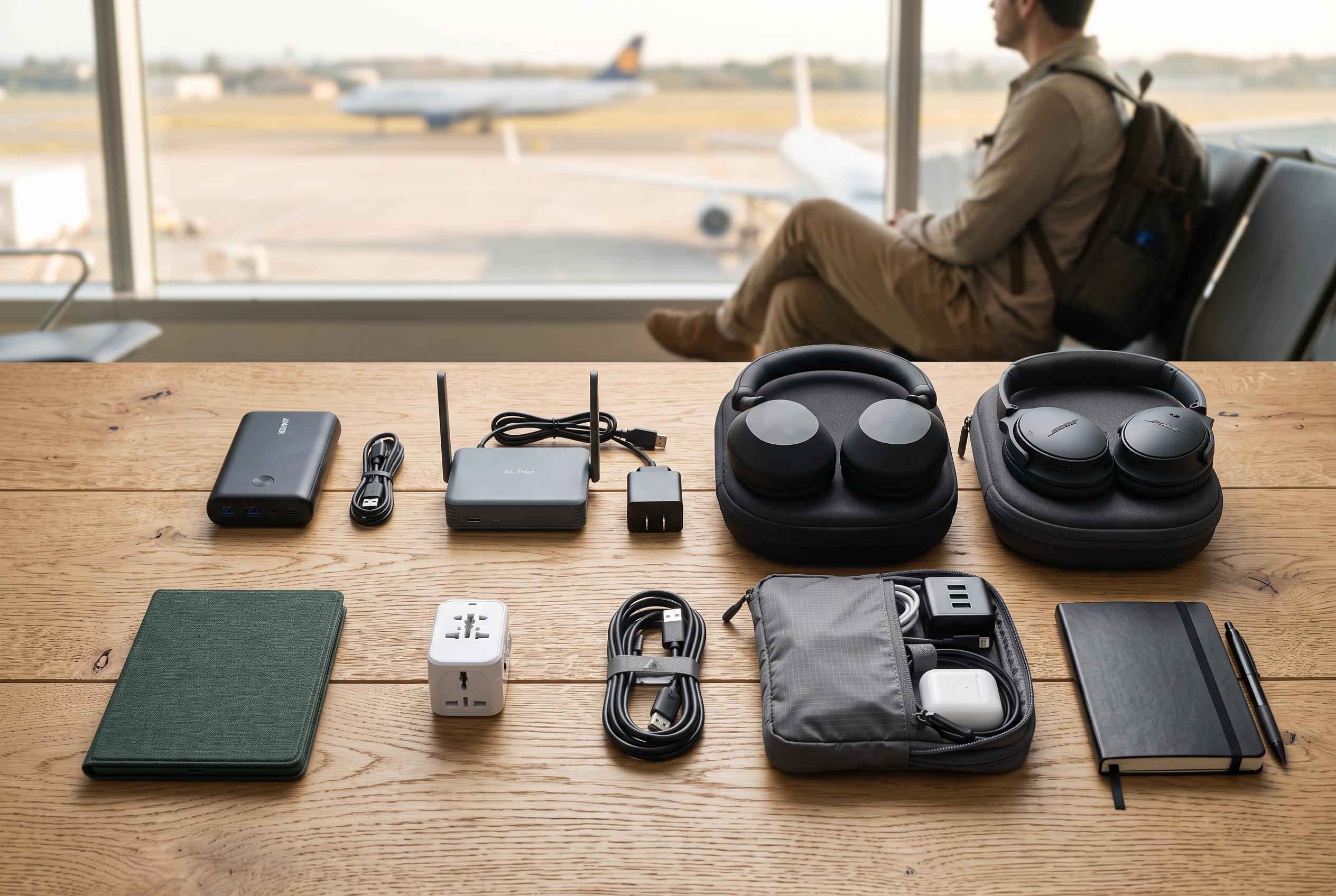

As families hit the road or skies, they rely on a curated selection of tech devices designed to solve predictable problems, power, connectivity, and entertainment, making travel more manageable and less stressful.
Family travel tends to expose the real value of technology. The devices that matter are not the cleverest ones, but the ones that solve predictable problems: power, connectivity, entertainment, tracking and comfort. Travel guides from Asurion, Verizon’s Tech Coach and several family-travel writers all converge on the same essentials: tablets, chargers, kid-friendly headphones and portable internet access are the items most likely to earn their place in a suitcase.
At the centre of the packing list is a smartphone, which now does the work once spread across a camera, boarding-pass holder, map and itinerary folder. That logic is echoed in broader family travel advice, which usually treats tablets as the main entertainment tool for children and a practical way to reduce boredom on long journeys. The key is preparation: content should be downloaded in advance, and devices should be tested offline before leaving home so that a weak signal does not break the trip at altitude or in a hotel room.
Power management is the next priority. Portable chargers remain one of the most consistently recommended travel accessories because flights, airport layovers and sightseeing quickly drain batteries. Compact models with multiple ports are especially useful for families carrying phones, tablets and headphones. Travel technology writers also warn that lithium-battery devices should not go in checked luggage, and some airlines now restrict how power banks can be used onboard.
For international travel, a slim plug adapter can be more useful than a bulky all-in-one kit, particularly for families moving between countries in a single trip. The distinction matters: an adapter changes the plug shape, but it does not necessarily convert voltage. That makes it essential to check whether items such as hair tools or other high-draw appliances are safe for local power standards before they are plugged in. Some travellers pair adapters with separate voltage converters when they need broader compatibility.
Children’s screens are often treated as a convenience, but the better view is that they are a travel management tool. Tablets can keep younger travellers occupied during flights, car rides and hotel downtime, while headphones help keep the experience civil for everyone else. Family-travel guides repeatedly stress volume limits for children’s headphones, along with the need to confirm that plugs, Bluetooth pairing and charging cables all match the devices being carried.
Small accessories can make a disproportionate difference. Audio adapters and splitters help connect modern USB-C devices to older aircraft entertainment systems or conventional headphone sockets. In a similar vein, tablet mounts, wireless headphones and e-readers appear frequently in family packing lists because they turn awkward travel time into something more manageable, especially on long road trips or flights where fixed seating and limited space create friction.
Connectivity has become just as important as entertainment. Portable Wi-Fi hotspots and eSIM-based data plans are now common recommendations for families travelling abroad because hotel internet is often unreliable and roaming charges can be steep. These tools are useful not only for messaging and maps but also for ride-hailing, video calls and mobile work. For parents, a backup data connection can prevent a simple outage from becoming a full-day disruption.
Some of the most valuable travel items are not about amusement at all. Portable carbon monoxide detectors have become a sensible addition for stays in rented accommodation, particularly after warnings from booking platforms about properties without a reported alarm. AirTags or similar trackers also remain a practical safeguard for luggage, backpacks and children’s shoes, where discreet placement can help families recover lost items faster in airports, theme parks and crowded cities.
The broader lesson is that family travel technology works best when it is limited to tools that solve a specific problem. A charger prevents a dead phone, a downloaded film settles a flight, a tracker helps recover misplaced belongings and a fan can make an overheated room usable. The point is not to pack every gadget available, but to choose the few that reduce friction and leave more room for the actual trip.
Disclaimer: This content is intended for informational purposes only. Readers are advised to exercise their own judgement, conduct due diligence, or consult a qualified expert before acting on any information provided.