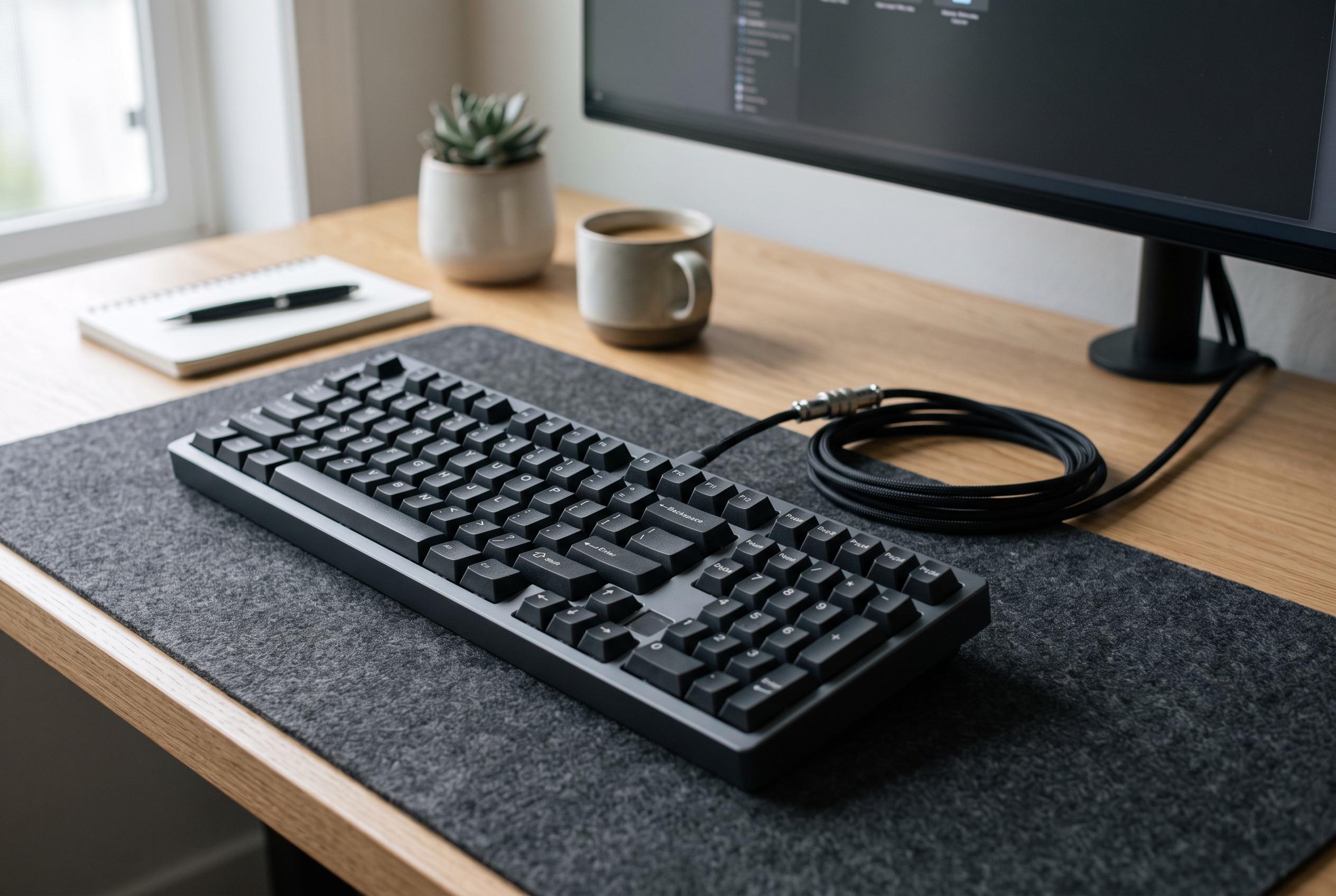

Despite advancements in wireless technology, wired keyboards remain the reliable, low-maintenance option for static desk setups where simplicity and dependability outweigh the benefits of wireless convenience.
I have reached the point where a wired keyboard looks less old-fashioned than sensible. On a desk where a mouse, keyboard and speakers rarely move, the promise of wireless convenience begins to matter less than the quiet burden of keeping yet another battery alive. When a keyboard spends its life in one place, charging it starts to feel like maintenance for a mobility problem it does not actually have.
That is why wireless works best for devices that earn the freedom. A mouse benefits from being untethered because it moves constantly, and headphones or earbuds justify their batteries because they are meant to travel with the user. Industry comparisons of wired and wireless peripherals make the same basic case: wireless adds flexibility and a tidier setup, but wired gear still has an edge in simplicity, reliability and the absence of battery management.
The battery argument is weaker than it once was. Some modern wireless accessories now deliver extremely long runtimes, with manufacturers claiming months of use between charges in ordinary conditions. Even so, long battery life can create a different annoyance: the charge cycle becomes so infrequent that it is easy to forget it exists until the device stops responding at exactly the wrong moment.
For that reason, the practical dividing line is not technology but use case. Devices that leave the desk, or that genuinely benefit from a cable-free setup, still make a strong case for wireless. Stationary peripherals do not. In a gaming or work setup where fewer interruptions matter more than absolute minimalism, a plugged-in keyboard can be the cleaner choice simply because it removes one more thing to think about.
Disclaimer: This content is intended for informational purposes only. Readers are advised to exercise their own judgement, conduct due diligence, or consult a qualified expert before acting on any information provided.