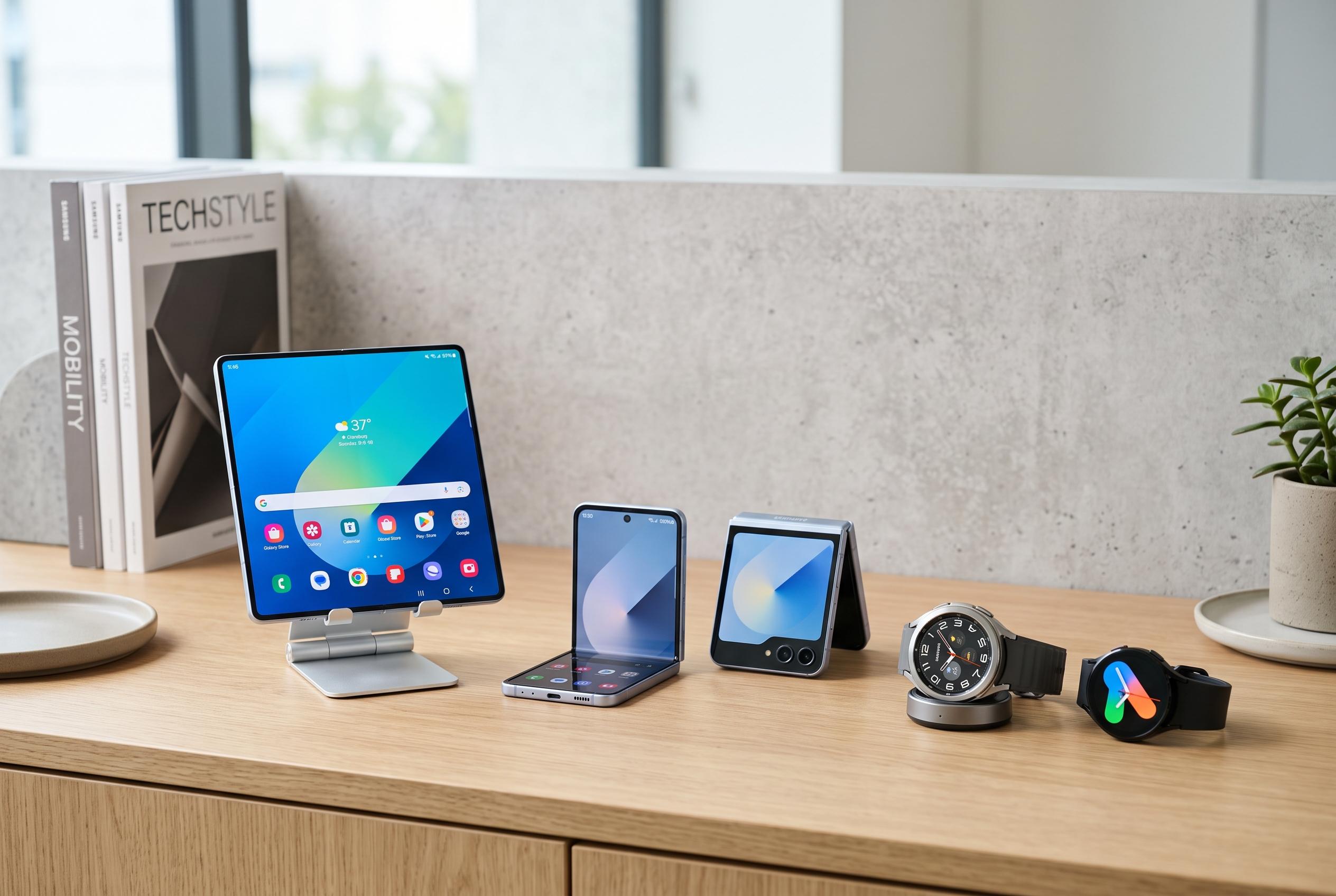

Samsung launches its most ambitious foldable and smartwatch range to date, with pre-orders surpassing previous records and a notable shift towards larger, more premium devices amid strong global demand.
Samsung’s latest foldables and smartwatches are now on sale worldwide, marking the commercial launch of a range that Samsung has positioned as its most ambitious update to date. Early demand appears strongest for the wider Galaxy Z Fold8, which Samsung says has accounted for 40% of pre-orders in Europe and 70% in South Korea, a sign that the new book-style design is resonating with buyers who want a larger main screen without moving to a tablet-sized device.
The Fold8 is only part of the story. Samsung has also introduced the Galaxy Z Fold8 Ultra, a higher-end model that builds on the original Galaxy Fold concept with a 5,000mAh battery, faster charging and a more premium specification set. TechRadar describes it as a thinner, flatter device with a near crease-free 8.0-inch main display, a titanium hinge and a Snapdragon 8 Elite Gen 5 chipset. Samsung says the battery can deliver up to 27 hours of video playback, while Sammobile reports that the company has switched to silicon-carbon battery technology for the first time in a Fold model.
Pre-order figures suggest the wider Fold8 is proving especially popular. Tom’s Guide reported that Samsung recorded 1.44 million pre-orders for the Z8 series between July 28 and August 3, a rise of more than 30% year on year and a new record for the company. It said nearly half of those orders were for the standard Fold8, with Samsung also claiming that three times as many Galaxy Flip users are moving to the Fold this year. T3 reported a similar surge, saying foldable sales volume is up 17% from any previous launch year, although the high price of these devices remains a barrier to wider adoption.
The Z Flip8 also brings an important change in regional chip strategy. In the US and several other markets, Samsung is using the Snapdragon 8 Elite Gen 5 for Galaxy instead of the Exynos platform found in last year’s Flip models and in much of the rest of the world. On the wearables side, the Galaxy Watch9 moves to the Snapdragon Wear Elite chip, while the Galaxy Watch Ultra2 replaces the earlier refresh with a true sequel that adds IP69K water resistance, EN13319 diving certification and a much larger 800mAh battery. For buyers who are not ready to move into foldables, Samsung’s Galaxy S26 line is still available at relatively steady prices, with the Ultra model dipping back below $1,000 for the 256GB version. Google’s Pixel 11 series is due next week, but an updated a-series model is not expected until later in the year.
Disclaimer: This content is intended for informational purposes only. Readers are advised to exercise their own judgement, conduct due diligence, or consult a qualified expert before acting on any information provided.