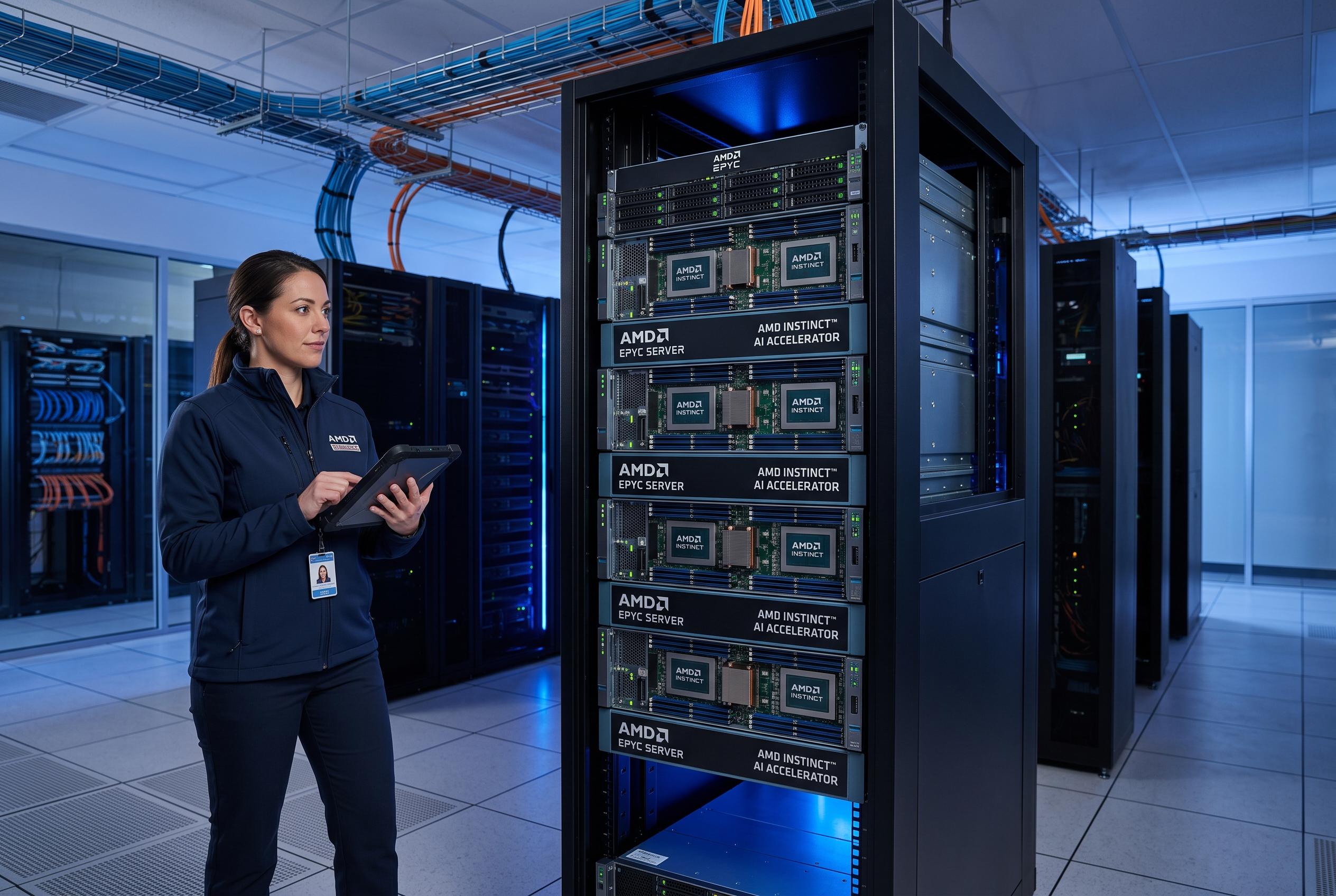

Advanced Micro Devices has expanded its AI strategy by acquiring Taalas, a chip startup specialising in inference, highlighting a strategic push to narrow the gap with Nvidia in AI platform development and inference processing.
Advanced Micro Devices has added another piece to its artificial intelligence strategy with the purchase of Taalas, a chip startup focused on inference, the stage of AI processing that answers user queries once a model is already trained. AMD said on August 6 that the deal is intended to feed into its accelerator roadmap and support system-level products built around Instinct graphics processing units. The company did not disclose financial terms.
The move fits a wider effort by AMD to narrow the gap with Nvidia in a market that has become increasingly defined by complete platforms rather than standalone chips. In a statement carried by Insider Monkey, Vamsi Boppana, senior vice president of AMD’s Artificial Intelligence Group, said the company is building a “full-stack AI platform” designed to give customers flexibility across different workloads.
Taalas appears attractive because it is built for efficiency as much as speed. Insider Monkey reported that its HC1 demonstrator can deliver about 17,000 tokens per second per user when running Llama 3.1 8B. The startup also claims its approach can cut build costs sharply and use less power by avoiding high-bandwidth memory, advanced packaging and liquid cooling. Those are meaningful advantages at a time when AI operators are under pressure to reduce both latency and energy use.
AMD’s purchase also extends a series of recent acquisitions aimed at strengthening its AI software and inference stack. CRN reported that AMD bought Brium, an AI software optimisation company, while TechSpot said the company previously acquired Silo AI for $665 million in cash. Other recent additions cited by the outlets include Nod.ai, the engineering team from Untether AI, MK1, MEXT and FastFlowLM. Together, the deals suggest AMD is trying to build a broader ecosystem around its hardware rather than rely on chip performance alone.
The commercial test, however, remains open. Insider Monkey noted that Taalas hardwires entire models into silicon, which can make it harder to adapt if AI systems change quickly. That is a real risk in an industry where model architecture and customer demand move fast. Nvidia remains far more entrenched in AI infrastructure, but AMD’s latest acquisition shows the contest is no longer limited to training chips. Inference, where every chatbot reply and coding suggestion is generated, is becoming the next important battleground.
Disclaimer: This content is intended for informational purposes only. Readers are advised to exercise their own judgement, conduct due diligence, or consult a qualified expert before acting on any information provided.