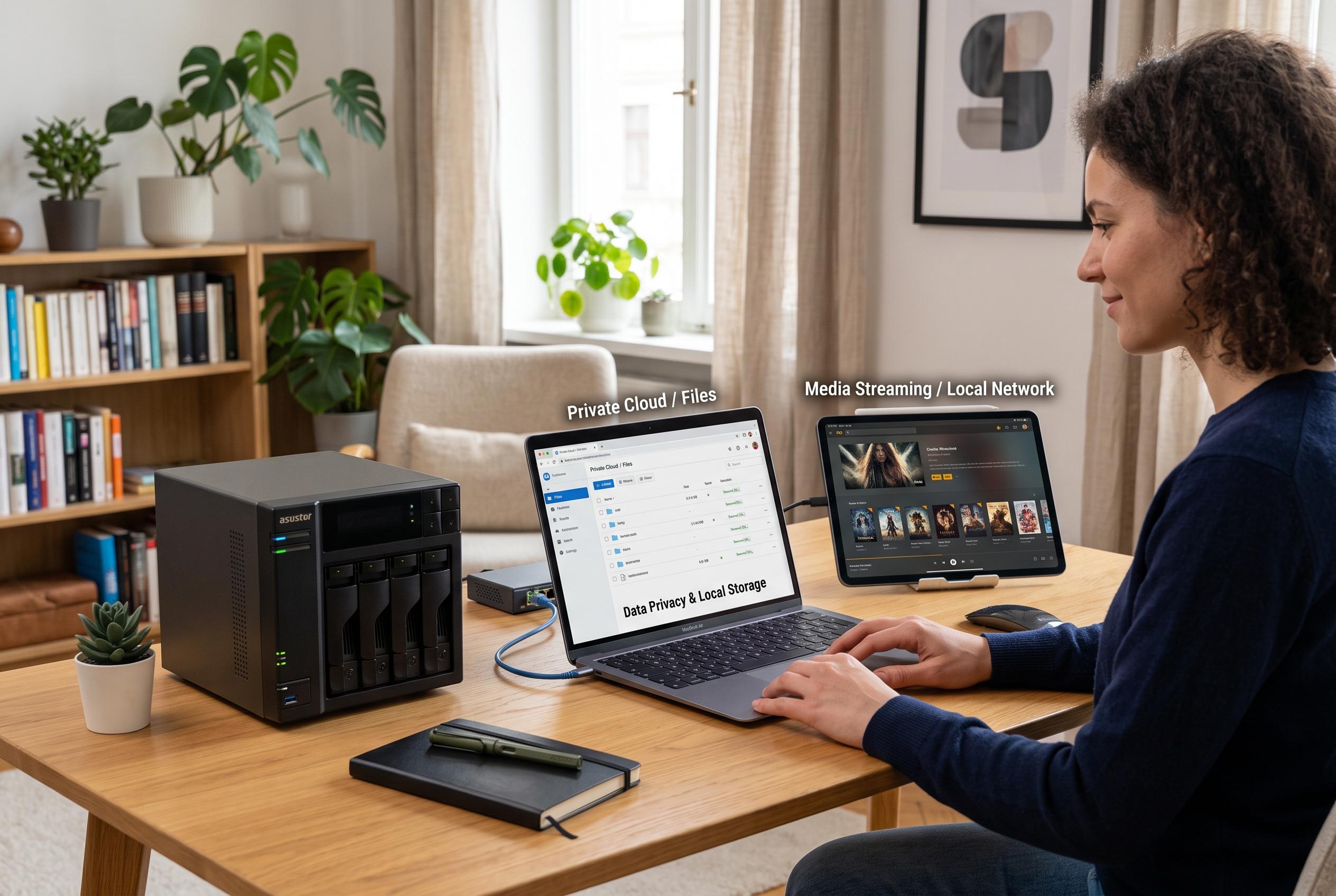

With rising cloud subscription fees and increasing privacy worries, experts suggest switching to home network-attached storage as a cost-effective and secure alternative for personal data management and media access.
Cloud subscriptions have become an easy habit for people who want automatic photo backups and cross-device access, but the bill can become harder to ignore as storage needs grow. In an XDA Developers article, the writer argues that moving personal files and media to a home network-attached storage system, or NAS, can reduce long-term costs while giving users direct control over their data and faster transfers on a local network.
The financial case is straightforward. XDA notes that modest monthly plans can rise quickly once extra capacity is needed, turning a small recurring charge into hundreds of pounds over several years. By contrast, a NAS usually involves a larger one-time purchase for the enclosure and drives, but it can provide terabytes of storage rather than the limited space bundled with consumer cloud accounts. NASMaster makes the same point, saying the appeal lies in both scalability and avoiding the steady creep of subscription fees.
The article also says the argument is not only about price. Cloud services can impose hidden trade-offs, including account restrictions, feature tiers and upload bottlenecks on residential internet connections. On a local network, a large video file or photo archive can move much faster over Ethernet or Wi-Fi than it would through a home broadband upload. TechRadar’s review of Ugreen’s NASync DXP4800 GT underscores how modern consumer NAS hardware can now offer faster networking, stronger processors and support for multiple drive configurations at a comparatively aggressive price.
Software has also narrowed the gap with mainstream cloud services. XDA points to NAS platforms that now include polished photo interfaces and automatic phone syncing, while open-source tools such as Immich, Nextcloud and Synology Drive can turn a self-hosted box into a private alternative to Google Photos or iCloud. Immich adds mobile backup, face recognition, map views and shared albums, while Nextcloud and Synology Drive are built around file synchronisation, collaboration and controlled access across devices.
That said, the shift to a NAS is not risk-free. A single home device can become a single point of failure if it is stolen, damaged or hit by multiple drive failures, which is why the article recommends the 3-2-1 backup rule: three copies of data, on two different media types, with one stored off-site. It also says remote access can be secured without exposing the NAS directly to the internet, using tools such as Tailscale or WireGuard instead of risky port forwarding. In that sense, the pitch is not that cloud storage is obsolete, but that for people willing to manage a little more hardware, self-hosting can offer privacy, performance and ownership that subscriptions do not.
Disclaimer: This content is intended for informational purposes only. Readers are advised to exercise their own judgement, conduct due diligence, or consult a qualified expert before acting on any information provided.