
Apple has expanded access to Alibaba’s Qwen AI models on Mac devices in mainland China, marking a significant step in its local AI deployment and strategic collaboration with Alibaba amid a challenging Chinese PC market.
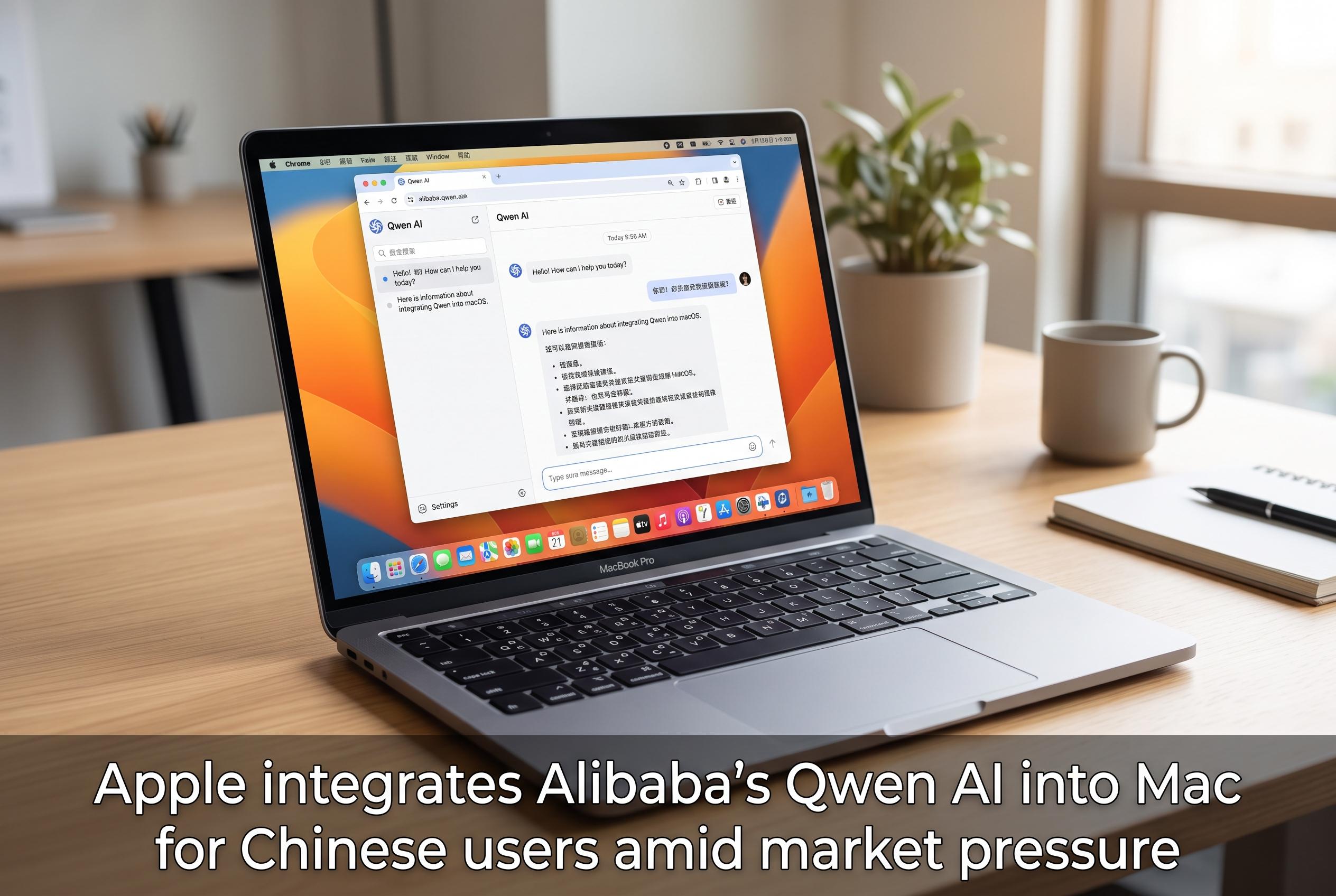
Apple has quietly widened access to Alibaba’s Qwen artificial intelligence models for Mac users in mainland China, adding a new layer to its carefully managed local AI rollout. The move, described in updated Chinese-language support material, links Qwen to Siri and Writing Tools for eligible Mac devices and suggests Apple is moving from policy approval to practical deployment in one of its most important overseas markets.
According to Apple’s documentation, users who opt in can use the service to get richer replies from Siri, including assistance that can draw on photographs and documents. The same integration can also feed into Writing Tools, allowing users to generate text and create images from prompts. The company has previously indicated that Qwen is expected to support Apple Intelligence across its main product lines in China, including the iPhone, iPad, Mac and Vision Pro, but the latest guidance focuses specifically on the Mac.
The rollout comes after China’s Cyberspace Administration approved Apple Intelligence for launch in the country in July, with Alibaba’s Qwen model set to power the service. Reuters and other technology publications reported that the regulator did not specify a launch date, underscoring how closely such services remain tied to local approval processes. Alibaba has also said Qwen will be woven into Apple’s AI offering for users in China, reflecting a broader effort to localise Apple’s software stack for the market.
Apple’s support document sets out practical conditions for use. Mac users must run at least macOS 26.6, activate the feature and sign in with a new Qwen account. Apple also says Alibaba will not be allowed to use data obtained through the service to train its AI models, a notable privacy safeguard in a market where data handling remains a sensitive issue.
The timing matters because Apple is under pressure in China’s PC market. Research from Omdia showed Mac shipments in the first quarter fell about 9% year on year to roughly 800,000 units, leaving Apple with around 9% market share. Lenovo led with about 31%, helped by its Tianxi AI assistant, while Huawei held roughly 16% with AI tools tied to its HarmonyOS ecosystem. In that context, deeper AI integration may be as much a competitive necessity as a product upgrade.
For Alibaba, the arrangement offers a route into Apple’s installed base that goes beyond its own apps and cloud services. The company recently unveiled Qwen3.8-Max, which it described as its most advanced model yet, although Apple’s documentation does not identify which version of Qwen is powering the Mac integration. The broader significance is clear enough: Apple is trying to make its devices more relevant in China by embedding a local AI partner directly into core software, while Alibaba gains visibility inside one of the world’s most valuable consumer technology ecosystems.
Disclaimer: This content is intended for informational purposes only. Readers are advised to exercise their own judgement, conduct due diligence, or consult a qualified expert before acting on any information provided.