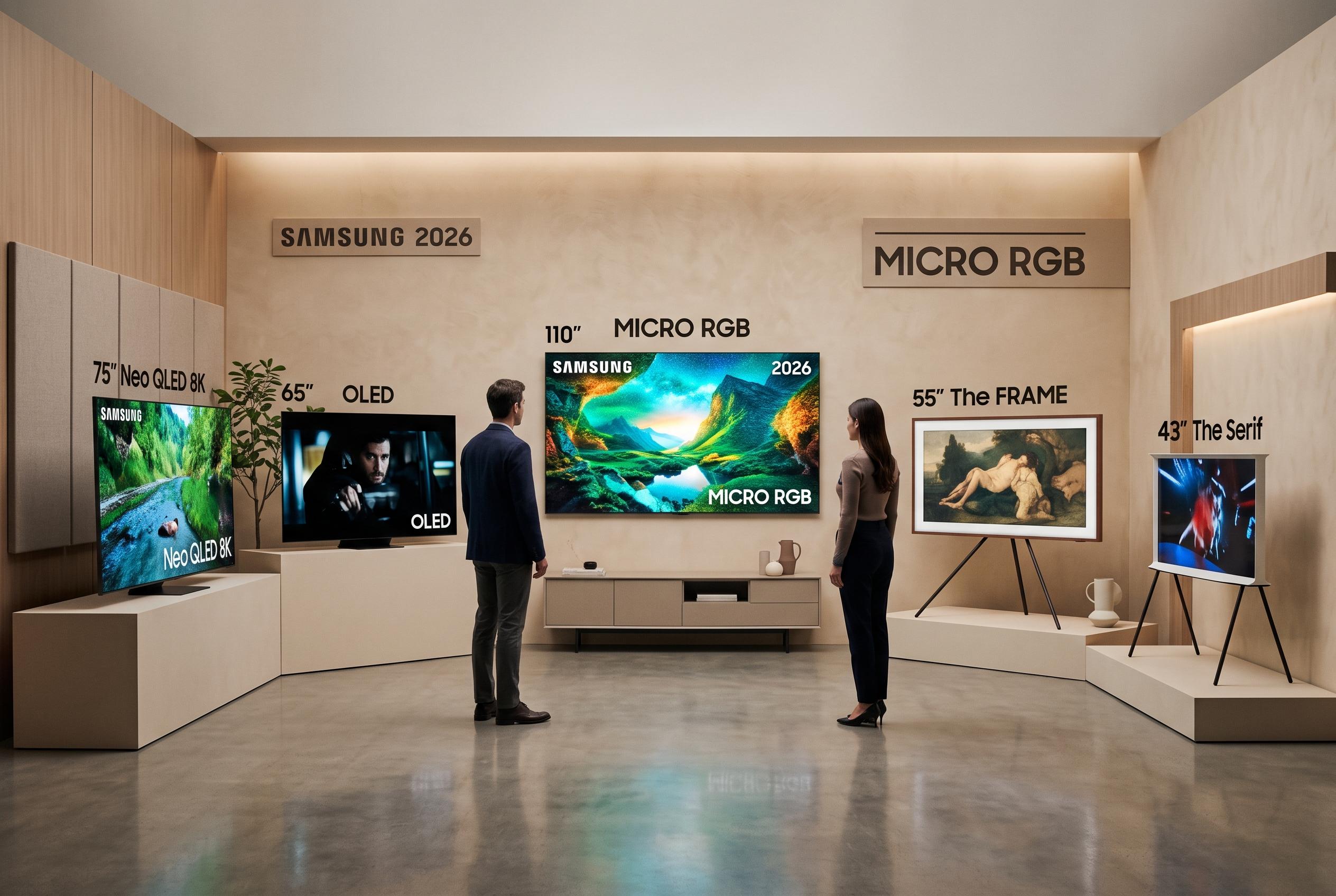

Samsung unveils its most ambitious 2026 television lineup yet, spearheading a new premium LCD platform with Micro RGB and expanded gaming capabilities across OLED, Neo QLED, Mini LED, and lifestyle TVs, all while maintaining its HDR10+ ecosystem.
Samsung’s 2026 television line-up marks one of the company’s most substantial refreshes in years, led by a new premium LCD platform called Micro RGB and followed by updated OLED, Neo QLED, Mini LED and lifestyle sets. The range is also notable for Samsung’s continued refusal to adopt Dolby Vision, even as it expands support for HDR10+ Advanced and Eclipsa Audio, two formats the company is using to strengthen its own ecosystem. Gaming remains a central theme throughout the portfolio, with several models offering variable refresh rate, auto low-latency mode, cloud gaming access and refresh rates of up to 165Hz on the top OLEDs and Micro RGB sets.
At the top of the new LCD range is the R95H, which introduces Micro RGB display technology using individually controlled red, green and blue LEDs rather than a conventional white backlight. Samsung says this approach should improve colour accuracy and light control, and the set also adds the company’s latest AI picture processing, Wireless One Connect and support for 4K gaming at up to 165Hz. A step down, the R85H uses the same panel technology but trims back the hardware, including the processor and refresh rate, while keeping much of the same headline feature set. It is positioned as the more accessible way into Samsung’s new premium LCD tier.
Samsung’s OLED range is led by the S99H in the US and Australia, and the S95H in the UK and Europe. Samsung says the two models are essentially the same television with different industrial design and connectivity choices. The flagship OLED adds a new floating-style design, Wireless One Connect and the NQ4 AI Gen3 Processor, while supporting 4K at up to 165Hz. Below it, the S90H keeps many flagship features, including Glare Free technology, OLED HDR+ and advanced gaming support, but at a lower price point. The S85H sits at the entry level for the OLED family, using a slower processor and lower-power audio system, though it still includes OLED HDR, modern Tizen software and core gaming features.
For buyers who prefer Mini LED rather than OLED, Samsung’s 2026 portfolio is broader than before. The QN990H remains the flagship 8K Neo QLED, combining Mini LED backlighting with Samsung’s strongest upscaling hardware and premium extras such as Glare Free and Wireless One Connect. The more mainstream QN80H may be the model with the broadest appeal, as it keeps Mini LED backlighting, 144Hz support and Samsung Gaming Hub without the cost of the most exotic new technologies. The QN70H sits lower down the range and pares back some of the more advanced features, but it still offers the contrast benefits of Mini LED and Samsung’s latest smart TV platform.
Samsung is also expanding into a new M-series Mini LED family, with the M80H and M70H designed to bring the backlight technology into more affordable territory. Both keep Samsung’s smart TV software and gaming services, but step down in processing power, audio and gaming specifications compared with the Neo QLED models. In the lifestyle category, The Frame Pro is the most significant change: it replaces the standard model’s conventional display hardware with Quantum Mini LED backlighting and adds Wireless One Connect, while preserving the Art Mode and swappable bezels that define the range. The standard Frame continues alongside it for buyers who want the design-first approach at a lower cost.
Taken as a whole, Samsung’s 2026 line-up shows a company trying to segment its TV range more clearly while pushing several technologies across more price points. The result is a wider spread of options, from the expensive but technically ambitious Micro RGB sets to more familiar Mini LED and lifestyle models aimed at mainstream buyers. Which of them matter most in practice will depend on how the new panel technologies perform in testing, how much premium Samsung attaches to them and whether customers decide that features such as 165Hz gaming, wireless connectivity and proprietary HDR formats are worth paying for.
Disclaimer: This content is intended for informational purposes only. Readers are advised to exercise their own judgement, conduct due diligence, or consult a qualified expert before acting on any information provided.