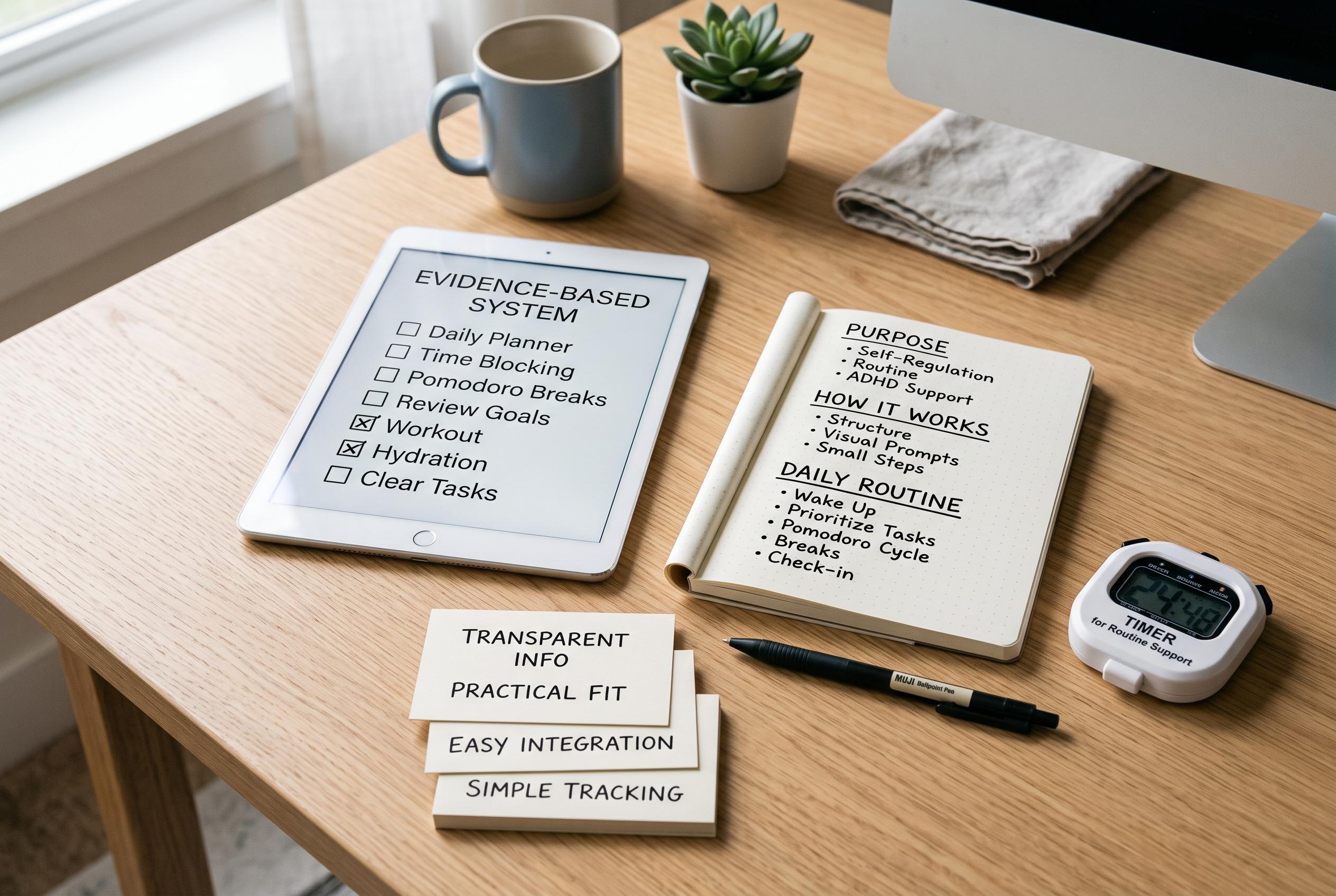

People with ADHD should prioritise evidence-based tools that offer clear purpose and easy integration over trendy apps or supplements, according to experts. Simple systems that simplify decision-making and support daily routines are most effective for managing attention issues.
People with ADHD often spend more energy testing apps, supplements and systems than they save by using them. The most useful approach is not to chase the newest promise but to ask a basic question first: does this tool have evidence, a clear purpose and a low-friction fit with daily life? That standard matters because, as the National Center for Complementary and Integrative Health notes, conventional treatment remains more effective than complementary approaches for most people with ADHD.
For apps, the strongest signs are clinical involvement, published testing and a specific function rather than broad lifestyle claims. LumosityRx, for example, is an FDA-cleared prescription therapeutic app for adults with ADHD and is backed by a study of more than 500 adults that found improvements in attention functioning and quality of life. By contrast, general-purpose “brain training” or to-do list apps with ADHD branding can add complexity without changing outcomes. A practical test is whether the app reduces planning effort, supports working memory or helps with time awareness in a way that is measurable and repeatable.
Supplements deserve even more caution. The evidence for omega-3 fatty acids, the most commonly discussed option, remains mixed. The NCCIH says the research is inconclusive, with some modest findings but nothing close to the effect seen with stimulant medication. A Cochrane review of polyunsaturated fatty acids in children and adolescents reached a similar conclusion, finding little evidence of meaningful symptom improvement versus placebo. Healthline’s guide also stresses that supplements should not replace standard ADHD treatment and should be discussed with a clinician, especially because dose, interactions and purity can vary widely.
The same evidence-first rule applies to productivity systems. The best systems for ADHD are usually simple, visible and designed to reduce decision-making. According to the guidance in the lead article and the broader app reviews, that means external structure: calendars that sync across devices, visual timers, task lists broken into small steps and reminders that prompt action before attention drifts. Systems built around time blocking or short work sprints can help, but only if they are easy enough to maintain consistently.
In practice, the fastest way to vet any ADHD tool is to ignore the sales pitch and check for four things: evidence, transparency, safety and everyday usefulness. If an app cannot explain what it changes, if a supplement cannot show what is in it, or if a productivity system creates more steps than it removes, it is unlikely to help for long. The most reliable options are rarely the most dramatic. They are the ones that fit how attention problems actually work: by making the next useful action easier to start.
Disclaimer: This content is intended for informational purposes only. Readers are advised to exercise their own judgement, conduct due diligence, or consult a qualified expert before acting on any information provided.