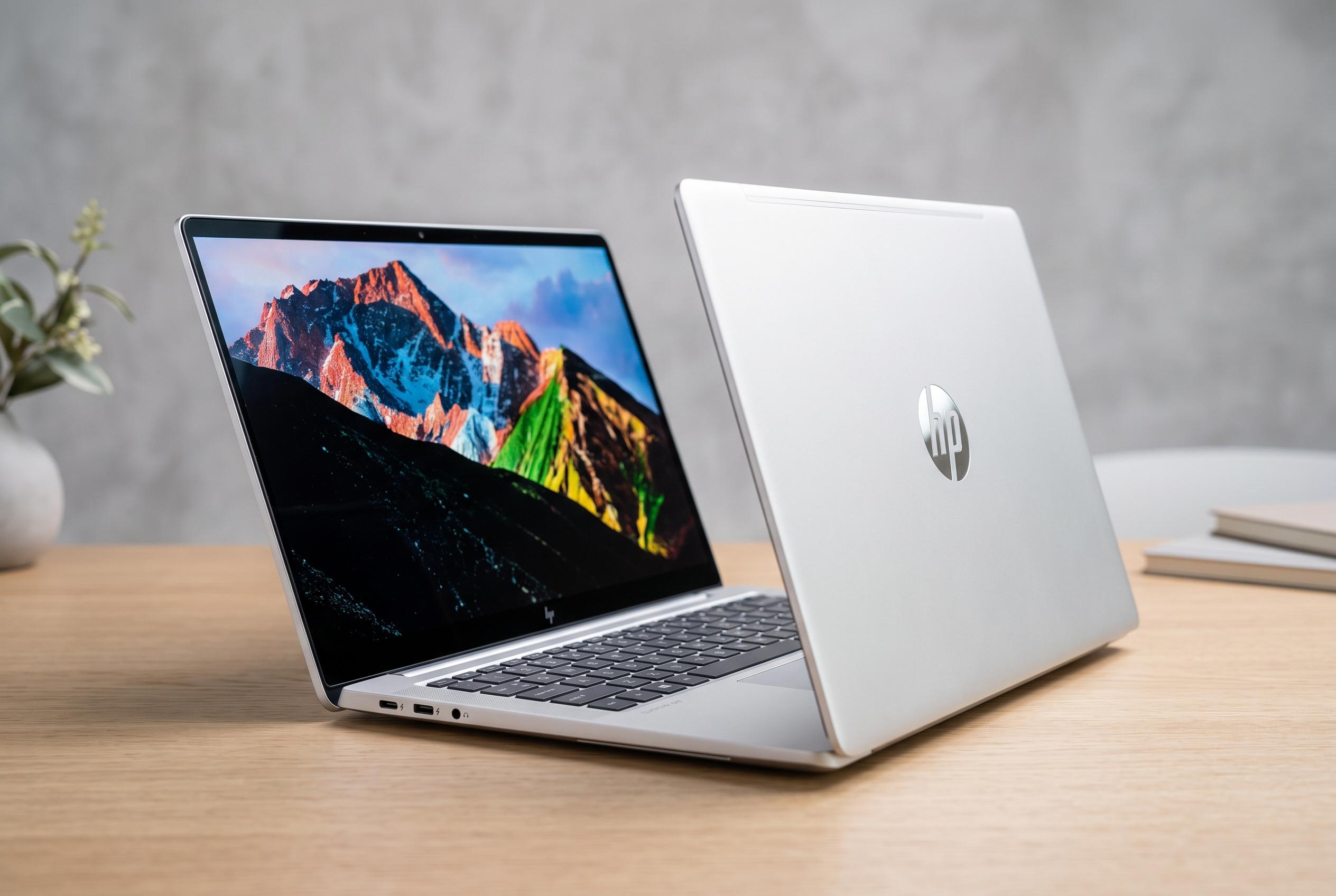

Hp’s latest OmniBook Ultra 14 offers a sleek redesign, outstanding OLED display, and impressive battery endurance, challenging established premium laptops in a crowded market.
HP’s latest OmniBook Ultra 14 is a cleaner and more ambitious follow-up to the company’s former Spectre line, and it arrives in a crowded premium ultraportable market with a stronger case than before. XDA says the redesign is slimmer, sharper and more polished than last year’s model, while Tom’s Guide and PCWorld both point to a machine that looks and feels like a genuine flagship. The system is available with Intel Core Ultra and Qualcomm Snapdragon X2 options, OLED is standard, and some configurations offer up to 64GB of memory and 2TB of storage, which is unusual in this class.
The chassis is a major part of the appeal. According to XDA, the laptop is exceptionally rigid despite its thin profile, with a premium finish and a haptic touchpad that feels more precise than a traditional clickpad. PCWorld similarly praised the build quality and touchpad, though it noted that the machine is not quite as thin in practice as the specifications suggest. The trade-off is in connectivity: the design omits USB-A, so users with older accessories will need an adapter or hub.
The display is the standout feature. XDA described the OLED panel as bright, colour-accurate and well suited to indoor work, with strong coverage of the P3 colour gamut and high measured brightness. Tom’s Guide also highlighted the 14-inch 120Hz OLED touchscreen as a major strength, and Windows Central singled out the 3K panel as one of the laptop’s best features. The main weakness is glare. XDA found the screen’s glossy finish more reflective than expected, which could be distracting for anyone working outdoors or near bright light.
Performance depends heavily on configuration. XDA’s review unit used Intel’s Core Ultra X9 388H and found it fast enough for everyday use, but not the best value in the range given the large price jump over lower-tier chips. Tom’s Hardware, reviewing a Snapdragon X2 Elite model, reported strong results in file transfers and video transcoding, while Tom’s Guide said the Qualcomm version outpaced Apple’s M5 MacBook Air and MacBook Pro in some multi-core and encoding workloads. The common thread is efficiency rather than raw power: HP seems to have tuned the machine for sustained performance, not maximum benchmark numbers.
Battery life is another area where the OmniBook Ultra 14 distinguishes itself. XDA recorded 25 hours in its looped test at 200 nits, an exceptional result for a 14-inch premium laptop. Windows Central also reported all-day endurance, with real-world use stretching to roughly 22 hours. The machine’s cool-running behaviour adds to that appeal, and XDA noted that even the highest-end Intel version remained comfortable under load. The webcam is adequate rather than exceptional, but the speakers, microphones and Windows Hello facial sign-in help round out the experience.
The result is a laptop that succeeds on design, display and endurance, even if the keyboard and port selection leave room for improvement. XDA found the keys a little soft, while Tom’s Guide warned that Qualcomm-based models still depend on Microsoft’s Prism emulation for some Windows software, which can matter for users with niche applications. For buyers who want a premium Windows ultraportable with excellent battery life, a sharp OLED screen and strong build quality, the OmniBook Ultra 14 makes a compelling case. For everyone else, the best configuration will depend on whether portability, compatibility or raw performance matters most.
Disclaimer: This content is intended for informational purposes only. Readers are advised to exercise their own judgement, conduct due diligence, or consult a qualified expert before acting on any information provided.