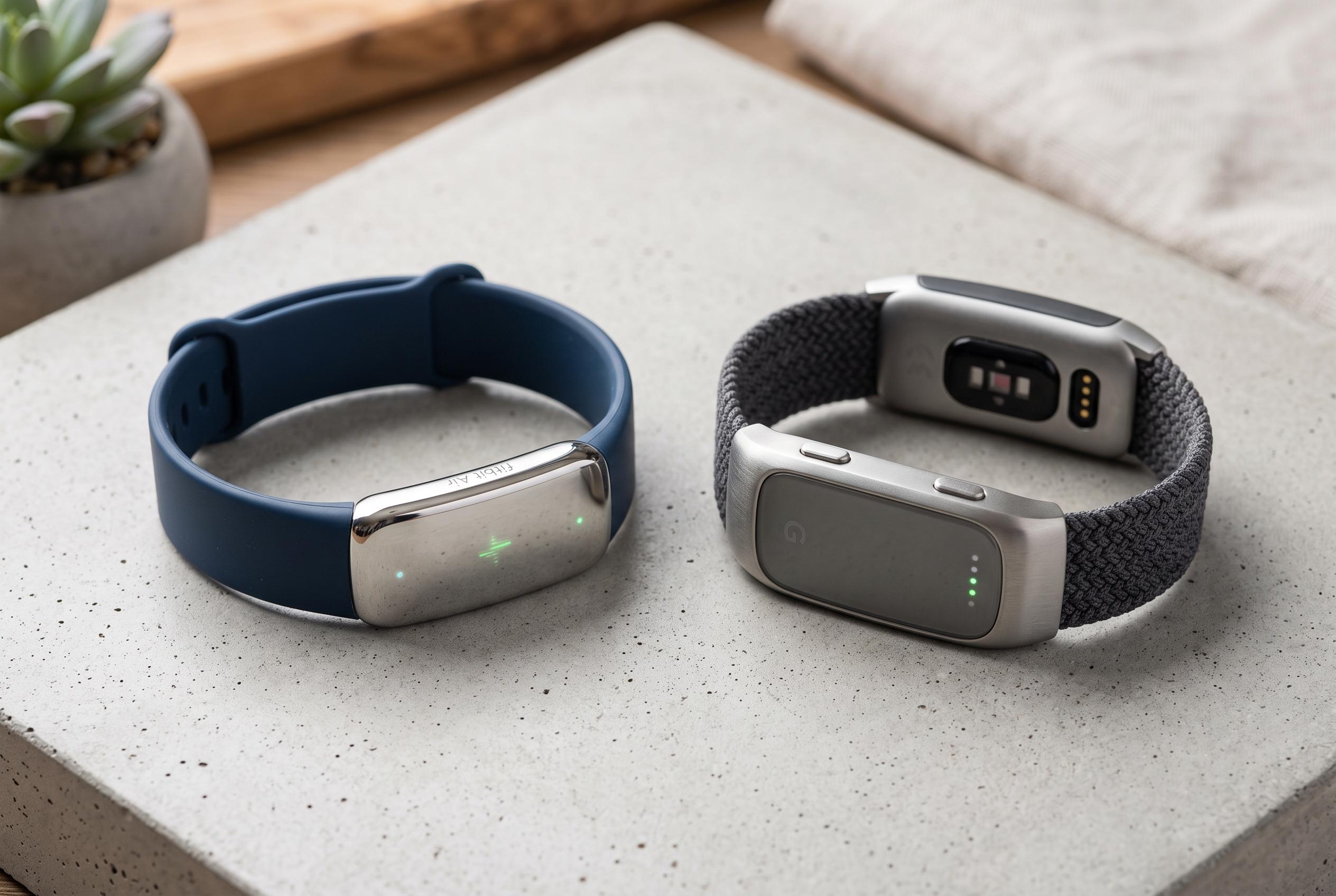

Garmin’s Cirqa and Fitbit’s Air showcase contrasting philosophies in the burgeoning market for screenless, wrist-based health devices, with differences in pricing, ecosystem integration, and target user focus shaping their appeal.
Garmin’s Cirqa and Fitbit’s Air represent two different answers to the same problem: how to track health and activity all day without turning a wrist into a mini smartphone. Both are screenless, both depend on a companion app and both are aimed at users who want continuous data without the distraction of a display. The split between them is not about basics, but about philosophy, price and the strength of each company’s wider ecosystem.
The most obvious contrast is cost. Fitbit Air launched at $99.99, while Garmin’s Cirqa arrived at $199.99. Tom’s Guide has noted that both devices use phone-connected location tracking rather than built-in GPS, which keeps the hardware simpler but limits serious outdoor navigation use. That makes each band better suited to health monitoring, sleep logging and everyday activity tracking than to replacing a full sports watch.
Garmin has pitched Cirqa as its first screen-free smart band, and TechRadar reported that the device offers 24/7 monitoring, a rated 10-day battery life and no subscription requirement for core functions. The review also described the band as comfortable and well suited to minimalist wearers. Tom’s Guide’s hands-on coverage reached a similar conclusion, saying Cirqa sits neatly between Fitbit Air and Whoop’s more expensive model.
Fitbit Air, by contrast, is designed to be understated and affordable. Tom’s Guide described it as light, comfortable and focused on the health metrics most people actually use, including sleep, heart health, movement and workouts. That lower price makes it easier to recommend to first-time buyers who want a discreet tracker without paying for a premium fitness platform.
The two devices also differ in how they frame the data they collect. Fitbit’s approach is generally more wellness-led, presenting information in a simple way for users who want trends and guidance rather than detailed training analysis. Garmin, through Connect, pushes harder towards performance and recovery, with tools such as heart-rate variability, Body Battery and training readiness feeding into a broader fitness system.
That distinction matters most for active users. Garmin says Cirqa can automatically detect activities and track more than 80 exercise types, while its physical button gives it a practical edge for workout control. Fitbit Air is still capable of logging daily movement, walks and routine exercise, but it is better thought of as an everyday wellness band than a training device.
Sleep tracking is a closer contest. Both devices are designed for round-the-clock wear and both are meant to be comfortable enough to keep on overnight. Fitbit has long been strong in sleep analysis and Air continues that tradition, while Garmin folds sleep data into its recovery-focused ecosystem. For users who mainly want simple sleep trends, Fitbit Air has the cleaner presentation; for users already invested in Garmin, Cirqa adds more context around recovery and training.
Neither device includes built-in GPS, so runners and cyclists who want full route tracking still need to carry a phone or move up to a dedicated sports watch. That limitation is important. For casual fitness use, it may not matter much. For structured training, especially outdoors, it is a meaningful constraint.
On balance, Fitbit Air is the stronger value choice for most people. It is cheaper, lighter and easier to understand, and it covers the core health and sleep basics well. Cirqa is the better pick for buyers who already use Garmin products or want a more training-oriented system with longer rated battery life and a deeper fitness platform. The decision is less about which tracker is universally better and more about whether you want simple wellness data or a fuller performance ecosystem.
Disclaimer: This content is intended for informational purposes only. Readers are advised to exercise their own judgement, conduct due diligence, or consult a qualified expert before acting on any information provided.