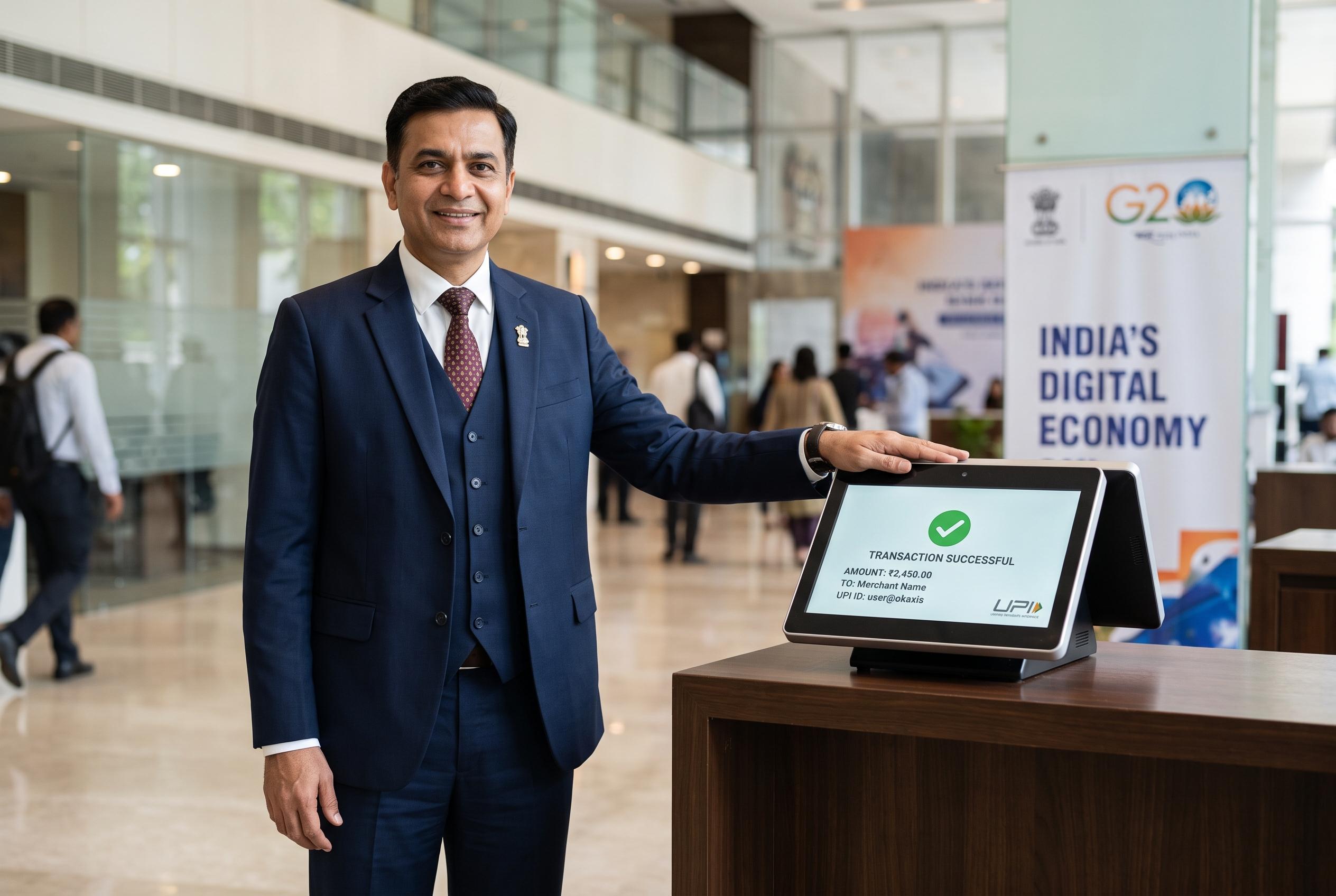

India’s finance ministry has clarified that consumer UPI transactions will remain free, even as it considers a modest MDR for large merchants, signalling a shift towards sustainable digital payment infrastructure.
India’s finance ministry has moved to calm speculation that the government plans to start charging ordinary users for Unified Payments Interface transfers, saying consumers will continue to pay no transaction fees and that person-to-person payments will remain free. The clarification comes amid reports that the administration is examining a limited merchant discount rate, or MDR, for larger business transactions, a change that would affect only a narrow set of payments and not the broader pool of retail UPI use.
According to reports in LiveMint, The Financial Express and The Indian Express, any revived MDR would be aimed at large merchants and higher-value payments, with smaller businesses expected to remain outside the proposal. The reports said the possible charge would be modest, capped at a level far below typical card processing fees, and could be confined to transactions above a threshold such as ₹2,000 or to merchants above a turnover benchmark. The government has not announced a final framework, but the reports suggest a decision could come within weeks.
The Press Information Bureau also rejected claims that UPI payments above ₹2,000 could attract goods and services tax, calling such suggestions false and baseless. Officials said there is no current levy on UPI transactions and therefore no GST consequence tied to a fee that does not exist. The finance ministry’s broader message is that the policy debate is about sustainability of the payments ecosystem, not a move to tax consumers using UPI for everyday purchases.
That distinction matters because UPI has become the backbone of India’s digital payments system. In its statement, the government said the platform processed 2,366 crore transactions worth Rs 29.9 lakh crore in July 2026 alone and is now live in 11 foreign countries. The ministry argues that the system will need ongoing investment in security, fraud prevention and infrastructure if it is to keep expanding, especially into rural and semi-urban markets. It also says any future merchant levy would be threshold-based rather than universal, and that the steering committee led by the National Payments Corporation of India would decide the final structure if Parliament approves the relevant amendment.
Disclaimer: This content is intended for informational purposes only. Readers are advised to exercise their own judgement, conduct due diligence, or consult a qualified expert before acting on any information provided.