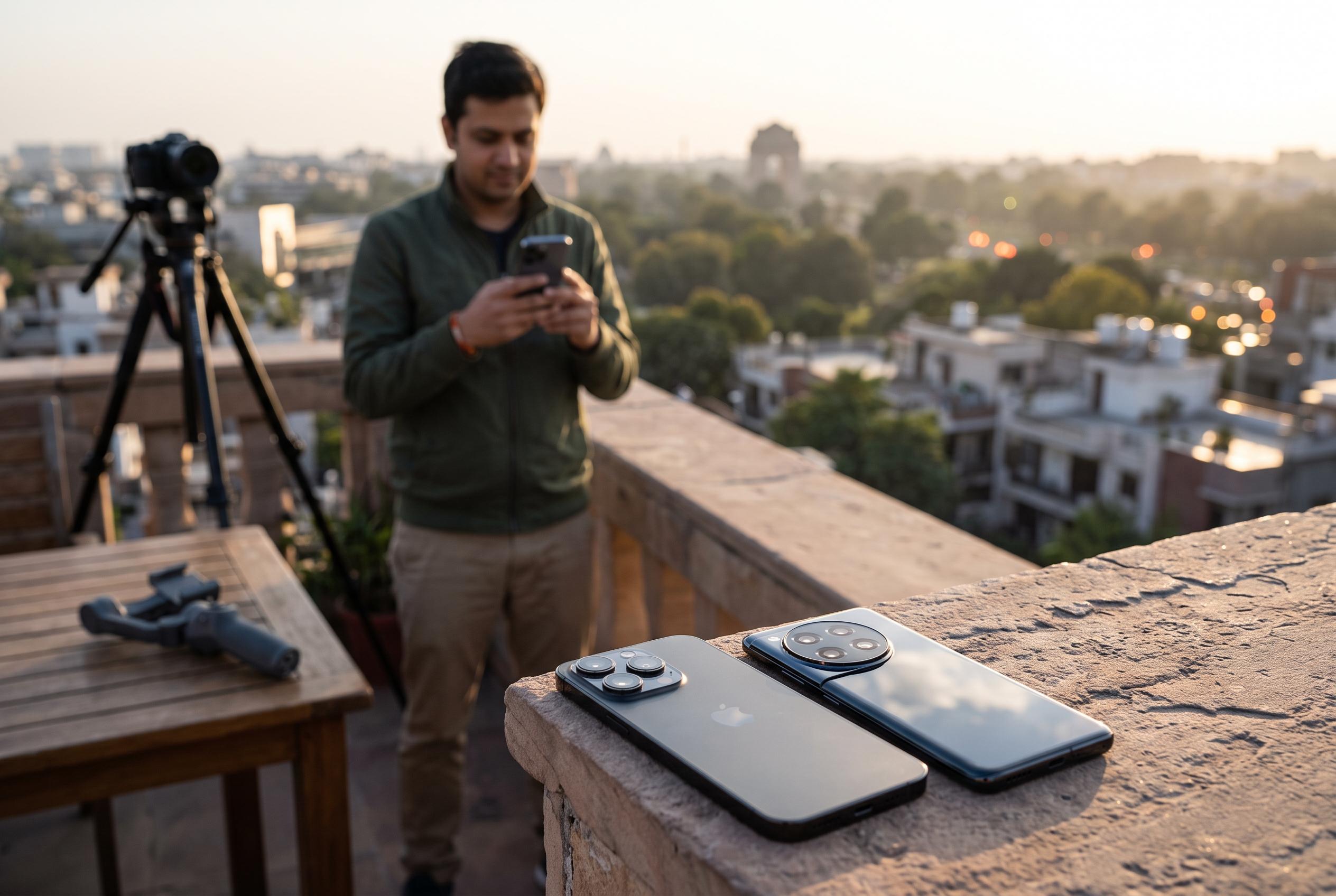

A fresh comparison in Delhi highlights the Pixel 11 Pro’s superior zoom capabilities and dynamic range over the iPhone 17 Pro, marking a significant step forward for Google’s flagship cameraphone.
Google’s Pixel 11 Pro is positioned as a camera-first flagship, and in a direct comparison with Apple’s iPhone 17 Pro around Delhi, it emerges as the more striking photographer’s tool. The Pixel’s revised processing, which Google says brings stronger dynamic range and greater sensitivity from the zoom sensor, appears to translate into brighter files with more recovered shadow detail, especially in difficult light. Apple’s rival remains the steadier and more natural renderer, but the Google phone often produces the more immediate, punchier image.
The hardware match-up is close on paper. Both phones rely on 48-megapixel ultrawide and telephoto cameras, but Google pairs them with a 50-megapixel main sensor and a 5x optical zoom, while Apple uses a 48-megapixel main camera and a 4x optical zoom that can be extended further through software. In practice, that difference matters. In overcast scenes and around shaded areas in Lodhi Garden, the Pixel held onto texture in leaves, stone and other darker parts of the frame more effectively, while the iPhone kept colours closer to the scene as it was seen by eye.
Portraits and close-ups showed a similar split. The Pixel often rendered skin in a way that looked more natural to this test, even when its overall tone veered slightly pink, while the iPhone’s output could look a touch more processed. In macro shots, Apple delivered softer, more polished backgrounds, but Google extracted more fine texture from petals and droplets. At longer range, the Pixel’s 5x telephoto proved the more convincing tool, preserving sharper detail and more legible colour in a demanding low-light shot of a black cat, where the iPhone lost clarity and fine structure.
The ultrawide cameras also favoured Google, largely because the Pixel lifted darker areas more confidently without breaking consistency with its main camera. That consistency matters across a whole set of images, especially for anyone sharing photos quickly rather than editing them later. Still, Apple’s image pipeline continues to offer a more restrained look, and that may suit users who prefer realism over emphasis.
The review’s broader conclusion is practical rather than absolute: the Pixel 11 Pro is the more appealing camera phone for people who want vivid, social-ready images with strong zoom performance, while the iPhone 17 Pro remains the more faithful interpreter of a scene. Android Central and TechRadar have also noted the Pixel 11 Pro’s gains in detail, portrait work and new camera features such as Magic Capture and Camera Looks, although they suggest the phone is still broadly evolutionary rather than a major hardware reset. For Apple, the camera system is still competitive, but the comparison suggests the next iPhone Pro may need a stronger telephoto step forward to close the gap in zoom photography.
Disclaimer: This content is intended for informational purposes only. Readers are advised to exercise their own judgement, conduct due diligence, or consult a qualified expert before acting on any information provided.