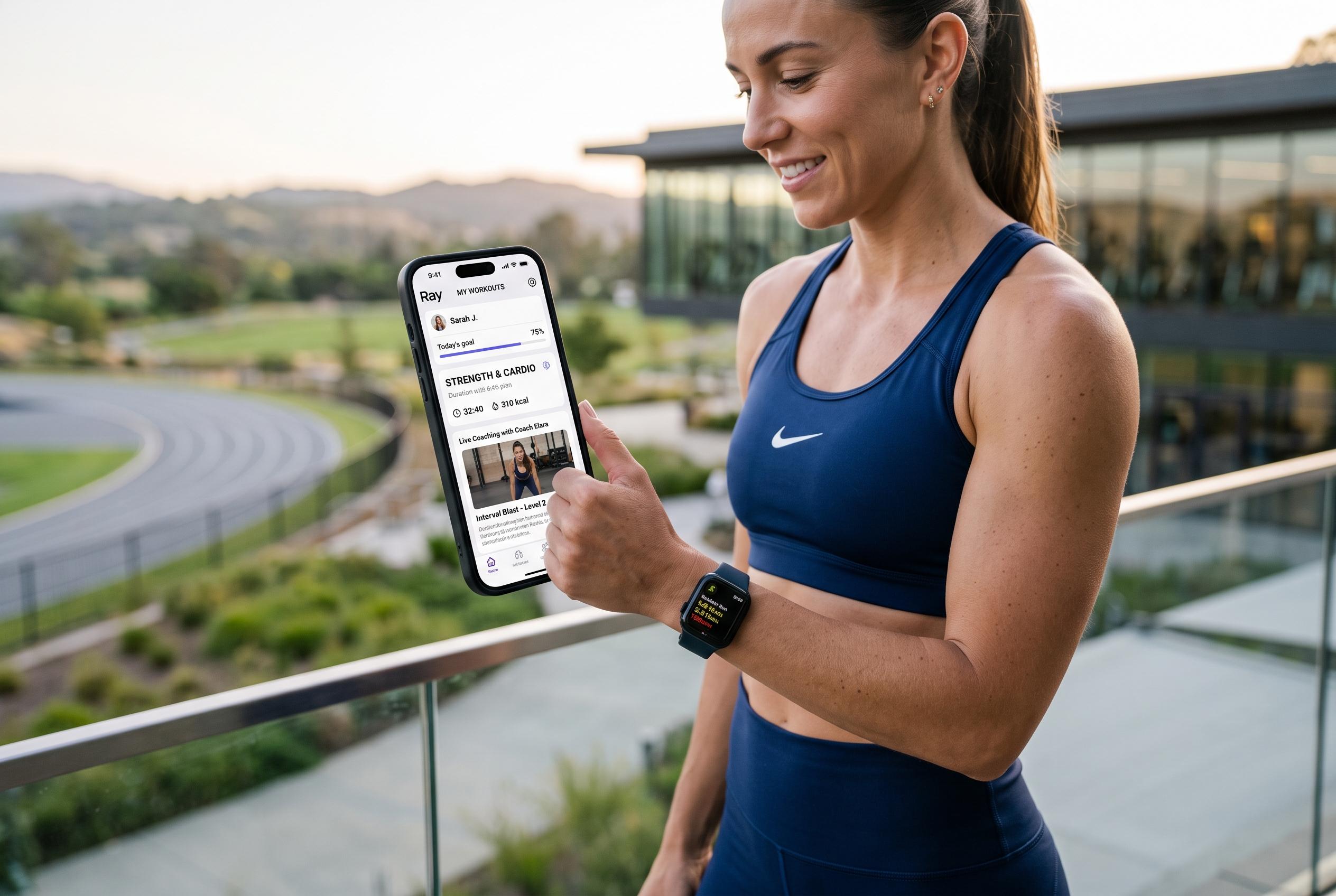

Ray, an AI-powered fitness application compatible with iPhone and Apple Watch, offers a personalised, flexible workout experience that closely mimics human coaching, setting it apart from typical workout software.
A former personal trainer says Ray, an AI fitness app for iPhone and Apple Watch, comes much closer to human coaching than most workout software. In a review for Tom’s Guide, the writer said the app plans sessions, gives audio cues, counts repetitions and alters training when the user is short on time, sore or tired. That flexibility, the review suggested, is what separates Ray from a basic exercise generator.
The app’s main appeal is its hands-free design. Ray uses a choice of voices, with the reviewer favouring one called Bold, and speaks clearly enough to direct the session without constant interaction with the phone. It tells users what comes next, manages rest periods and keeps the workout moving. The reviewer also said the audio can run alongside music or a podcast, briefly lowering other sound when instruction is needed.
According to the Tom’s Guide review, Ray’s programming was more convincing than expected because it did not simply make each session harder. Instead, it adjusted weights and volume in a way that suggested an attempt at progression, which matters in strength training. The app can be used with gym equipment, dumbbells or no gear at all, and it can also fold in cardio, mobility and stretching. Its ability to change a session mid-workout, rather than forcing the user to start over, was presented as one of its most useful features.
Ray also uses the iPhone camera to count repetitions automatically. The reviewer said the feature was accurate in practice and made it easier to concentrate on form rather than on tallying reps. Ray’s developer says the computer vision processing happens on device rather than being uploaded, and the camera is optional. The app also connects with Apple Health so outside activity can inform future workout planning, and the subscription starts at $19.99 a month after a seven-day free trial, according to the App Store listing.
Even so, the app is not portrayed as a full substitute for a real coach. The review noted that some motivational lines become repetitive and that software cannot match the judgement of a skilled trainer or assess pain the way a clinician can. But for consistent strength work, the writer concluded that Ray does something many fitness apps fail to do: it reduces the friction of planning, tracking and deciding, which makes it easier to keep training.
Disclaimer: This content is intended for informational purposes only. Readers are advised to exercise their own judgement, conduct due diligence, or consult a qualified expert before acting on any information provided.