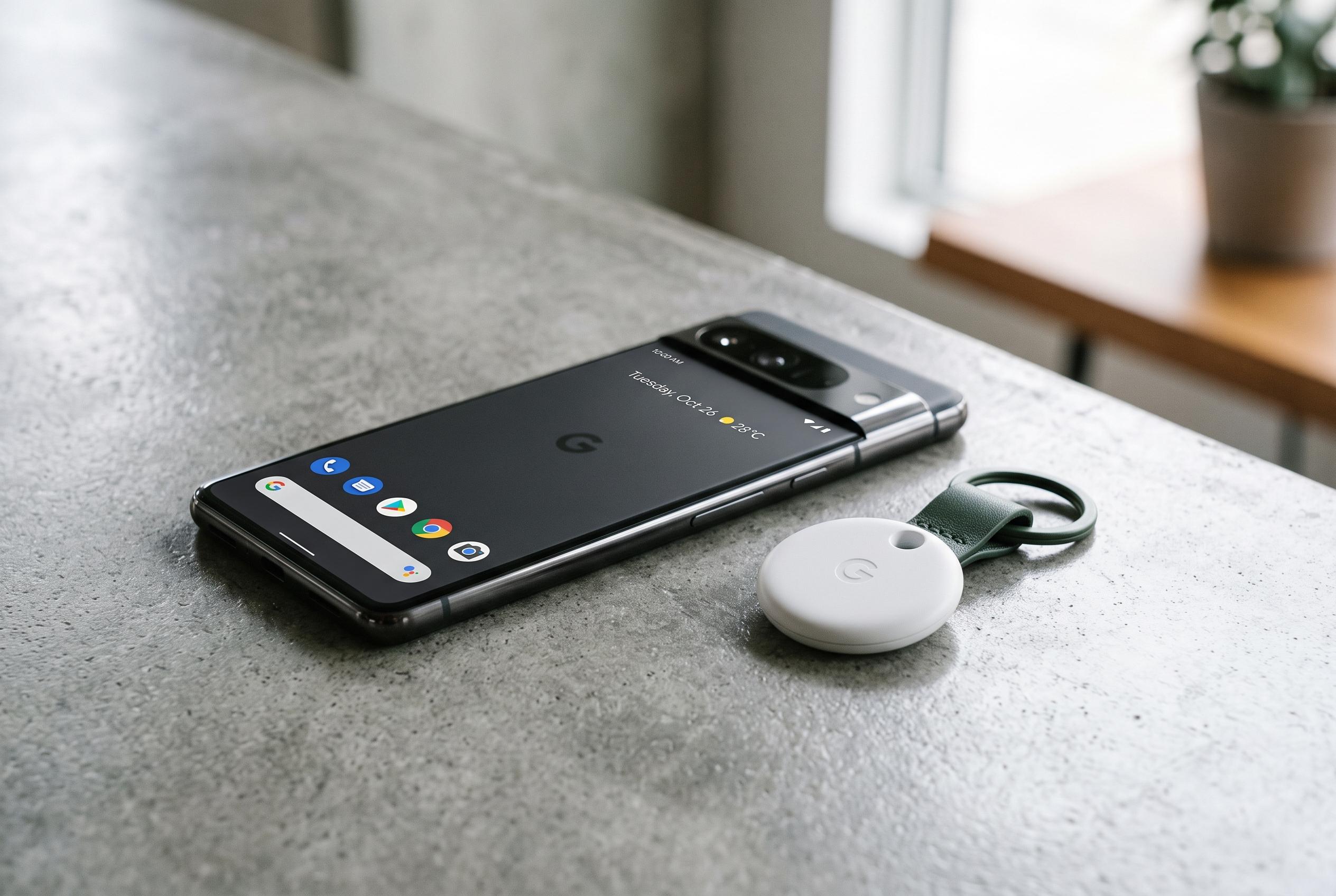

Leaked details ahead of Google’s 12 August Made by Google event hint at significant hardware updates, a new Pixel Tag tracker rivaling Apple’s AirTag, and price hikes, with availability set for 20 August.
Google’s next Pixel launch is shaping up to be one of its most revealing in years. With the Made by Google event set for 12 August, a wave of leaks has filled in much of the picture around the Pixel 11 family, including the hardware line-up, new design details, pricing and a surprise accessory that appears intended to take on Apple’s AirTag. The result is a launch that may be less about unveiling the broad plan and more about confirming what has already been widely exposed.
The line-up is expected to include the Pixel 11, Pixel 11 Pro, Pixel 11 Pro XL and Pixel 11 Pro Fold. Google is also believed to be preparing the Pixel Watch 5, a new colour option for the Pixel Buds Pro 2 and a small Bluetooth tracker called Pixel Tag. If accurate, that tracker would be Google’s first direct rival to AirTag, and its late appearance in the leak cycle suggests the company managed to keep at least one product under wraps until the final stretch.
Much of the technical interest centres on the Tensor G6, which is expected to move production to TSMC on a 2nm process. That would mark a notable shift for Google’s chip strategy and, according to the leaks, could bring a meaningful lift in CPU performance. The reported design uses a 1+4+2 layout with ARM C1 cores, including one high-performance Ultra core and four C1-Pro cores. The downside, according to the same reporting, is that the graphics subsystem may not be especially modern, which could limit appeal for mobile gaming. Google is also said to be moving away from Samsung’s Exynos modem in favour of a MediaTek M90.
Displays, batteries and storage are also changing. The base Pixel 11 is said to reach 3,000 nits of peak brightness, while the Pro models could climb to 3,600 nits. Storage is expected to start at 256GB across the range, effectively ending the long-standing 128GB entry tier. Battery sizes are reportedly rising on the base model and the Pro XL, though the Pro may lose a little capacity compared with its predecessor. Wired charging is said to top out at 30W on the Pixel 11, Pixel 11 Pro and Pixel 11 Pro Fold, with 45W reserved for the Pro XL. All models are expected to support Qi2 wireless charging.
Camera hardware appears to be where the differences between models become most visible. The Pixel 11 is tipped to keep a dual-camera setup, while the Pro and Pro XL may move to 50-megapixel main sensors, a 48-megapixel ultrawide with macro focus and a 48-megapixel periscope telephoto lens with 5x optical zoom. Leaks also point to a 42-megapixel front camera on the Pro models. The foldable version is expected to use a more modest camera package, though still with a periscope telephoto lens. Promotional material reportedly confirms 120x zoom on the Pro handsets, underlining how aggressively Google wants to market computational photography.
One of the more unusual changes is a feature called HiLight, which appears to be the final name for what earlier leaks described as Pixel Glow. It is said to be an RGB light strip integrated into the camera module on the Pro models, replacing the temperature sensor and offering visual feedback during Gemini use, phone calls or video recording. Google is also moving back to an all-glass camera bar, a design choice that recalls the Pixel 6 era. Colour options look more expressive than before, with fresh finishes such as Midnight Haze, Light Sterling, Fuchsia and Moss for the standard model, and a more muted palette for the Pro line.
Pricing is the most contentious part of the story. Android Central reported that Google has openly acknowledged a rise in component costs, especially memory, with the price of 1GB of RAM said to have jumped sharply between 2025 and 2026. That cost pressure has apparently forced the company to raise prices across the Pixel range. The Pixel 11 is now expected to start at $899 in the US, while the Pixel 11 Pro and Pixel 11 Pro XL could begin at $1,099 and $1,299 respectively. The Pixel 11 Pro Fold is tipped at $1,899. In a sign of the broader squeeze, some Pro models may ship with 12GB of RAM rather than 16GB, even as Google works on software-level memory efficiency to offset the cut.
Availability also seems more straightforward than in previous years. The latest reports suggest Google is aiming for a unified release on 20 August, with the entire Pixel 11 line-up and the Pixel Watch 5 going on sale at the same time. If that holds, buyers will not face the staggered availability that has complicated earlier launches, especially for the foldable model. For Google, the event now looks less like a product reveal and more like a final check against a near-complete leak trail.
Disclaimer: This content is intended for informational purposes only. Readers are advised to exercise their own judgement, conduct due diligence, or consult a qualified expert before acting on any information provided.