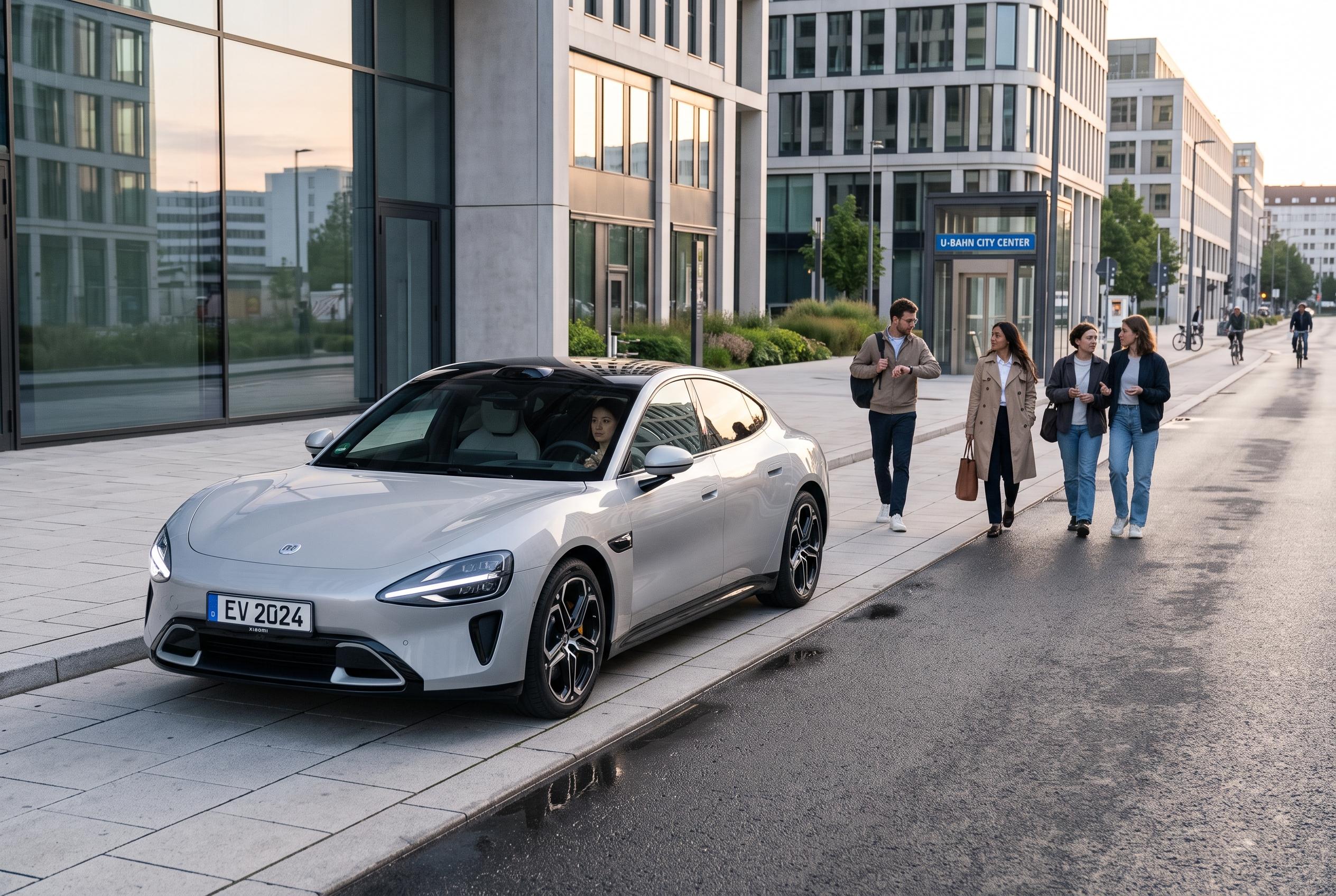

While Xiaomi’s smartphone division faces significant declines amid shrinking global shipments and market share loss, its electric vehicle business gains traction despite ongoing losses, highlighting a strategic shift in the company’s growth focus.
Xiaomi’s business is moving in two very different directions. Its smartphone arm, once the core of the group’s profit story, is under clear pressure, while the electric-vehicle operation is expanding its line-up and deliveries, even though it is still losing money. The contrast has become sharper this spring as the wider handset market weakens and Xiaomi loses share faster than its larger rivals.
According to Omdia, global smartphone shipments in the second quarter of 2026 fell to 272 million units, a decline of 6% year on year. Xiaomi’s shipments dropped 26% to 31.2 million devices, the steepest fall among the leading brands. Samsung shipped 60.5 million handsets, up 5%, while Apple rose 23% to 55.1 million units and took 20% of the market. Industry trackers also point to component shortages, especially DRAM and NAND memory, as a major drag on the sector, with higher input costs squeezing margins across the industry.
The weakness is feeding through to Xiaomi’s finances. In the first quarter, revenue fell 10.9% to 99.142 billion yuan, while adjusted net profit dropped 43.1% to 6.07 billion yuan. On a reported basis, net income declined 57% to 4.72 billion yuan. Revenue in the smartphone and AIoT division fell 14.5% to 79.3 billion yuan, and handset shipments dropped 19.2%. Even so, Xiaomi lifted research and development spending 33.4% to 9 billion yuan, signalling continued investment in artificial intelligence and core software development.
The company is also trying to reduce its dependence on outside suppliers. Lei Jun said in January that Xiaomi intended to build more of its own technology stack, including chips, operating system software and AI systems, in part to lessen reliance on Qualcomm and Google. That strategy sits alongside a broader push into vertical integration across China’s semiconductor ecosystem. Xiaomi has also supported its share price with a HK$2.5 billion buyback programme, launched in January and running through to the 2026 annual general meeting or until the funds are used.
By contrast, the EV business is gaining momentum, although it remains loss-making. Xiaomi delivered 80,856 vehicles in the first quarter, up 6.6% from a year earlier, generating 19.86 billion yuan in segment revenue but still posting an operating loss of 3.1 billion yuan. Reuters reported that the company unveiled two new SUVs in July, broadening its automotive range beyond the existing YU7 family. Regulatory filings in China also showed fresh model registrations, underscoring how crowded the domestic EV market has become. For now, Xiaomi’s investors are being asked to weigh a deteriorating handset franchise against a growing but still unprofitable car business.
Disclaimer: This content is intended for informational purposes only. Readers are advised to exercise their own judgement, conduct due diligence, or consult a qualified expert before acting on any information provided.