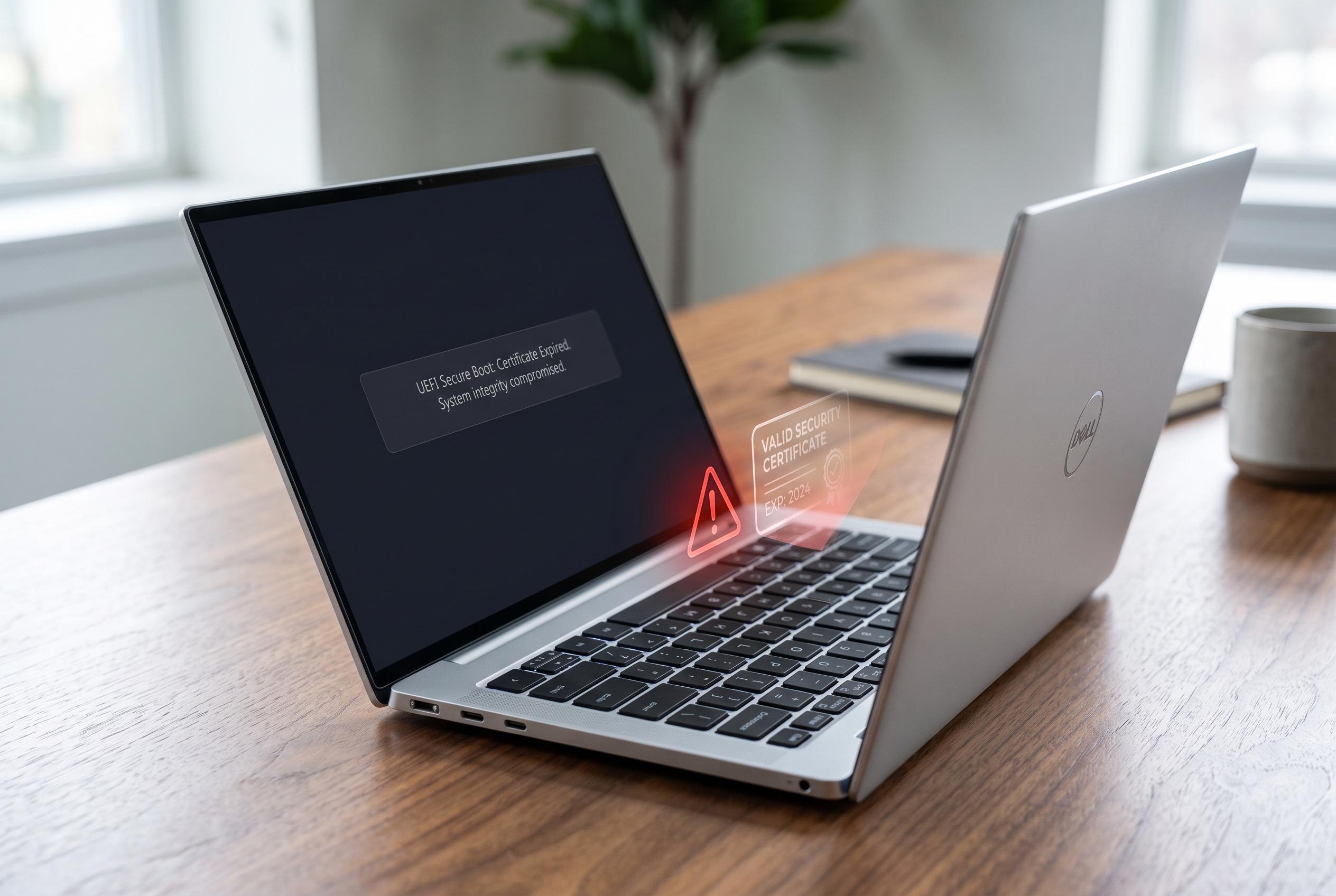

A forthcoming expiry of Microsoft’s secure boot certificates may leave ageing PCs increasingly vulnerable and untrustworthy, highlighting the fragile nature of firmware updates and vendor support policies as the October 2026 deadline approaches.
A change in Microsoft’s Secure Boot system is creating an unlikely deadline for PC owners: the certificates that help a motherboard verify what is allowed to start are beginning to expire, with the first wave due in June 2026 and a more consequential Microsoft Windows Production PCA 2011 certificate set to lapse on October 19, 2026. Microsoft says the replacement certificates have been rolling out through Windows Update since 2024, and most supported PCs should receive them automatically. But that assurance depends on the device still being in firmware support and able to accept the new trust chain. According to Microsoft’s servicing guidance, the issue is not that machines will suddenly stop booting; it is that older systems may gradually lose the ability to validate future Secure Boot components.
That distinction matters because the update is not only a Windows problem. The new certificates must also be written into the motherboard’s UEFI firmware, which means the vendor’s support policy determines whether a board is fully covered. HP has already published cut-off dates for older commercial systems, while Dell and Lenovo have also used age-based support tiers for firmware maintenance. In practice, that leaves two broad groups exposed: ageing prebuilt PCs that are past their update window and do-it-yourself boards that have aged out of active support. For both, the machine may continue to work, but it will be left with an increasingly stale trust chain.
The transition has also exposed the fragility of motherboard firmware updates. HP has acknowledged that some commercial and workstation systems can fall into BitLocker recovery screens after BIOS updates from early April 2026, and it says the issue can interfere with the deployment of Microsoft’s 2023 certificates. Separate reporting has described boot loops and recovery failures affecting premium HP laptops, including EliteBooks, ProBooks and ZBooks. HP has since issued guidance and a workaround, but the episode underlines how easily a security fix at firmware level can turn into a boot problem when the update process is not handled cleanly.
For builders using recent consumer boards, the picture is more reassuring. ASUS and MSI have both said that many supported desktop boards will receive the new certificates automatically through Windows Update, without a manual flash. That does not remove the risk entirely, because support still depends on whether the board remains inside the vendor’s update window. A current AM5 or recent Intel platform from a major manufacturer is likely to be covered. A board that is several generations old may not be. The difference is easy to miss because nothing dramatic happens on the deadline itself.
That is what makes this transition unusual. Microsoft says affected devices will keep running after the June and October expiries. The problem is not an immediate shutdown but a slow loss of trust in the boot chain, which can leave a system unable to verify future security updates correctly. In security terms, that is a root-of-trust issue; in practical terms, it is a form of silent obsolescence. The PC does not announce the problem. It just becomes less trustworthy over time.
There are also familiar hazards around any BIOS update. A full firmware flash is vulnerable to interruption, whether from a power cut, a faulty power strip or an unexpected reset during the write process. HP’s recent update problems show a second danger as well: even when the firmware itself finishes, the operating system can still fail if BitLocker or boot settings are not aligned with the new certificate state. That is why a full system backup and reliable power protection are not optional extras before a firmware refresh. They are the practical safeguards that determine whether an update is routine or expensive.
The larger point is simple. This is not a leak or a rumour. Microsoft has confirmed the certificate expiry, the replacement keys are already in motion and the final deadline is fixed. What remains unclear is which individual boards will glide through the change and which will be stranded by age, vendor policy or a failed update. For most people with recent, supported hardware, the change should happen in the background. For everyone else, October 19, 2026 is not a shutdown date, but it is a warning that the trust model underneath the PC is changing whether the owner notices or not.
Disclaimer: This content is intended for informational purposes only. Readers are advised to exercise their own judgement, conduct due diligence, or consult a qualified expert before acting on any information provided.