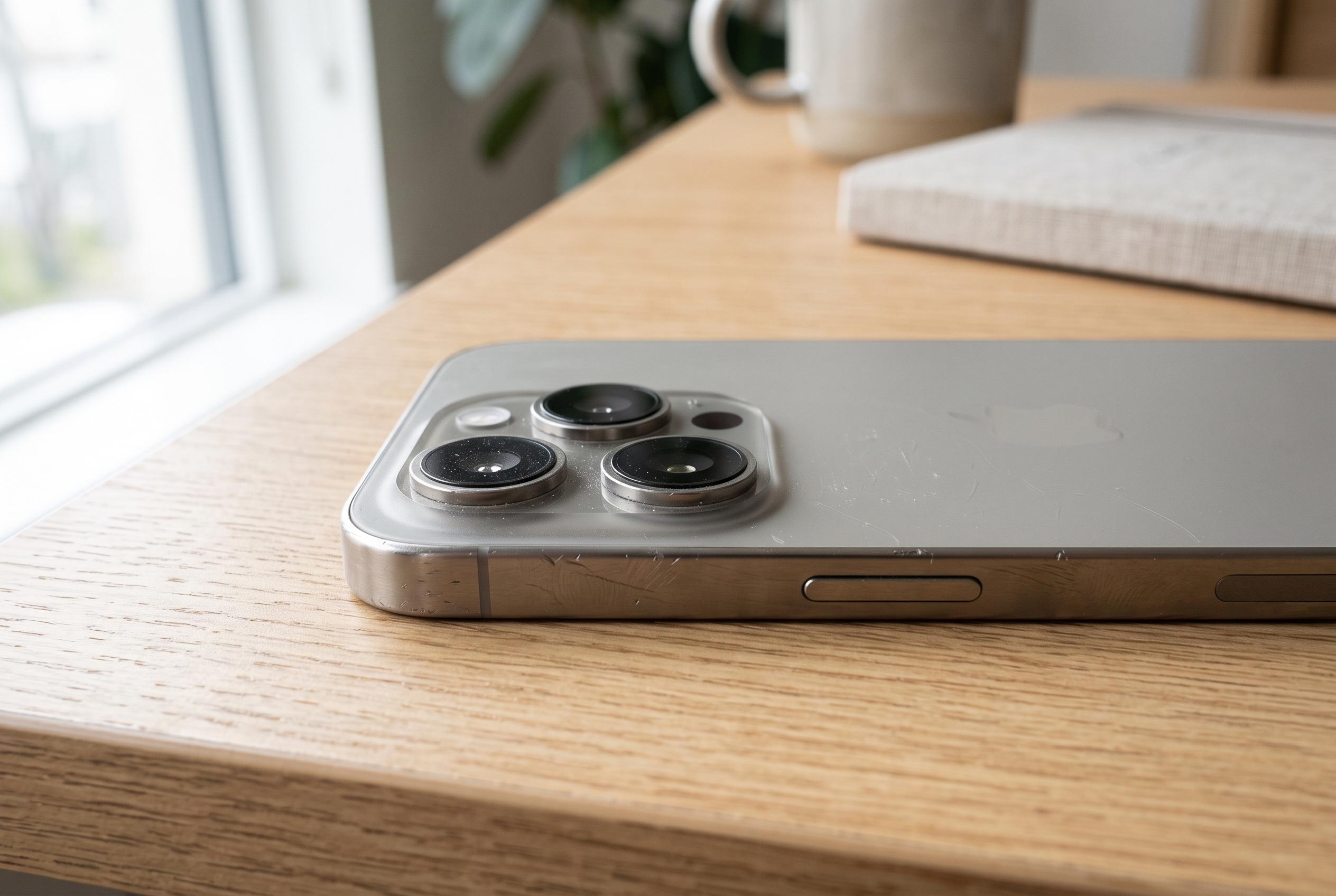

Despite surpassing expectations in long-term durability, the iPhone 17 Pro reveals vulnerabilities in its camera housing finish, with cosmetic wear concentrated around sharp edges, prompting debate over material choices and repairability.
A year of going without a case has not turned the iPhone 17 Pro into the cosmetic disaster feared during last autumn’s “scratchgate” row. But the long-term picture is not flawless either: the handset appears to shrug off much of the ordinary rubbing and bumping of daily use, while the raised camera shelf remains the part most likely to show conspicuous wear, especially where the coloured finish meets a sharp edge.
That conclusion fits awkwardly with the first wave of alarm around Apple’s redesigned Pro models. Soon after launch, Bloomberg reported scuffed demo units in Apple shops, particularly in darker finishes. Apple later told Tom’s Guide that many of the marks seen on display phones were caused by worn MagSafe risers transferring material to the handsets rather than cutting into them, and that the residue could be cleaned away. Android Authority, citing Apple’s response to CNET, said the company argued its anodisation process “exceeds industry standards”. Even so, Tom’s Guide found real-world results were mixed: John Velasco saw several small scratches appear on a Cosmic Orange iPhone 17 Pro, while another reviewer said a Deep Blue Pro Max being carried separately had stayed clear.
Independent testing has been more consistent about where the real weakness sits. MacRumors, reporting on JerryRigEverything’s scratch test, said keys and coins did not mark most of the phone, including the main rear surface, but did damage the edges of the camera plateau. iFixit reached much the same conclusion and supplied the clearest explanation. The repair site said the flaking seen there is a form of “spalling”: the anodised layer does not adhere evenly when it wraps around a relatively sharp corner, so once that edge is struck or abraded the colour can break away and expose bright metal underneath. As one iFixit expert put it, “Apple could have prevented this by making a more gradual curve and avoiding a relatively sharp corner.”
That technical explanation closely matches the year-long use test reported by ZDNET and picked up by UNIAN. In that trial, the phone spent months in jeans pockets, bags and rucksacks, and survived several drops on to carpet, wood and concrete. The front glass emerged scratched but uncracked, with the worst wear concentrated near the lower edges of the display. The more visible cosmetic damage appeared around the camera housing, where chips in the finish exposed bare aluminium. Elsewhere, however, the handset reportedly held up rather well: the rear glass remained largely intact and the rest of the unibody shell avoided major structural damage.
Colour choice appears to matter almost as much as handling. According to 9to5Mac, the new finish can look worse than it is because anodised aluminium has raw silver metal beneath the coloured surface. Once that top layer is nicked, contrast does the rest, making even a small blemish stand out more clearly than a comparable mark on titanium or glass. The same report argued that lighter shades should disguise this better, and specifically said Cosmic Orange was likely to age more gracefully than Deep Blue. Tom’s Guide’s mixed early experience broadly supports that theory, even if it does not remove the underlying vulnerability.
The trade-off for that material change is that Apple seems to have gained something useful. Tom’s Guide said the aluminium design helped the iPhone 17 Pro deliver better sustained performance than both the iPhone 16 Pro and Samsung’s Galaxy S25 Ultra. iFixit found a new vapour chamber inside the phone and said its thermal tests showed the 17 Pro remaining steady at 34.8C, while the 16 Pro Max had begun to throttle at 37.8C. Ars Technica, in a broader review, treated the redesign as a function-first shift and argued that improved battery life and thermals were among the clearest benefits. In the year-long caseless test, battery health was also reported to have stayed at 96 per cent after almost 12 months, helped by an effort to keep charging between 20 and 80 per cent.
Repairability is another area where the new model looks stronger than the cosmetic debate suggested. iFixit said the iPhone 17 Pro uses a screwed-in battery tray for the first time, held by 14 Torx Plus screws, while Apple has retained electrically debonding adhesive that can be released with a 12-volt process. That combination reduces the need for prying and messy solvent work during battery replacements. The site was less enthusiastic about everything else: the smaller rear opening now leads only to the wireless charging coil rather than offering the more useful dual-entry layout seen elsewhere in the line-up, and the phone uses five different screw types, which complicates repair work.
Taken together, the evidence points to a design that is sturdier in the round than the launch-week panic implied, but still easier to blemish than many buyers of a premium phone will tolerate. The broad shell appears resistant to the usual contents of a pocket. The vulnerable part is the camera plateau, where shape and finish work against each other. That also helps explain why the controversy has centred on the Pro models: Android Authority said the apparent issue was largely confined to those handsets rather than the standard iPhone 17. For buyers who care more about sustained performance, battery life and easier servicing than about keeping a pristine finish, the compromise may be acceptable. For everyone else, a slim case with decent camera protection still looks like the simplest answer.
Disclaimer: This content is intended for informational purposes only. Readers are advised to exercise their own judgement, conduct due diligence, or consult a qualified expert before acting on any information provided.