

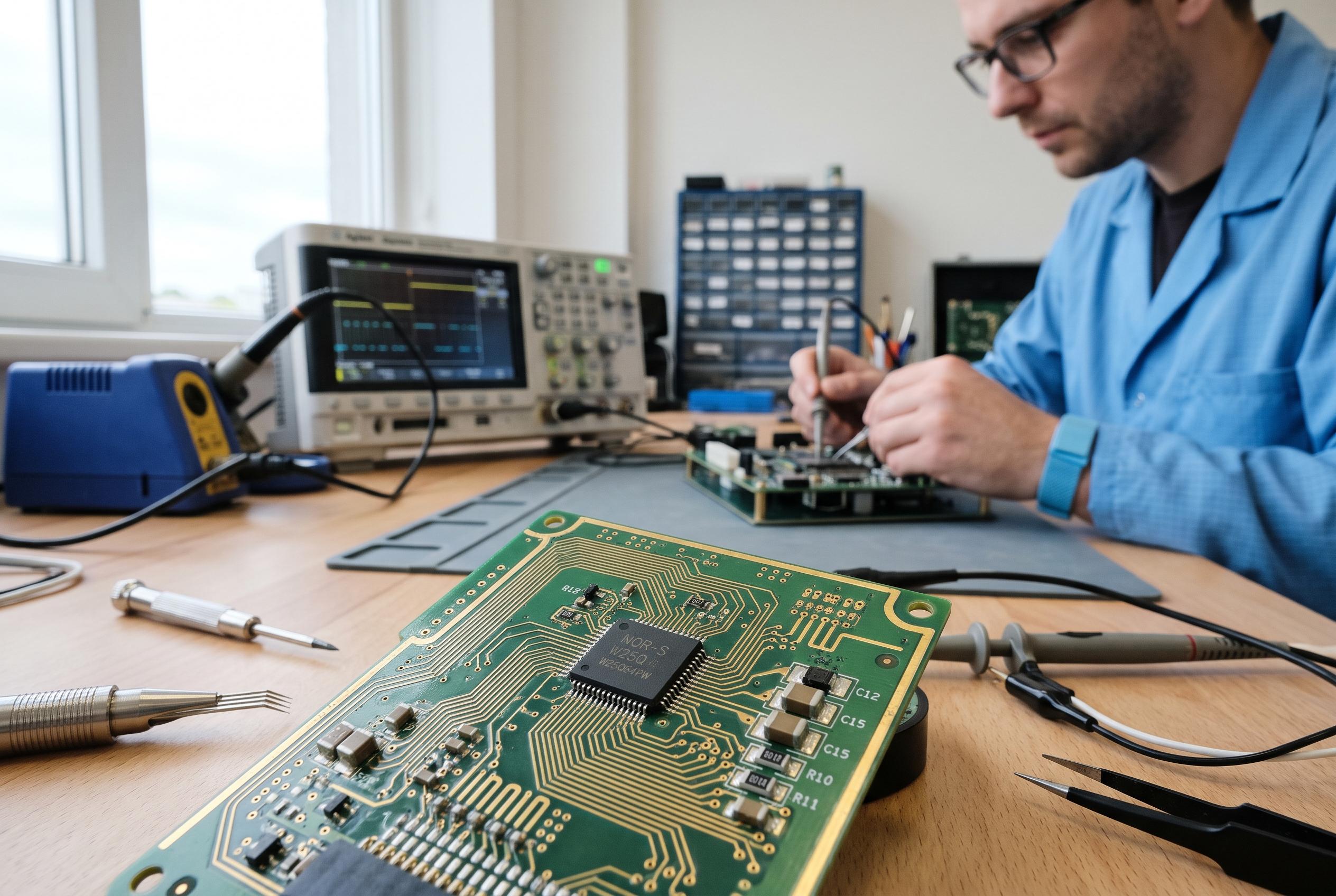

The ArmorFlash family embeds authentication, secure storage and hardware defences in memory chips, as manufacturers prepare for tougher EU cybersecurity requirements.
The European Union’s Cyber Resilience Act is forcing a shift in how connected products are built, with manufacturers moving from a model that depends on post-sale software fixes towards one that bakes security into the hardware from the outset. According to the European Commission, the regulation entered into force on 10 December 2024, with the main obligations taking effect on 11 December 2027. That timetable is already shaping design decisions in sectors where devices must remain secure over long service lives, especially as identity, update integrity and supply-chain trust become core engineering requirements. According to EE Times Asia, Macronix is positioning its NOR flash portfolio as one response to that change.
Macronix says its ArmorFlash family combines storage with security functions that would otherwise sit in a separate secure element. That approach is intended to reduce redesign work for existing systems by keeping a standard SPI connection while embedding authentication, secure regions and cryptographic controls inside the memory device itself. The company argues that this matters because attacks can target more than software: voltage, clock or temperature manipulation, bus interception and command replay can all undermine systems that rely too heavily on code-level defences.
Within the portfolio, ArmorBoot MX76 is aimed at secure start-up and code verification, while MX75 and MX78 are designed to protect data and communications. Macronix says the boot-focused part checks the integrity of flash-resident code before execution begins, including for over-the-air updates, and can support recovery if a load fails or is tampered with. The data-oriented devices add independently controlled memory regions, authenticated or encrypted reads, message authentication and monotonic counters, which help prevent rollback attacks by blocking the reuse of older software or commands.
The company also highlights hardware features that are meant to strengthen trust at the device level. These include a physically unclonable function, which derives unique identity material from tiny manufacturing variations, and physical defences such as an active metal shield and sensors that watch for abnormal voltage, temperature or clock conditions. Macronix says the design is intended to bind the flash device more closely to an authorised host system and to make probing or spoofing more difficult without adding major complexity to the board design.
Macronix says the ArmorFlash family has passed automotive reliability, functional-safety and cybersecurity requirements, including AEC-Q100 Grade 1, ISO 26262 ASIL D and ISO/SAE 21434, and that it also supports FIPS 140-2 and 140-3 aligned cryptographic expectations. The company says the parts are already in mass production and have shipped in the millions, with use in autonomous driving and advanced driver-assistance development platforms. Beyond automotive, it sees potential in industrial equipment, networking, healthcare, financial services, digital rights management and AI systems, as manufacturers look for ways to strengthen existing designs without a full platform redesign. Macronix plans to present its latest non-volatile memory technologies, including security flash, at electronica 2026 in Munich.
Disclaimer: This content is intended for informational purposes only. Readers are advised to exercise their own judgement, conduct due diligence, or consult a qualified expert before acting on any information provided.



