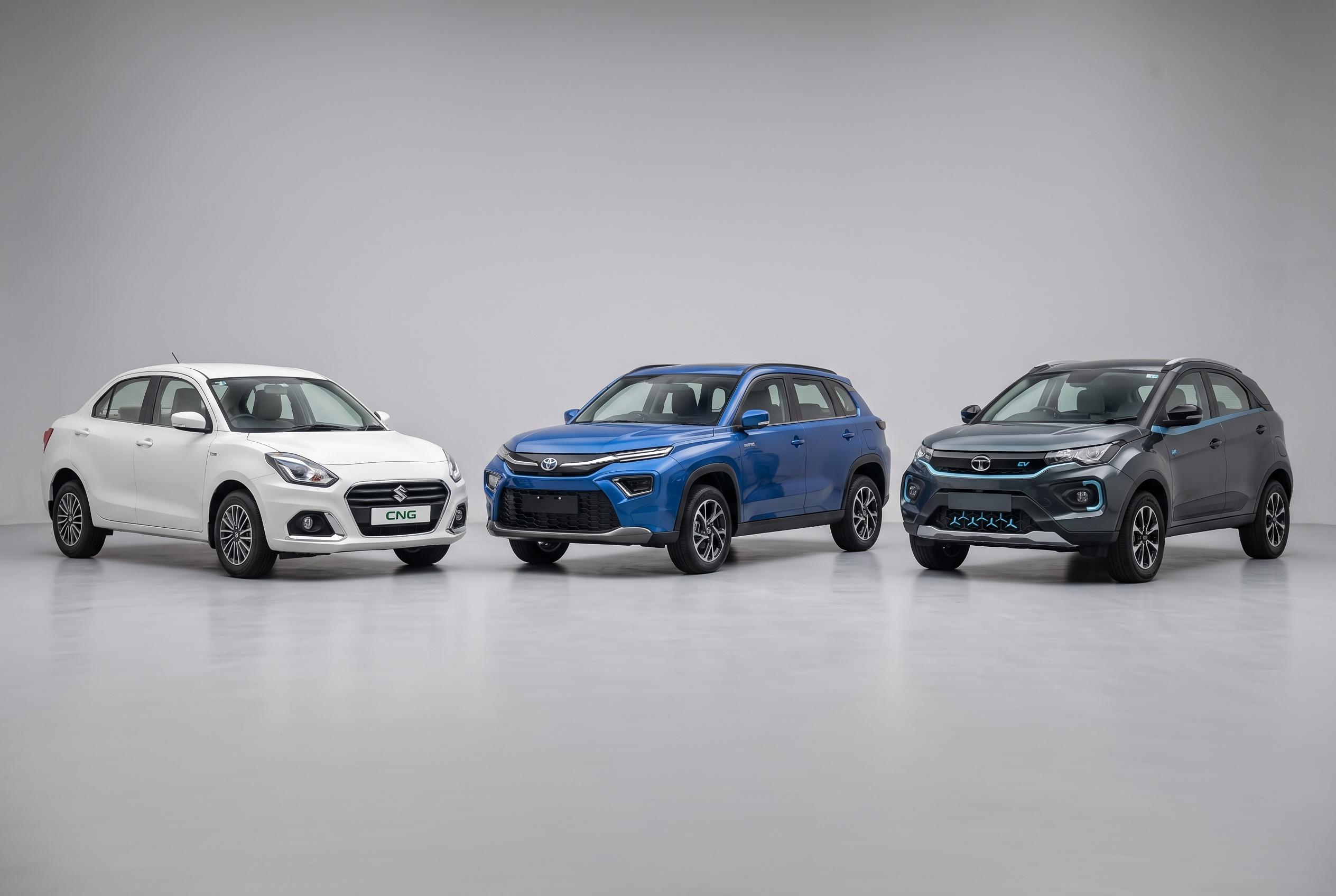

India’s passenger car market is witnessing a significant shift toward alternative fuels, with CNG, hybrids, and electric vehicles approaching petrol’s dominance amid fuel efficiency debates and policy incentives, signalling a transformative phase for the country’s automotive industry.
India’s passenger car market is showing a clear shift away from pure petrol power, with alternative-fuel models now approaching parity in showrooms. In July 2026, combined retail sales of CNG, hybrid and electric passenger vehicles accounted for 40.6 per cent of the market, only 1.1 percentage points behind petrol’s 41.7 per cent share, according to data released by the Federation of Automobile Dealers Associations. A year earlier, petrol led by 13.2 points. If the pattern continues, alternative fuels could overtake petrol for the first time in the country’s recorded retail data.
The scale of the change is reflected in the broader market as well. FADA said passenger vehicle retail sales rose to 416,555 units in July, a 19.13 per cent increase from a year earlier and the first time the category had crossed the 400,000 mark for the month of July. Overall retail volumes across vehicle categories reached 2.59 million units, up 25.89 per cent year on year, with every major segment posting its best July on record. Yet dealerships are also carrying more stock, with passenger vehicle inventory rising to 33 to 35 days, above FADA’s preferred 21-day level, a sign that supply is running ahead of retail absorption as the festive season approaches.
At the heart of the petrol decline is unease around E20, the fuel blend now sold at most stations. India advanced its 20 per cent ethanol blending target to 2025, and the transition has prompted questions from buyers about mileage, durability and long-term running costs. Reports in The Times of India and The Economic Times have said E20 can reduce fuel efficiency by about 2 to 6 per cent in some vehicles, while the oil ministry has acknowledged a possible fall of 3 to 5 per cent in some cases. Maruti Suzuki has separately said the calorific value of E20 is lower than E10 by about 3 to 3.5 per cent, which it says explains most of the difference. The government argues the trade-off is cleaner combustion, lower emissions and reduced dependence on imported crude.
That hesitation appears to be pushing buyers towards CNG. Cost is the main advantage. CNG is materially cheaper to run than petrol in most Indian cities, and that difference is large enough to shape purchase decisions for urban commuters. FADA’s data show CNG and LPG’s share of passenger vehicle retail rose from 21.38 per cent in July 2025 to 24.67 per cent in July 2026, making it the biggest gainer among all fuel types. Manufacturers have responded by expanding factory-fitted CNG options, which has reduced the reliability concerns once associated with aftermarket conversions.
Electric vehicles are also gaining ground, helped by policy rather than fuel-price arithmetic. India’s earlier FAME incentives ended in March 2024 and were replaced by PM E-DRIVE in October 2024. While that scheme mainly supports electric two-wheelers, three-wheelers, buses, trucks and ambulances, private electric cars benefit from a lower 5 per cent GST rate, compared with 18 per cent for most small internal-combustion vehicles and 40 per cent for larger ones under the current tax structure. That tax gap has improved the economics of EV ownership for car buyers and coincides with a near doubling in EV share of passenger vehicle retail, from 5.14 per cent in July 2025 to 7.90 per cent in July 2026.
Hybrids have taken a steadier path. Their share has hovered around 8 per cent for the past year, reflecting a narrower but durable appeal: better mileage than a conventional petrol car, without the need for charging infrastructure or a change in refuelling habits. Their tax treatment remains less favourable than electric cars, and industry executives have signalled that this suggests policymakers view hybrids as a transitional technology rather than a long-term priority. Even so, buyers appear to value the balance of efficiency and convenience, especially as fuel costs and policy signals become harder to ignore.
Taken together, the shift is not being driven by one factor alone. FADA’s July data point to a market where E20 concerns, lower running costs for CNG, stronger EV incentives and the practical appeal of hybrids are all reshaping consumer choice at the same time. Add a broader affordability lift from tax reforms and strong rural demand, and petrol no longer looks like the automatic default for many Indian car buyers.
Disclaimer: This content is intended for informational purposes only. Readers are advised to exercise their own judgement, conduct due diligence, or consult a qualified expert before acting on any information provided.