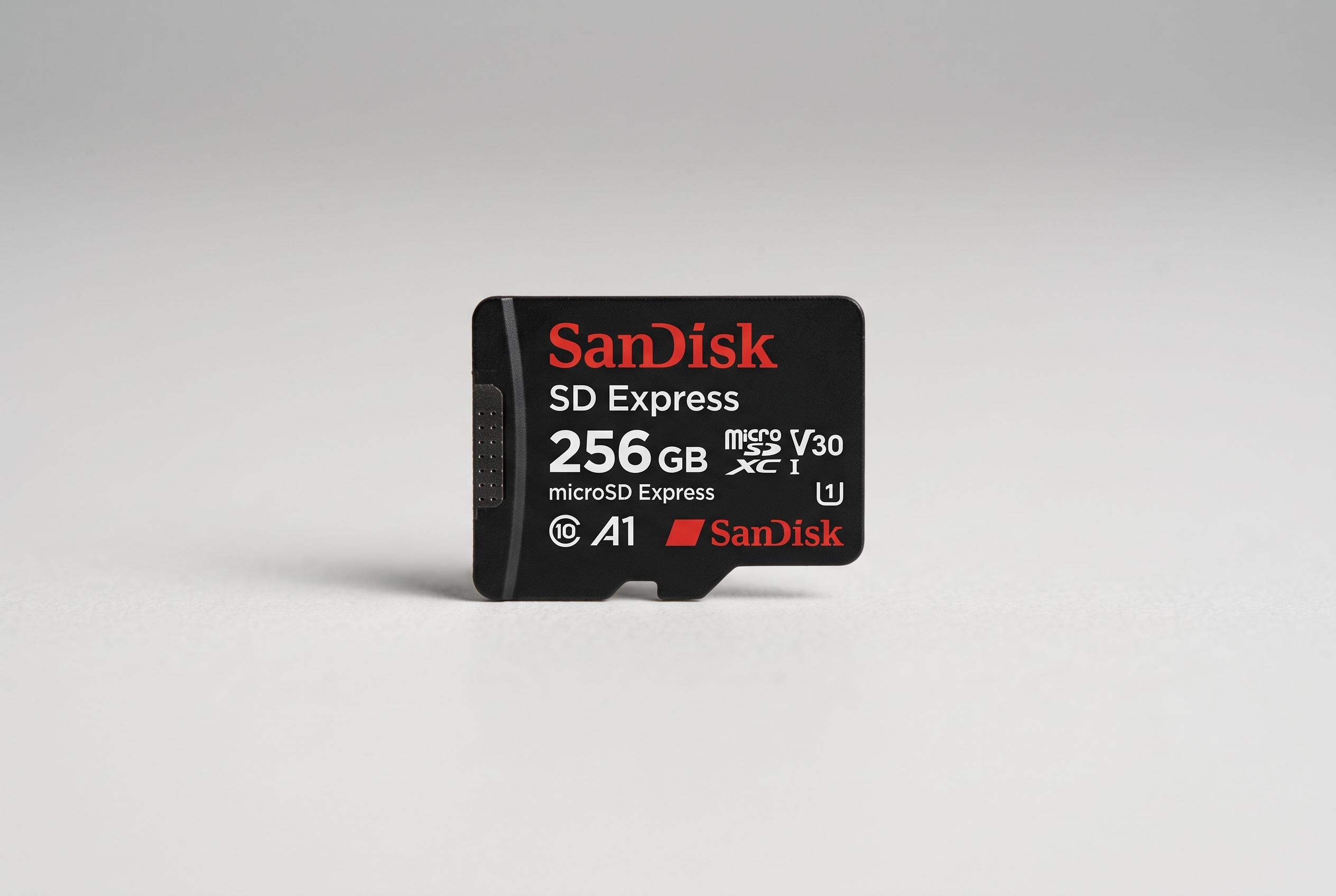

SanDisk’s new 256GB microSD Express card leverages PCIe 3.1 NVMe architecture to deliver near SSD-level read and write speeds, signalling a significant leap in removable storage technology and promising improved performance for gaming and large file transfers.
SanDisk’s 256GB microSD Express card is a clear sign that removable storage is moving beyond the limits of older microSD technology. At its best, the card behaves less like a conventional memory card and more like a compact SSD, with read speeds of up to 880MB/s and write speeds of up to 650MB/s. For handheld gaming, video capture and large file transfers, that changes the practical experience as much as the headline figures suggest.
The key difference is the underlying interface. According to product listings from B&H Photo Video and Best Buy, the card uses PCIe 3.1 NVMe architecture while still retaining compatibility with standard UHS-I devices. That means it can work in older hardware, but its full performance is unlocked only with devices and readers that support microSD Express. SanDisk says the sustained write rate does not fall below 210MB/s, which matters for long recordings and repeated transfers rather than short bursts alone.
The card is also being positioned for the Nintendo Switch 2, where microSD Express support is becoming important for game storage. GamesRadar and TechRadar both identify SanDisk’s model as a strong budget option in that market, while TechRadar’s review measured real-world speeds slightly above the quoted figures. That review also noted a simple limitation: SanDisk is offering only a 256GB version, so buyers must choose capacity and price carefully rather than scale up within the same product line.
Retail pricing is less settled. TechEblog highlighted a promotional price of $58.99, down from $74, while B&H listed the card at $74.99 and Best Buy at $79.99. The variation suggests the card is still early in its retail life, with pricing likely to remain fluid as more Express-compatible devices reach the market. For users who regularly move large game installs, 4K footage or other bulky files, the appeal is straightforward: much faster transfers in a format that still fits into existing microSD slots.
Disclaimer: This content is intended for informational purposes only. Readers are advised to exercise their own judgement, conduct due diligence, or consult a qualified expert before acting on any information provided.