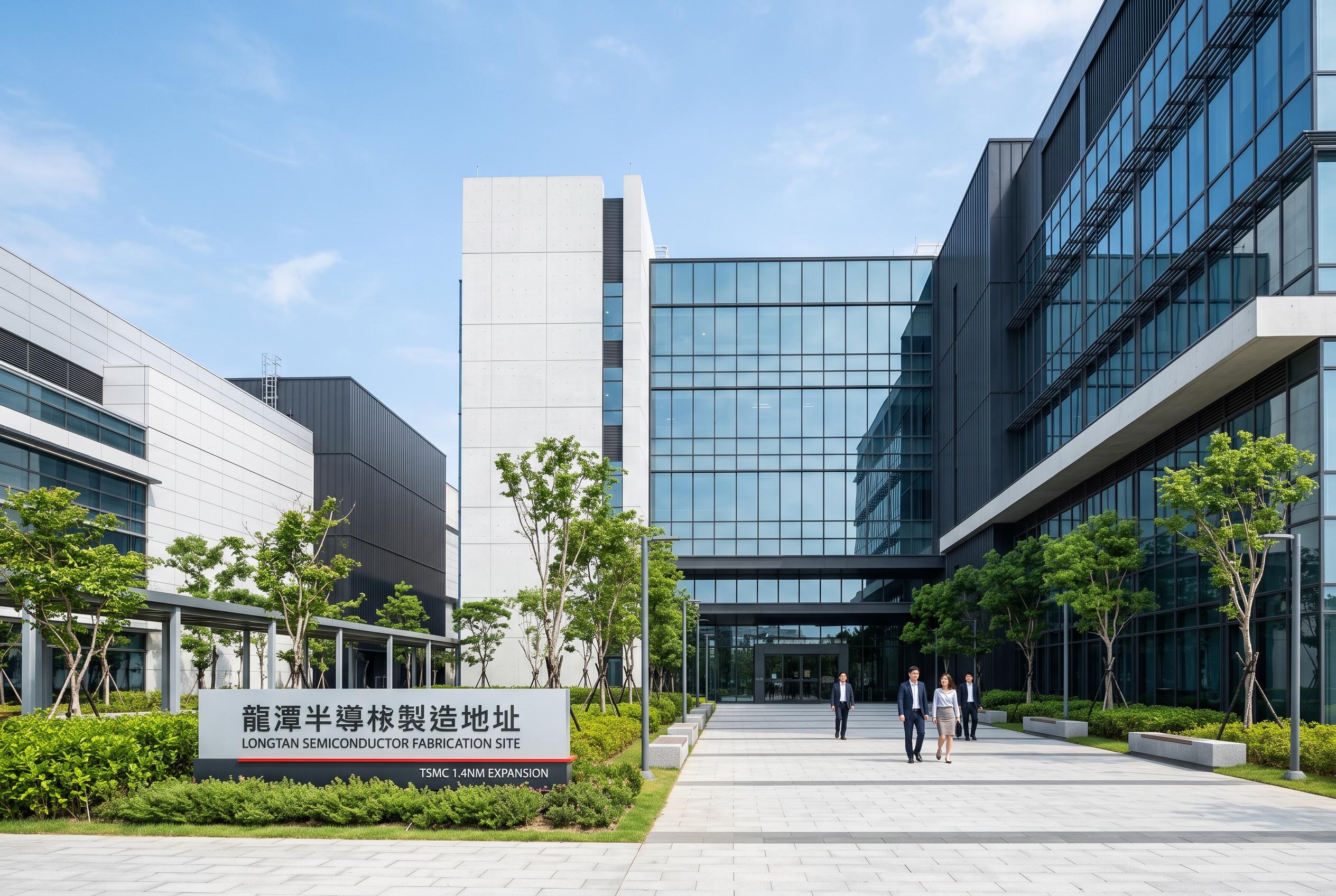

Taiwan Semiconductor Manufacturing Company has secured land in Taoyuan’s Longtan district, clearing the way for its ambitious 1.4nm fabrication plants and reinforcing Taiwan’s position as a leading hub for cutting-edge chip production amid renewed local support.
Taiwan Semiconductor Manufacturing Company has reportedly cleared a major land hurdle for its next-generation 1.4nm expansion, after local opposition in Taoyuan’s Longtan district eased and landowners reversed their earlier resistance. According to reports cited by Taiwanese media, the company has now secured ground for two 1.4nm fabrication plants and one advanced packaging facility, reviving a project that had been thrown into doubt in 2023.
The Longtan Science Park Phase 3 plan was previously derailed by protests from residents, forcing TSMC to walk away from the site in October 2023. That earlier dispute centred on a large share of the required land being privately held by local owners, making the expansion difficult to advance until the company and authorities could regain support. Taiwan News reported at the time that the wider 1.4nm plan was intended to support research and development for nodes at 2nm and below, with mass production originally targeted for 2027 to 2028.
The renewed land access matters because TSMC’s 1.4nm programme is one of its most ambitious manufacturing projects to date. Earlier planning documents described the broader expansion as a major industrial investment with substantial economic spillover, including thousands of jobs and a significant annual output value for Taiwan. The company has also been pushing ahead with its 2nm ramp, with reports indicating that monthly output could reach 100,000 wafers by the end of 2026, underscoring how quickly TSMC is trying to move from one advanced node to the next.
The latest land development also fits into a wider build-out across Taiwan. Separate reports in 2025 said TSMC was preparing a large multi-fab investment strategy that included both wafer production and advanced packaging, reflecting how the company is pairing leading-edge chipmaking with the back-end capacity needed to support complex systems-on-chip. That is especially relevant for customers such as Apple, which is expected to depend on TSMC’s most advanced process technology for future iPhone chips if the 1.4nm timetable holds.
Disclaimer: This content is intended for informational purposes only. Readers are advised to exercise their own judgement, conduct due diligence, or consult a qualified expert before acting on any information provided.