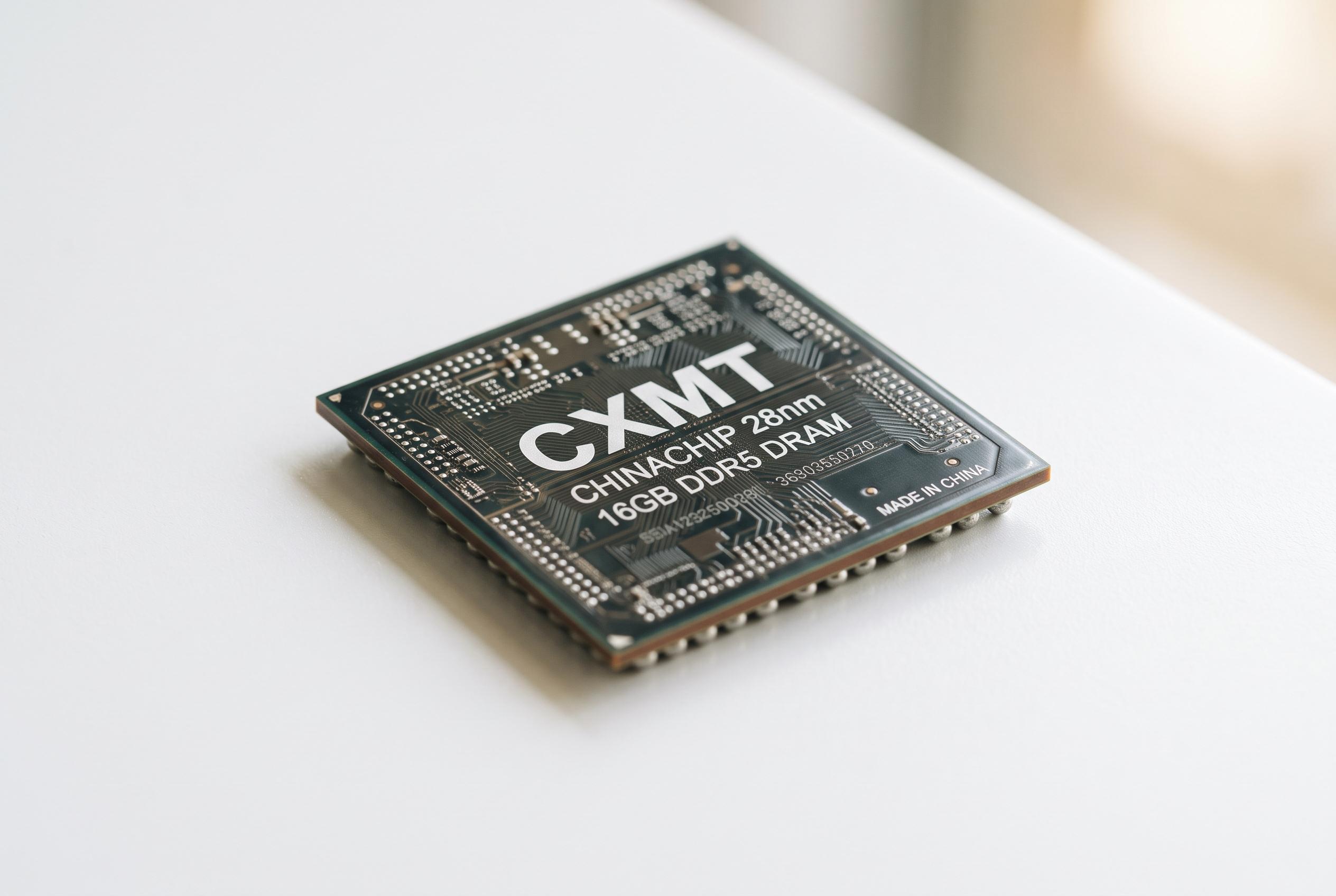

A US-led attempt to curb China’s AI ambitions by restricting advanced semiconductors has unexpectedly boosted domestic industry, fuelling CXMT’s market debut and signalling Beijing’s strategic shift towards self-sufficiency in chip manufacturing.
Washington’s attempt to curb China’s artificial intelligence ambitions by restricting access to advanced semiconductors may have had an unintended effect: it helped propel a domestic champion to the top of the mainland market. CXMT Corporation, China’s largest DRAM maker, has become the latest symbol of Beijing’s push for chip self-sufficiency after completing a major listing on Shanghai’s STAR Market and drawing intense investor demand. According to the Shanghai Stock Exchange and China’s securities regulator, the company’s flotation was approved and advanced through the exchange’s review process in a matter of months, far faster than a conventional listing.
The offering has been framed in China as more than a routine capital raise. CXMT sought to finance technology upgrades and expand capacity in a sector that Beijing considers strategically vital. The company’s debut came after a period of support from regulators and state-backed funds, underscoring how tightly China is now linking market mechanisms with industrial policy. The STAR Market, created in 2019 to back high-tech and strategic companies, was built precisely for such listings.
On its first day of trading, CXMT’s shares surged by as much as 466%, according to market reports, briefly making it the most valuable listed company in mainland China by market capitalisation. Some accounts put the increase even higher, reflecting the volatility around the debut and the intense scarcity value attached to domestic chipmakers. The company’s fundraising was also notable by size: reports said the deal raised about 29.5 billion yuan, while other coverage described the placement as closer to 66.6 billion yuan, including the full value of shares sold in the transaction.
The wider significance lies in what this says about China’s response to US export controls. Chris Miller, author of Chip War and a professor at Tufts University, told Bloomberg that US firms still benefit from deeper capital markets, but he also noted that China’s financing costs are falling relative to American peers. That gap matters in semiconductor development, where long investment cycles and heavy capital spending can decide who scales first. Industry data cited by UBS suggests Chinese AI models are already being trained at far lower cost than leading Western systems, while domestic listing plans for firms such as DeepSeek, Moonshot AI, Z.AI and MiniMax point to a growing pipeline of state-backed and market-backed technology financing. In that sense, the policy meant to slow China’s AI advance may have helped create the financial and industrial conditions for its next phase.
Disclaimer: This content is intended for informational purposes only. Readers are advised to exercise their own judgement, conduct due diligence, or consult a qualified expert before acting on any information provided.