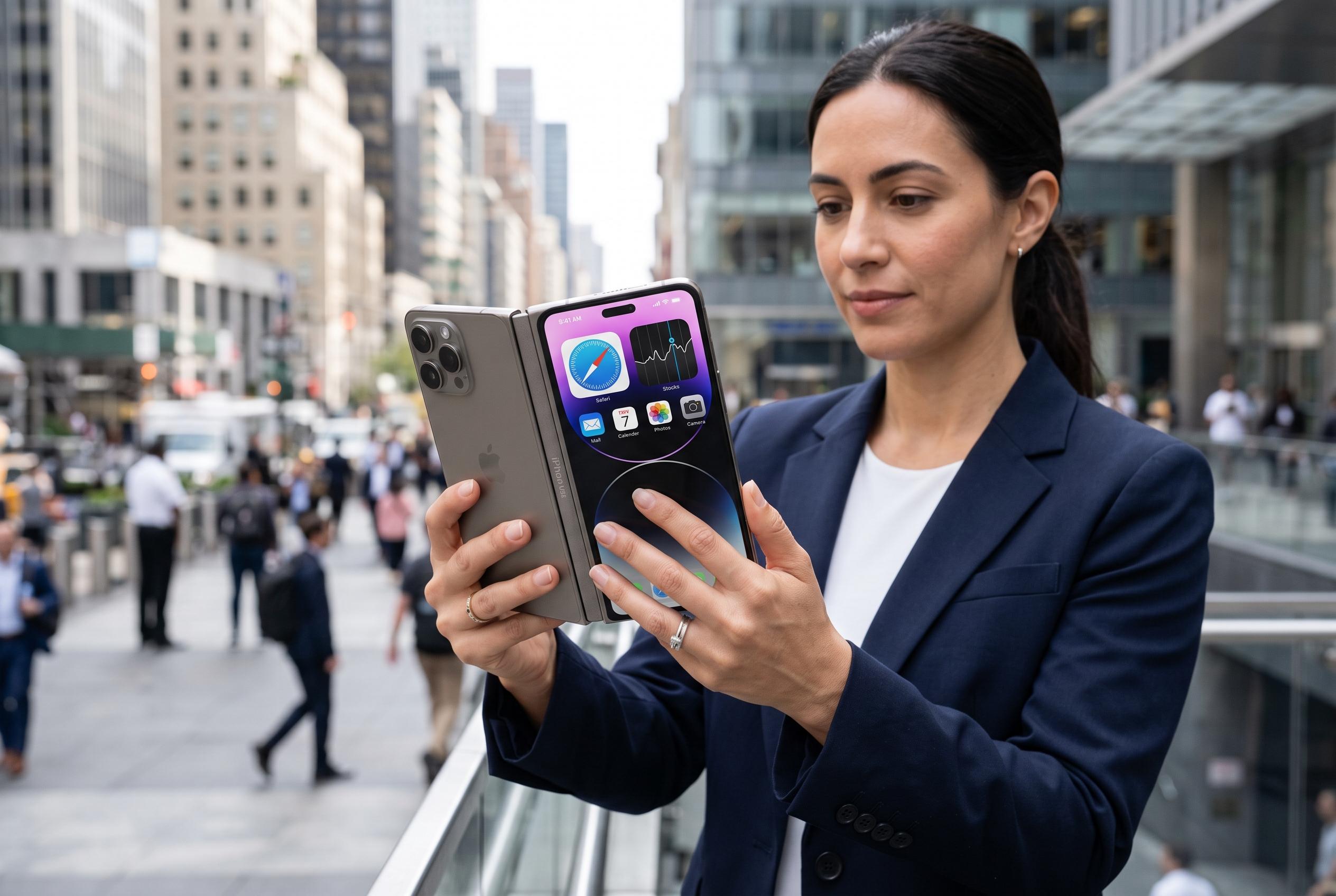

As Apple prepares to launch the iPhone Ultra, industry experts emphasise the importance of solving key practical challenges, such as ergonomics, durability, and software integration, to ensure the foldable device’s success in the competitive market.
Apple is widely expected to enter the foldable market with an iPhone Ultra, but the real test will not be novelty. It will be whether the device solves the practical problems that have held back folding phones since Royole’s FlexPai first arrived and then failed to find a broad audience. Android Authority argues that Apple can borrow heavily from the best ideas in the category, yet still faces the same basic challenge every maker has faced: making a foldable feel like a proper everyday phone rather than a fragile experiment.
The first requirement is simple ergonomics. A folding handset must be comfortable when closed, not just impressive when opened. Android Authority points to wider, more usable designs such as OPPO’s Find N line as a better model than the tall, narrow approach taken by some rivals. Reports cited by Tom’s Guide suggest the iPhone Ultra could be about 4.5mm thick when unfolded, with a design that prioritises a thinner, more pocketable feel. That would matter more than chasing the absolute slimmest frame on the market. Durability would matter just as much, with proper dust and water resistance likely to be a basic expectation rather than a bonus.
The display itself will be the centrepiece. Tom’s Guide says the iPhone Ultra is expected to use a 7.8-inch inner screen and a 5.4-inch cover display, while Android Authority argues that Apple needs a panel that feels nearly crease-free in daily use. That is one area where current Android foldables still draw criticism, even as the technology has improved. TechRadar reports that Apple has been working through hinge issues and display refinements, which suggests the company is treating the foldable screen as a mechanical and visual problem, not just a specification.
Software may decide whether the phone feels useful or merely clever. Android Authority says Apple’s iPad-style multitasking tools, split-screen layouts and adaptive interfaces would suit a larger folding canvas. TechRadar has pointed to WWDC 2026 clues, including references in iOS 27 beta code and Apple’s push for adaptable apps, as signs the company is already preparing developers for a new form factor. That matters because a foldable only works when apps shift cleanly between the outer screen and the inner display without forcing users to fight the interface.
There is also the question of input and battery life. Android Authority makes a case for Apple Pencil support, even though Apple has historically resisted stylus use on phones. That looks unlikely, but it underlines the broader point: a foldable should do more than mirror an existing iPhone. Battery capacity will also be under scrutiny, since dual displays create a heavier power burden. Tom’s Guide says the device could launch with an A20 chip, dual 48MP rear cameras, Touch ID and a price in the $2,400 to $2,500 range, although TechRadar reports suggest the timetable is still fluid and could slip into 2027 if hinge problems are not resolved.
In that sense, the iPhone Ultra may not need to be perfect. It needs to be credible. If Apple delivers a foldable with strong build quality, a restrained crease, reliable software and battery life that holds up, it could reset expectations for the category. If it arrives with too many compromises, it will simply join the long list of expensive foldables that impressed early adopters but never truly broke through.
Disclaimer: This content is intended for informational purposes only. Readers are advised to exercise their own judgement, conduct due diligence, or consult a qualified expert before acting on any information provided.