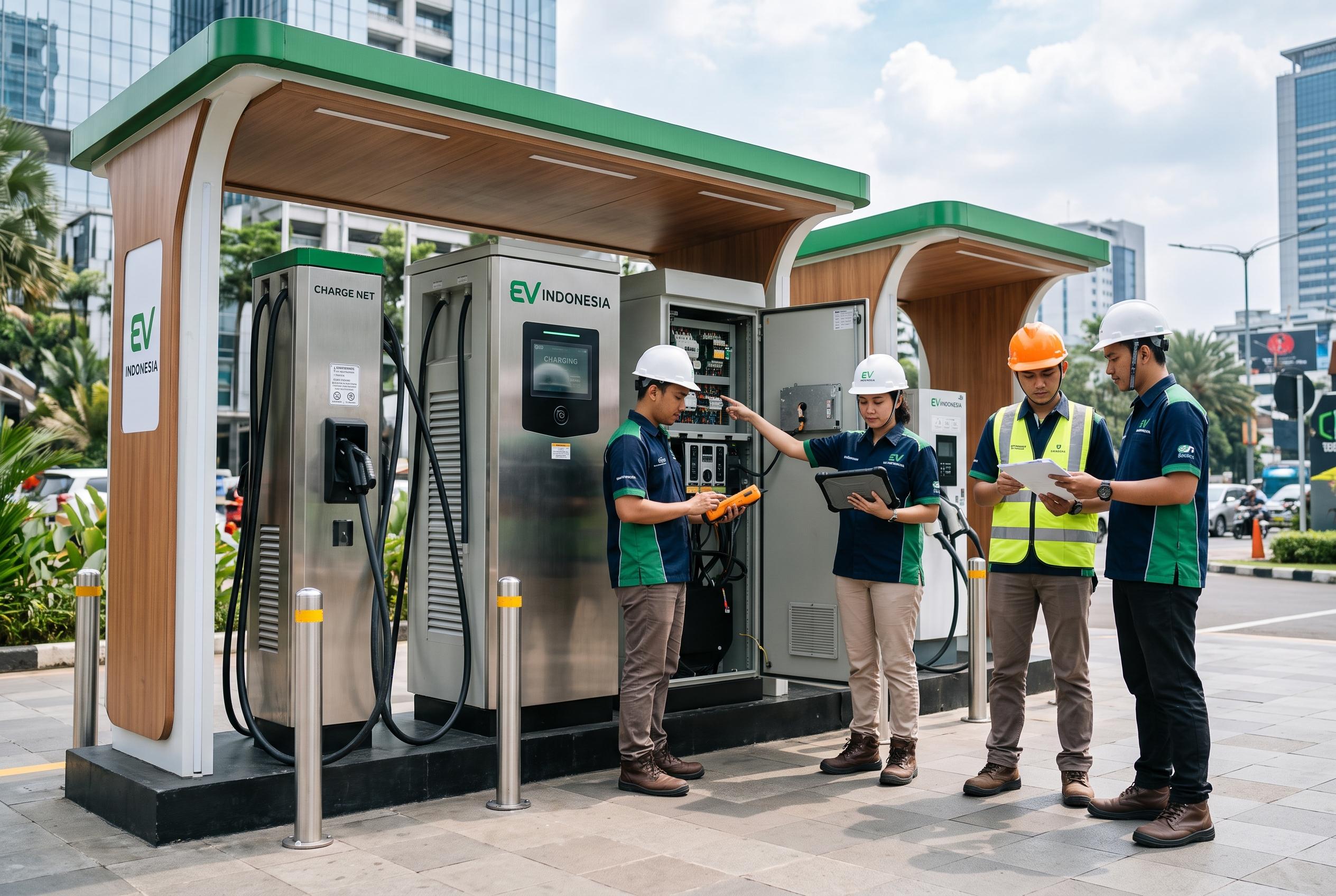

PT Len Industri seeks to unify component manufacturing, charging networks, and safety standards to ensure a durable electric vehicle transition in Indonesia, as government policies and local industry capabilities evolve.
PT Len Industri is seeking to position reliable electrical engineering and safety design as the benchmark for Indonesia’s electric vehicle ecosystem, with its chief executive arguing that the country needs more than chargers and factories if it wants a durable transition. Joga Dharma Setiawan said in Jakarta on Monday that the company is aiming to unify component manufacturing, charging networks and after-sales support under a single technical standard, so the system is safe, consistent and ready for future demand.
Setiawan said the central problem in modernising infrastructure is fragmentation, and argued that system integration is the discipline needed to manage it. He said PT Len Industri’s experience in defence and energy, where it has worked on low-error systems and large-scale power projects, gives it a basis for extending similar reliability to mobility and data connectivity. The company, which was founded in 1991 and now serves as the parent of the DEFEND ID defence holding, also points to its work on command-and-control systems and national solar power projects as evidence of that capability.
The timing matters because the government has recently reset the tax and incentive framework for battery-based electric vehicles. According to the text of Home Affairs Regulation No. 11 of 2026, in force from March 31 and applied from April 1, the new rules provide the national basis for provincial governments to calculate motor vehicle tax and ownership transfer fees, while keeping incentives in place for battery electric vehicles. Analysis of the regulation indicates that the updated scheme is intended to clarify how tax relief is applied across the sector.
Economist Adhitya Wardhono has warned that stimulus for the electric vehicle market will only have a lasting effect if it is matched by deeper domestic industrial capability. He said incentives can lift sales and investment, but their value is limited if Indonesia remains reliant on imported components. Wardhono said the policy should be tied to local supplier development, battery production, charging infrastructure and skills improvement, so higher demand translates into more domestic value added rather than simple assembly.
Disclaimer: This content is intended for informational purposes only. Readers are advised to exercise their own judgement, conduct due diligence, or consult a qualified expert before acting on any information provided.