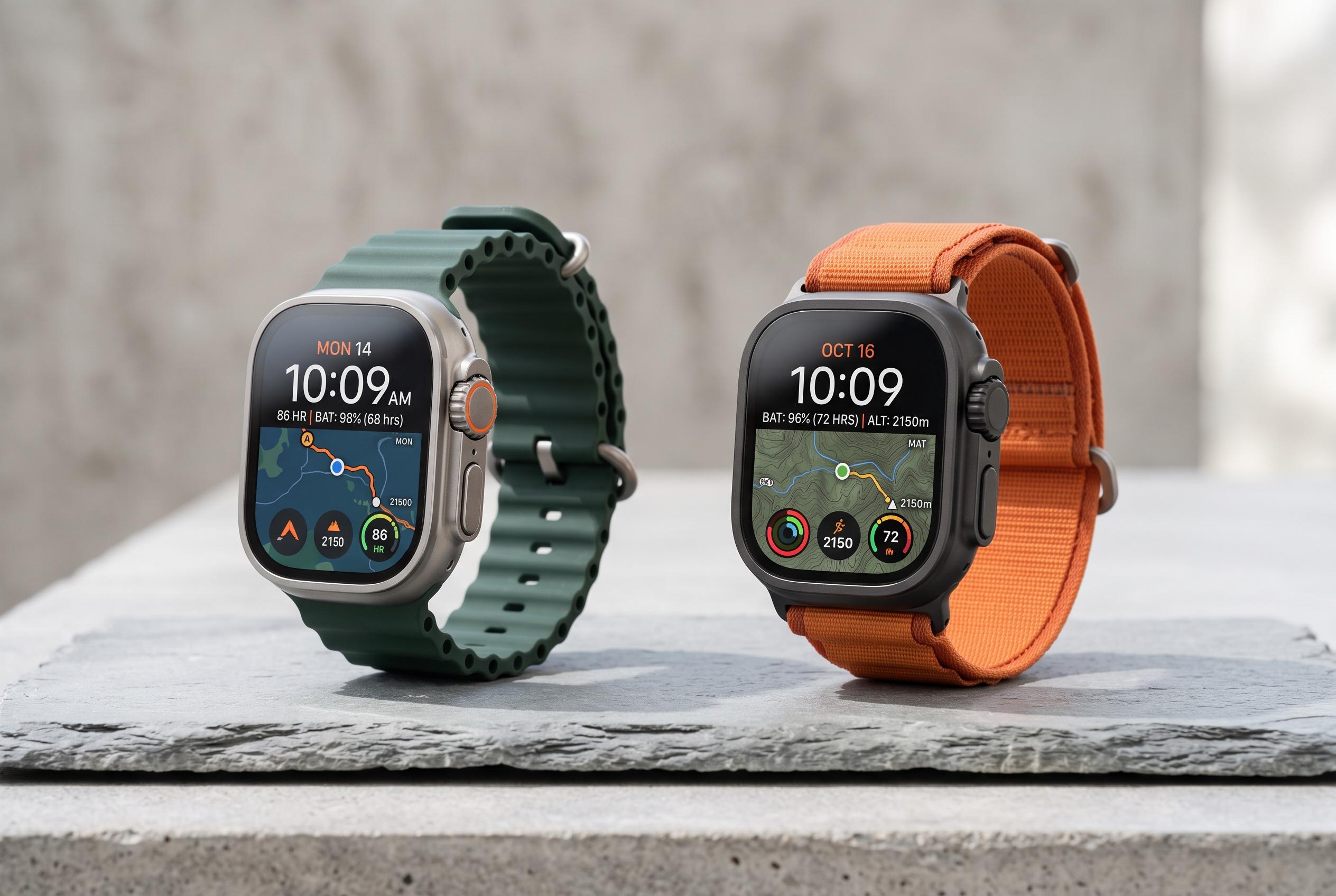

Samsung’s Galaxy Watch Ultra 2 introduces a sharper, more practical design with extended battery life and new activity support, intensifying the smartwatch competition with Apple’s Ultra 3, where user ecosystem ultimately influences choice.
Samsung’s Galaxy Watch Ultra 2 arrives as a sharper, slightly more practical take on the company’s rugged flagship formula, but it is still the broader ecosystem that will decide the buyer. In a direct comparison with Apple’s Watch Ultra 3, the two watches land close enough on paper to make the choice hinge less on raw specifications than on whether the user lives in Android or iPhone territory. Samsung launched the Ultra 2 in July 2026 with a redesign aimed at comfort, speed and endurance, while Apple’s Ultra 3, introduced in September 2025, remains the bigger-screened option with the strongest tie-in to the iPhone.
The Galaxy Watch Ultra 2 keeps Samsung’s cushion-style case but trims the profile and lowers the weight, which should make it easier to wear for long periods. According to Samsung’s launch material as reported by SamMobile, the watch uses Grade 4 titanium, a 5,000-nit display and a larger battery than the previous model, while PhoneArena lists 64GB of storage, dual-frequency GPS, LTE and 10ATM water resistance with IP69K, MIL-STD-810H and EN13319 certification. Apple’s Watch Ultra 3 takes the opposite approach: a 49mm Grade 5 titanium case, a 1Hz always-on LTPO3 display with wide-angle OLED and a brighter, more spacious rectangular screen.
Software is where the choice becomes most decisive. Samsung pairs Wear OS 7 with One UI 9 Watch and the Snapdragon Wear Elite chip, and that combination is designed to work closely with Google services and Samsung’s own tools. SamMobile says the watch adds trail running and diving support, including Mares Dive app integration, while Samsung positions the device for AI-assisted health and activity tracking. Apple’s Ultra 3 runs watchOS 26 on the S10 chip and leans on the tighter integration of the Apple ecosystem, with features such as ECG, blood oxygen monitoring, sleep tracking, 5G connectivity and advanced health insights.
Battery life remains one of Samsung’s stronger arguments. The Galaxy Watch Ultra 2 is rated for up to 80 hours with always-on display disabled, and Samsung also highlights faster charging. Apple’s Watch Ultra 3 is rated for up to 42 hours in normal use and up to 72 hours in Low Power Mode, which is still strong for a premium smartwatch, particularly given Apple’s emphasis on fast top-ups and more advanced power management. For buyers who spend long stretches outdoors or away from a charger, Samsung appears to offer more endurance headroom.
Health and fitness features are now deep enough on both watches that the real difference is in emphasis. Samsung has added broader guidance tools such as trail running support, body composition tracking and dive-related functions, pushing the Ultra 2 towards users who want more adventure-oriented feedback. Apple, meanwhile, focuses on a more established health stack, with sleep insights, hypertension notifications, ECG and blood oxygen monitoring, plus training tools aimed at serious exercise tracking. The practical distinction is simple: Samsung is trying to widen the range of supported activities, while Apple is tightening the connection between workout data and the wider health ecosystem.
Price may settle the argument for many buyers. Samsung’s starting price of $699 undercuts Apple’s $799 by $100, and that gap is more meaningful when it is paired with Samsung’s larger battery and brighter display. Apple’s premium is easier to justify only if the buyer wants iPhone-only features such as satellite connectivity, Apple Pay and the most seamless cross-device experience. In the end, the Galaxy Watch Ultra 2 looks like the stronger value for Android users, while the Watch Ultra 3 remains the more natural choice for anyone already invested in Apple’s hardware and services.
Disclaimer: This content is intended for informational purposes only. Readers are advised to exercise their own judgement, conduct due diligence, or consult a qualified expert before acting on any information provided.