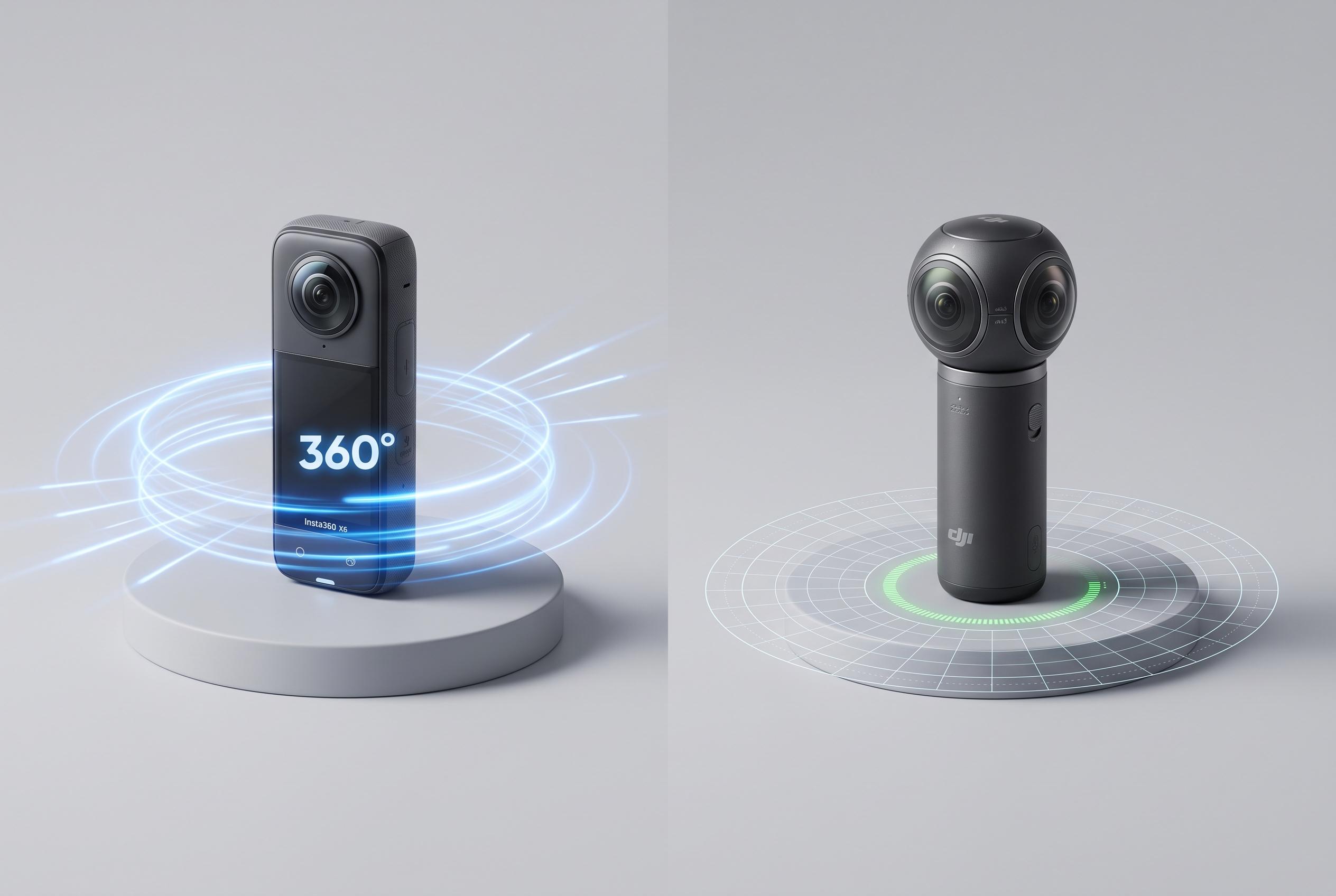

As Insta360 prepares to launch its innovative X6 model and DJI upgrades its Osmo 360 with refinements, the market splits into two distinct paths, one focused on cutting-edge imaging and flexibility, the other on professional reliability and long-duration recording.
Insta360’s forthcoming X6 and DJI’s Osmo 360 show how quickly the 360-degree camera market is splitting into two different strategies. According to Tech Court, DJI is leaning towards refinement, with longer battery life, replaceable lenses and 8K recording at 60fps with 10-bit colour, while Insta360 is pushing harder on new imaging features, AI-assisted processing and underwater use. That contrast matters because both cameras are aimed at creators who need reliable stitched footage, strong stabilisation and practical tools for difficult shooting conditions.
The DJI model is built around continuity rather than reinvention. DJI says its Osmo 360 uses 1-inch 360-degree imaging and native 8K/50fps recording, with 120MP stills, 10-bit colour and D-Log M support for grading. It also advertises 100 minutes of continuous recording at 8K/30fps, helped by large 2.4μm pixels designed to improve detail and low-light performance. The company also positions the camera as part of its magnetic quick-release ecosystem, which should make mounting and accessory use simpler for field work.
Insta360’s X6 is shaping up as the more experimental device. Digital Camera World reported that it will use dual custom one-inch Sony sensors and three AI chips, a combination intended to improve low-light capture and processing. Leaked specifications cited by Gadgets 360 and Gizmochina point to 8K recording at up to 50fps, 120MP 360-degree photos, an OLED touchscreen with up to 1,200 nits of brightness and a 2,600mAh battery. Gizmochina also reported a more compact redesign, closer in shape to a conventional action camera, while the company’s teaser material suggests underwater and low-light shooting support.
Availability may prove as important as specifications. Tech Court said Insta360 has confirmed U.S. availability for the X6, while DJI’s U.S. position remains uncertain because of possible FCC-related restrictions. That could give Insta360 an immediate commercial advantage in a market where buyers often care as much about warranty support and retail access as they do about sensor size or codec options. For creators planning a purchase around a launch date, the X6 is due on August 12, 2026, whereas DJI’s model is already being sold in selected regions.
For buyers, the decision comes down to priorities rather than a simple winner. DJI appears to be targeting professionals who value predictable performance, longer recording runs and a mature accessory system. Insta360 is aiming at users who want more aggressive imaging upgrades, stronger low-light results and broader environmental versatility. In practice, the better camera will be the one that matches the shoot: DJI for steadier, production-led work; Insta360 for creators who want the newest features and, at least in the U.S., easier access.
Disclaimer: This content is intended for informational purposes only. Readers are advised to exercise their own judgement, conduct due diligence, or consult a qualified expert before acting on any information provided.