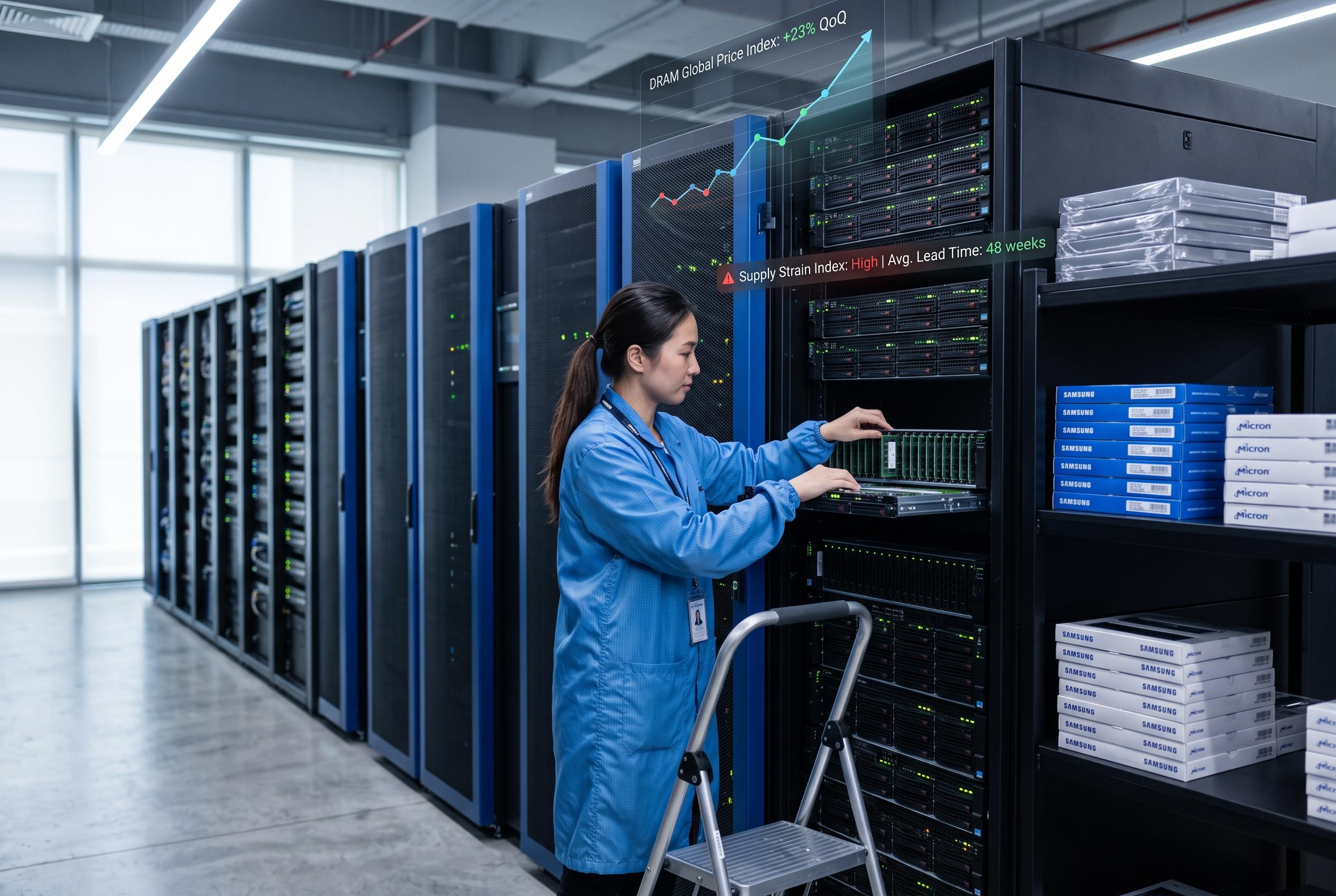

The global memory chip crunch, intensified by AI demand, is disrupting product launches, elevating prices, and prompting strategic shifts among industry giants like Apple, Samsung, and SK Hynix, raising questions about market stability and competition.
The global shortage of memory chips is no longer a narrow supply-chain story. It is now shaping product launches, pricing and manufacturing plans across the technology sector. According to reporting by Tom’s Hardware, Apple is facing delays to the iPhone 18 Pro because of DRAM shortages, with about $1 billion worth of processor wafers reportedly waiting for packaging while the company struggles to secure enough memory for its A20 Pro and C2 chips. The broader message is clear: the market for DRAM, NAND flash and high-bandwidth memory has tightened to the point where even the biggest buyers are being forced to compete for capacity far earlier than before.
The squeeze is being driven in large part by artificial intelligence. Samsung and SK Hynix have warned that shortages could last until at least 2027, while SK Hynix chief executive Kwak Noh-jung has said 2027 may be the worst year for the industry and that the crunch could extend to 2030. That reflects the way AI infrastructure consumes memory at scale. High-bandwidth memory, or HBM, is essential for AI accelerators and is costly and complex to make. As chipmakers reallocate wafer capacity towards HBM, the wider DRAM market is tightening too, leaving less for PCs, phones and other consumer hardware.
The effect on pricing is already visible. Samsung, according to recent earnings coverage, said it is shifting more of its memory sales away from the volatile spot market and towards long-term contracts with large data-centre clients, with advance payments and price floors becoming more common. That approach may stabilise revenues for suppliers, but it also signals a structural change in how memory is sold. Samsung also reported record profits, helped by rising DRAM and NAND prices, even as its mobile and display businesses were hurt by higher component costs. Analysts at Gartner have forecast higher PC prices and weaker shipment volumes as the shortage filters through to consumers.
For device makers, the timing is awkward. Tom’s Hardware reported that Apple is now having to manage supply pressure from Micron, SK Hynix and Samsung, while also seeking more flexibility in where it sources memory. The company has reportedly looked to ease constraints by pushing for access to ChangXin Memory Technologies, a Chinese supplier that faces U.S. national security scrutiny. For lower-cost devices, the outlook is even harsher. When memory takes up a larger share of the bill of materials, margins collapse quickly, and the cheapest phones may become increasingly difficult to build at profitable prices.
There is also a more uneasy question hanging over the market: whether this is only a supply crunch or something closer to disciplined scarcity. A class-action lawsuit filed in June 2026 alleges that Samsung, SK Hynix and Micron coordinated production in ways that helped push DRAM prices sharply higher. The companies have a history in this area: Samsung and SK Hynix both pleaded guilty to criminal DRAM price fixing in 2005. No court has ruled on the latest claims, and the surge in AI demand is unquestionably real. But with three firms controlling most of the market, record profits across the sector and customers reserving supply years ahead, the line between normal market forces and something more strategic is becoming harder to define.
Disclaimer: This content is intended for informational purposes only. Readers are advised to exercise their own judgement, conduct due diligence, or consult a qualified expert before acting on any information provided.