
Samsung launches the Galaxy Z Fold 8 with a distinctive passport-shaped design, delivering a compact outer display, a tablet-like inner screen, and flagship performance , but at a high price and with some usability questions.
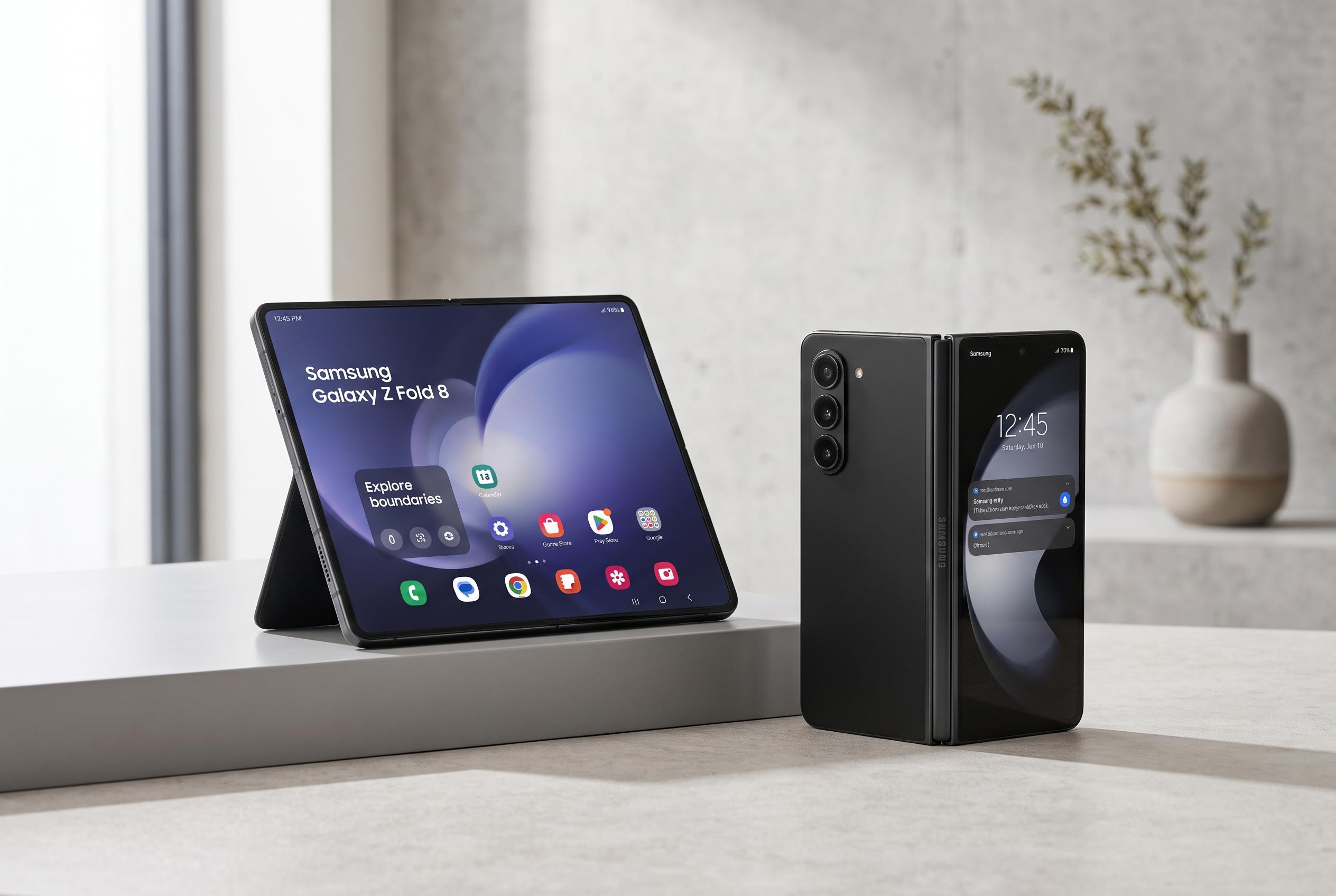
Samsung’s Galaxy Z Fold 8 is a striking departure for the company’s foldable line: shorter, wider and shaped more like a passport than a conventional handset. The design gives the inside display a more tablet-like feel, with a 4:3 panel that is closer to an iPad mini than to earlier book-style foldables, but it also raises the question of whether Samsung has made the closed phone too awkward to use. The device launched alongside the pricier Z Fold 8 Ultra, with Samsung clearly aiming at two different kinds of buyer rather than one compromise model. According to Samsung’s launch details, both phones sit firmly in the premium bracket.
In everyday use, the new proportions are the Fold 8’s defining feature. Reviewers from Android Central and SamMobile said the device feels compact in the pocket and unusually broad in the hand, with a 5.5-inch outer screen that can still handle apps and video well, even if typing feels cramped. When unfolded, the 7.6-inch inner display is described as bright, sharp and easier to use for websites, books and split-screen work than the squarer layouts of some rivals. The trade-off is that the closed form is less natural for one-handed phone tasks, and the width makes reaching across the screen difficult.
Performance appears to be one area where Samsung has not compromised. Digital Camera World and Android Central both point to the Snapdragon 8 Elite Gen 5 chip, with up to 16GB of RAM and 1TB of storage, giving the Fold 8 flagship-class speed for gaming, multitasking and general use. Battery life is also stronger than the format might suggest: The Guardian reported around 40 hours between charges in mixed use, while Android Central said the 4,800mAh cell remains dependable despite the demanding dual-screen design. That said, some reviewers noted warmth under heavy loads, which is not unusual for a thin folding device.
Camera hardware is more limited than the price implies. The Fold 8 has two 50-megapixel rear cameras but no telephoto lens, a point raised by The Guardian, Digital Camera World and TechRadar. The main camera is judged solid in good light and the ultrawide is competent, but zoom is largely digital and loses quality quickly. TechRadar, after extensive real-world use, said the smaller Fold 8 can be the more practical photography phone than the larger Ultra because it is easier to carry and quicker to bring into action, even if the Ultra has better imaging hardware. That is a useful reminder that convenience can matter as much as sensor count.
Samsung’s software remains one of the Fold 8’s strongest arguments. The Guardian noted that One UI 9 offers flexible split-screen layouts, floating windows and up to three apps arranged across the display, while Google’s Gemini and Samsung’s own AI features add suggestions and shortcuts across the system. The phone is also rated IP48 for water resistance and Samsung says it will support updates through 31 July 2033. Repairability is better than expected for such a fragile device, though the inside screen remains expensive to replace. At £1,699, the Fold 8 is not a product for mainstream buyers. It is a finely made, technically ambitious foldable whose unusual shape may appeal to some users more than others, but its price, camera limitations and awkward closed form keep it from being an easy recommendation.
Disclaimer: This content is intended for informational purposes only. Readers are advised to exercise their own judgement, conduct due diligence, or consult a qualified expert before acting on any information provided.