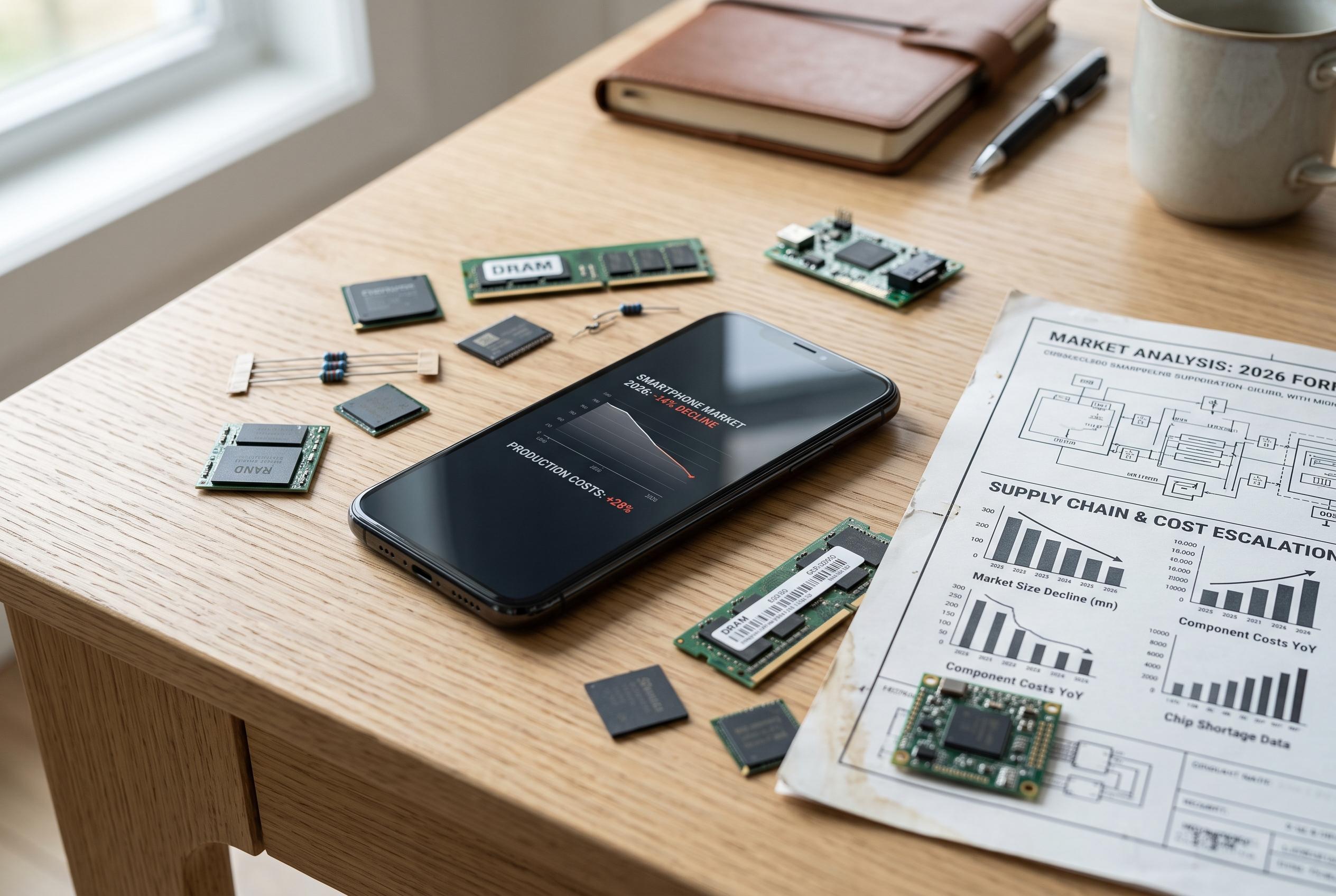

Global smartphone shipments fell again in the second quarter of 2026 amid ongoing memory chip shortages, with costs rising and demand weakening, prompting forecasts of a deeper market contraction into 2027.
Global smartphone shipments fell again in the second quarter of 2026 as a prolonged memory chip shortage continued to push up handset production costs, according to FDM CCS Insight. The research firm said the market dropped 7% year on year, marking a second consecutive quarterly decline, as manufacturers passed higher RAM and storage costs on to buyers. That has fed through to retail prices and weakened demand across much of the sector.
FDM CCS Insight expects the pressure to persist. It has forecast that the global smartphone market will decline 15% in 2026, with higher component costs likely to keep prices elevated into 2027 and 2028. The firm said the primary market, meaning phones sold new through retailers and retail partners, is under the greatest strain. It now expects that segment to fall 12% this year, while the organised secondary market, covering refurbished and warranty-backed used devices, should grow 9%.
Other industry forecasts point in the same direction. Counterpoint Research has also cut its outlook for 2026, saying smartphone shipments are likely to fall 2.1% as memory prices rise and bill-of-materials costs increase. Counterpoint said lower-priced phones are the most exposed, with Chinese brands such as Honor, Oppo and Vivo among those expected to face the sharpest shipment declines. Business Standard reported that Apple and Samsung have so far been better placed to absorb the shock by protecting flagship pricing and securing supply.
The weakness is most visible in entry-level phones, where memory now accounts for a much larger share of the total build cost. TelecomLead said some vendors are paying several times more for memory than they were a year earlier, while TechTimes reported that the second quarter was the weakest for the smartphone industry since 2013. For consumers, that has meant fewer discounts and fewer genuinely affordable new models. For the market, it points to a longer period of muted demand unless memory prices ease significantly.
Disclaimer: This content is intended for informational purposes only. Readers are advised to exercise their own judgement, conduct due diligence, or consult a qualified expert before acting on any information provided.