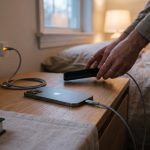

Old electronics, from phones to routers and webcams, can find new purpose in the home when repurposed for specific tasks. Expert advice reveals effective methods and common pitfalls, highlighting how discipline and realistic expectations make reusing hardware a cost-effective alternative to buying new.
The strongest case for keeping old electronics is not nostalgia but utility. Consumer guides and vendor documentation alike point to the same conclusion: ageing devices become genuinely useful again when they are stripped back to one narrow task, whether that is a fixed smart-home panel, a secondary wireless access point or a basic local camera. That approach matters because the hardware is already compromised by worn batteries, dated radios or indifferent optics, and the best results come from working within those limits rather than pretending an obsolete gadget can replace a modern premium product.
A retired Android handset is a good example. Home Assistant’s own documentation says its Android Companion app can be set as the device’s default home app, effectively turning a spare phone or tablet into a dedicated control surface that boots straight back into Home Assistant after a restart. The trade-off is deliberate: there is no ordinary app drawer, the Home button always returns to Home Assistant, and the Back button refreshes the app once the navigation stack is empty. Home Assistant also recommends creating a separate user for each kiosk-style device, which makes it easier to assign a dashboard tailored to a kitchen wall, bedside table or hallway panel without exposing the rest of a household account.
That single-purpose approach is more convincing than treating an old phone as a vague spare. TechRadar has suggested several other second lives for old handsets before they “finally break”, including use as a dash cam, sat-nav, baby monitor or indoor security camera. Its examples are practical rather than aspirational: the Android app AutoBoy Dash Cam can overwrite older footage automatically, trigger recordings through a crash sensor and back up clips to YouTube, while Alfred Home Security Camera offers intruder alerts and two-way audio on both iOS and Android. Even so, TechRadar notes the obvious constraints. Battery health, camera quality and the residual resale value of an iPhone can all affect whether reuse is smarter than selling the device or recycling it.
An ageing router is often even more valuable, because its new role is not glamorous but infrastructural. Official guidance from Linksys and consumer instructions from Tom’s Guide broadly agree on the essentials. The old unit should be reset, given a fixed management address on the existing network and stripped of routing duties so that only the main router continues allocating IP addresses. Linksys uses 192.168.1.250 as an example static address in its WRT1900AC manual, paired with a subnet mask of 255.255.255.0, and states plainly that there should be only one active DHCP server on the network. It also advises matching the SSID, security mode and password to the main wireless network so that phones and laptops can roam without the user manually switching connections.
The detail that tends to be skipped in simpler how-to pieces is radio planning. Linksys advises choosing a non-conflicting wireless channel and reminds users that, on 2.4GHz, channels 1, 6 and 11 are the non-overlapping options. Tom’s Guide adds the equally important point that placement matters as much as configuration: the repurposed router should sit roughly halfway between the main router and the dead zone so it receives a strong enough signal to rebroadcast. On dual-band kit, Tom’s Guide says the same work should be repeated for 5GHz. It is a cheap fix, but, as the publication cautioned, owners should “don’t expect Wi-Fi miracles”. A recycled router can fill coverage gaps, not conjure high-end mesh performance from ageing hardware.
The webcam conversion is the most technically demanding of the three projects, but it is also the clearest example of how far local software has advanced. Frigate’s documentation recommends using go2rtc’s FFmpeg Device support for USB cameras, starting by identifying the device path with “v4l2-ctl –list-devices”. It then suggests checking supported formats and resolutions with “ffmpeg -f v4l2 -list_formats all -i /dev/video0”. The sample configuration in the documentation uses /dev/video0 and includes a sample resolution of 1024 by 576. Where Frigate is running in a containerised environment such as Docker on TrueNAS, the project says USB passthrough must be enabled and the device paths mapped correctly between host and container before the camera can be used for roles such as detection and recording.
That documentation-backed method is more robust than the older, PC-tethered webcam surveillance model, but the older warnings still apply. Tech Advisor says reusing a webcam as CCTV is worth trying before buying a dedicated IP camera precisely because it may cost nothing if the camera is already in a drawer. However, it also lays out the compromises more bluntly than most maker guides do. A traditional webcam setup may require a computer to stay switched on continuously, which can raise electricity use and add heat stress to the machine. Placement can also be awkward because the camera is constrained by USB cable length and the location of the computer. Optical limitations matter too: reflections from windows can spoil the image in daylight, and many webcams are poor after dark unless there is reliable external lighting.
Taken together, these sources make a stronger argument for disciplined reuse than for endless tinkering. A spare phone works best when it becomes a dedicated dashboard and little else. A retired router can still earn its keep when it is demoted to access-point duty with one DHCP server left in charge. A forgotten webcam can provide useful local monitoring, but only if expectations are calibrated around lighting, cabling and always-on compute. Reuse is worthwhile when it solves an everyday problem cheaply and predictably, not when it turns into a weekend-long attempt to disguise the age of the hardware.
Disclaimer: This content is intended for informational purposes only. Readers are advised to exercise their own judgement, conduct due diligence, or consult a qualified expert before acting on any information provided.