
Rokid’s latest smart glasses demonstrate that high-tech wearables can be designed for easy repair and sustainable use, contrasting with the less repairable models from competitors like Meta and Ray-Ban.
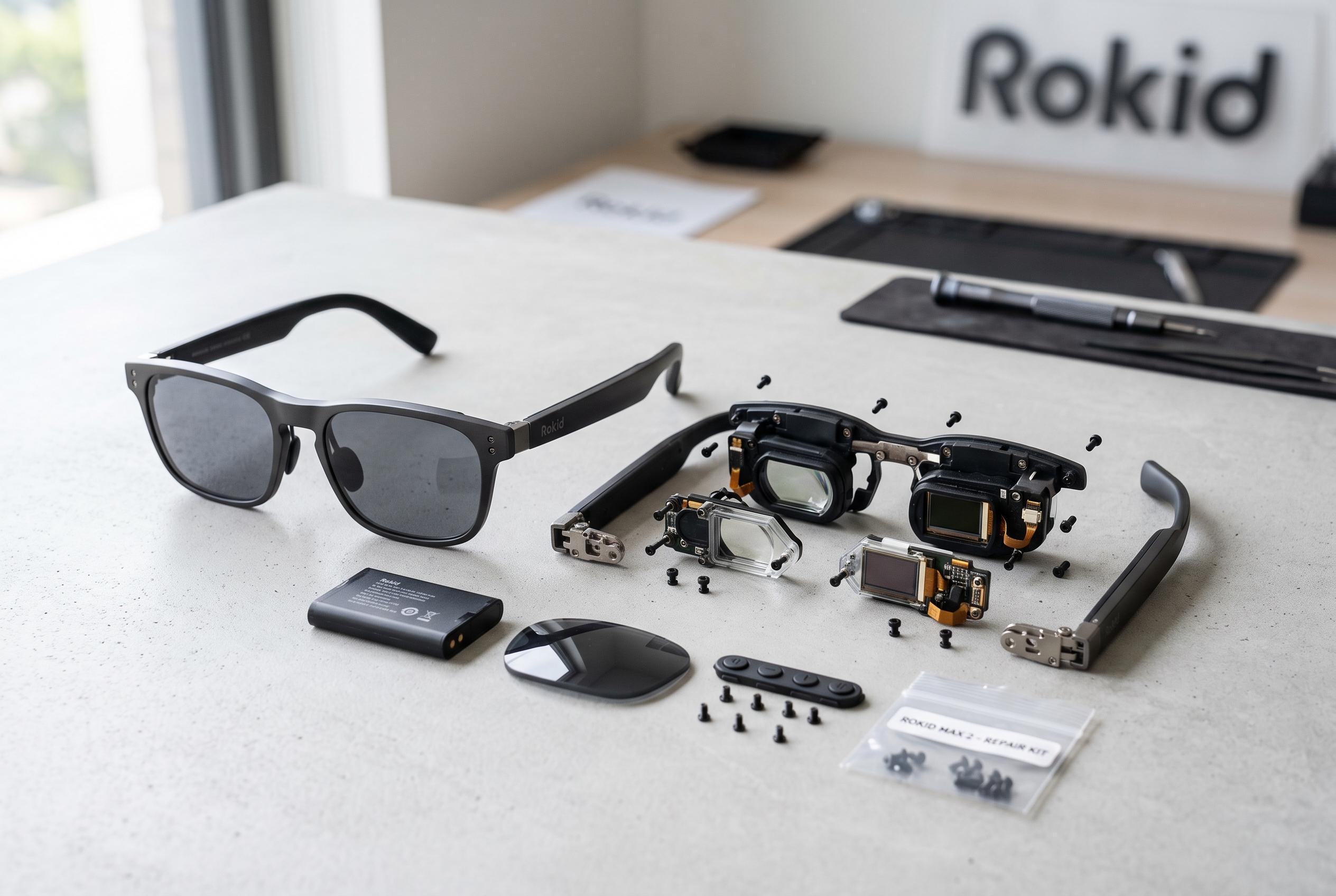
Rokid’s latest smart glasses are being held up as evidence that wearable devices do not have to be disposable. A teardown by iFixit found that the Chinese-made Rokid Glasses can be opened, separated and repaired with far less effort than most smart glasses, largely because their battery is built into a detachable arm rather than buried behind layers of adhesive and fragile components.
That matters because repairability has long been one of the weakest points in wearables. Wireless earbuds, smart rings and smart glasses are typically packed tightly, with lithium-ion cells glued in place and difficult to replace once they degrade. The European Union has already approved rules that will require many electronics to have easier-to-replace batteries from 2027, although major technology companies have pressed for exemptions for wearables on the grounds that slim designs would be harder to achieve. Rokid’s design challenges that argument.
According to iFixit’s analysis, the Rokid Glasses use only light adhesive along the top edge of the battery arm, making the casing straightforward to open with basic heat and simple tools. Once inside, the power connector is immediately accessible, allowing the device to be shut down safely before further work. The battery arm itself can then be removed with little more than a cable release, one internal screw and two hinge screws, without disturbing the display or the main processing hardware. iFixit described it as the closest thing it had seen to a user-serviceable smart-glasses design.
The left arm is equally restrained in its construction, with the main logic board held in place by very few fasteners and little glue. Rokid also splits display duties in a way that saves space and power, using a single Micro OLED projector at the bridge rather than separate projectors for each side. The glasses are built around Qualcomm’s Snapdragon AR1 Gen 1 chip, a 32GB Micron flash component and an NXP controller for lower-power tasks. Rokid also offers an external magnetic battery pack rated at 1.11Wh, which can be swapped out as needed. By contrast, iFixit’s recent teardown of Meta’s Ray-Ban Display glasses found a far less repair-friendly product, with glued arms, soldered parts and no official replacement-battery programme. The contrast suggests that thin AR glasses and practical repairability are not mutually exclusive.
Disclaimer: This content is intended for informational purposes only. Readers are advised to exercise their own judgement, conduct due diligence, or consult a qualified expert before acting on any information provided.