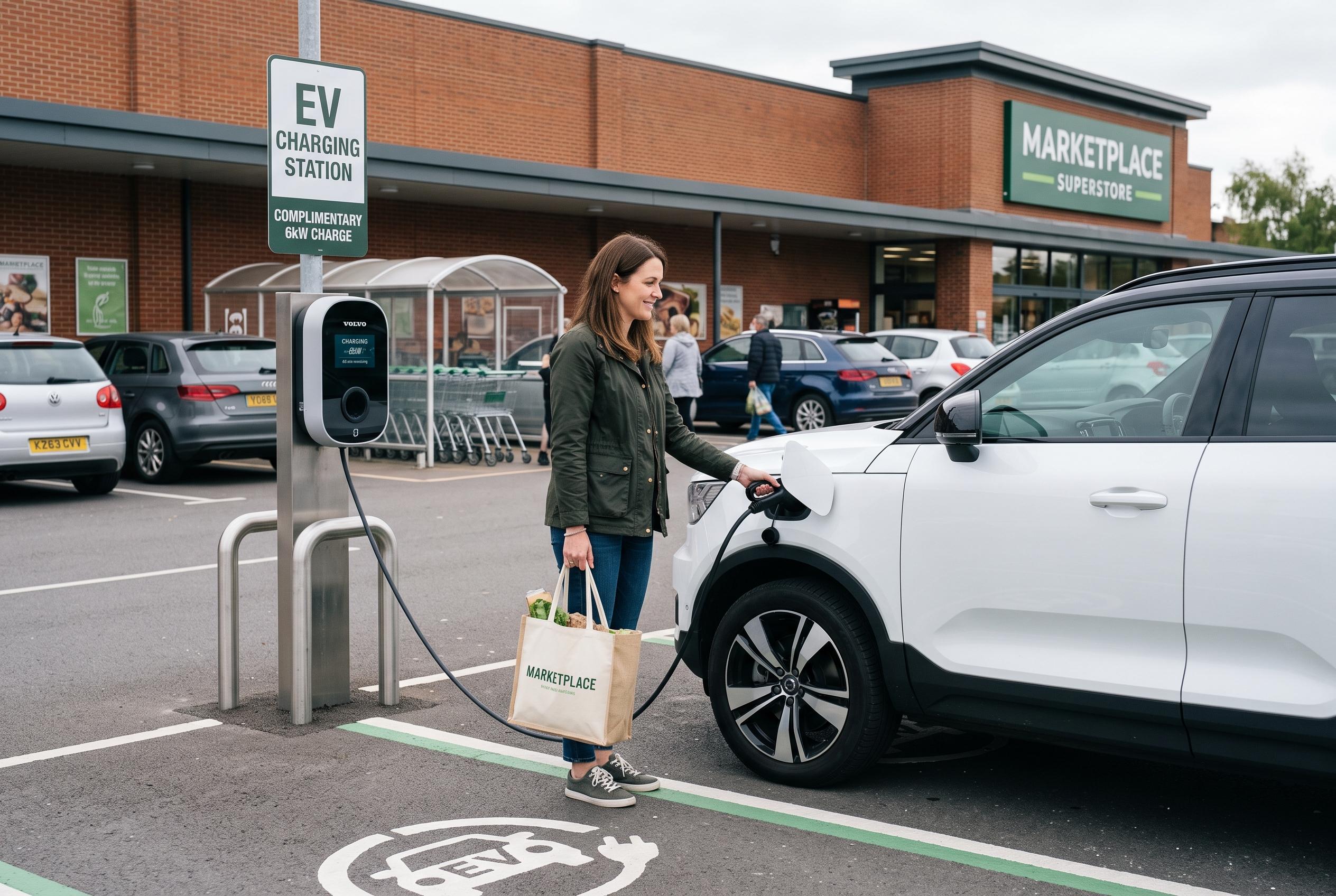

A Reddit debate reveals that slow 6-kilowatt EV chargers at supermarkets serve more than just quick top-ups; they are a strategic tool to enhance convenience for non-home chargers and boost retailer loyalty, despite their limits.
A Reddit discussion over supermarket EV chargers has exposed a simple question with a less simple answer: why install a slow 6-kilowatt charger in a place where most shoppers stay for less than an hour? The practical use case, as commenters noted, is not to deliver a full battery but to add a small, useful amount of range while a driver is already parked. For many owners, that is enough to reduce reliance on pricier rapid charging and to make routine errands more efficient.
That logic matters most for drivers who cannot charge at home. Supermarket charging can serve as a convenient stop-gap for apartment residents, office workers and anyone who depends on public infrastructure. It can also soften the cost of EV ownership over time, especially when retailers offer charging for free or as part of a loyalty scheme. The Reddit thread reflected that point clearly: some users said they would happily take “free electrons” while shopping, while others argued that any charger that keeps a car usable is better than none at all.
Retailers have their own reasons for doing it. Industry guidance from charging providers says supermarket EV points can increase footfall, extend dwell time and strengthen customer loyalty. In plain terms, a charger can encourage shoppers to stay longer, spend more and return more often. The same material also says the technology supports sustainability claims and helps stores present themselves as forward-looking businesses. For supermarkets, charging is therefore not only a service to drivers but also a commercial tool.
There are, however, limits. Poorly managed chargers can be blocked, left idle or fail to deliver much value if they are not well maintained or well priced. That is why the type of charger matters. A 6-kilowatt Level 2 unit is designed for slower top-ups during everyday activity, not the kind of quick energy dump offered by motorway fast chargers. The underlying idea is simple: for a short shopping trip, even a modest charge may be enough to make the journey worthwhile, particularly for drivers trying to balance convenience, cost and range anxiety.
Disclaimer: This content is intended for informational purposes only. Readers are advised to exercise their own judgement, conduct due diligence, or consult a qualified expert before acting on any information provided.