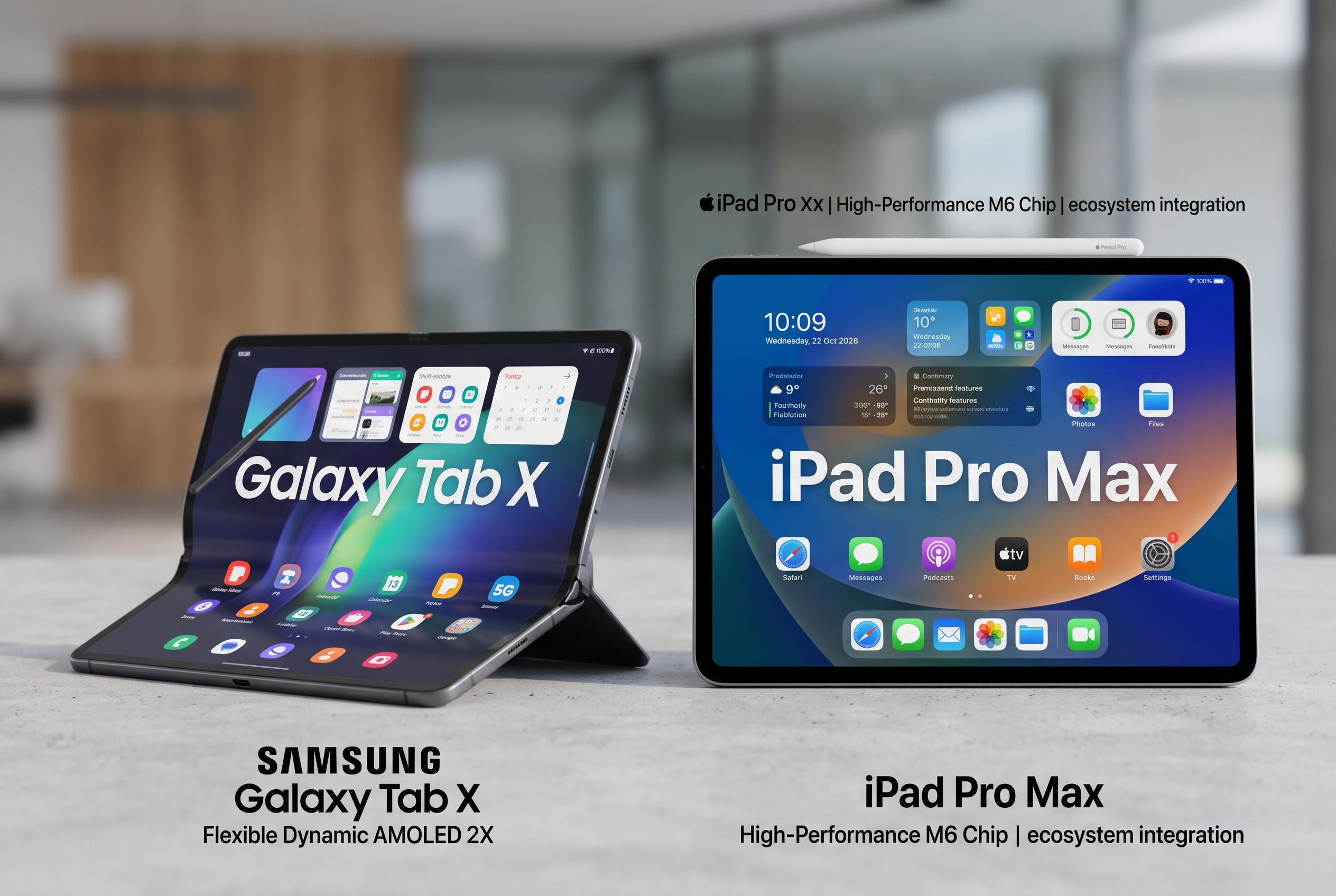

The 2026 tablet landscape sees a fundamental division, with Samsung prioritising flexibility and display features, while Apple focuses on performance and ecosystem integration, shaping buyers’ choices based on how they work and play.
In 2026, the tablet market is split less by raw capability than by philosophy. Samsung and Apple both offer strong premium devices, but they prioritise different strengths. Samsung leans on bright displays, S Pen support, microSD expansion and a desktop-like experience through DeX. Apple counters with faster chips, a deeper tablet app ecosystem, longer software support and close integration with the iPhone and Mac. For buyers, the real question is not which brand is better in the abstract, but which working style each tablet supports most effectively.
At the top end, the Samsung Galaxy Tab S11 Ultra and Apple’s latest iPad Pro models define the category. Reviews of the Tab S11 Ultra repeatedly point to its 14.6-inch Dynamic AMOLED 2X screen as a major advantage for media, drawing and multitasking. Apple’s iPad Pro line, meanwhile, is built around the M4 and M5 chips, with comparisons highlighting stronger benchmark performance, Wi-Fi 7 support and, in the case of the newer model, longer battery life. The trade-off is clear: Samsung offers more physical flexibility, while Apple tends to deliver the sharper performance edge.
The middle of the market is just as important. Current buying guides place the iPad Air M4 among the most balanced choices for most people, especially those who want a capable tablet without moving into full Pro pricing. Samsung’s Galaxy Tab S11 also targets this space with a large screen, stylus support and Android’s broader app and file-handling openness. For users who want a tablet for notes, streaming, light creative work and portable productivity, both devices make a strong case, but they do so in different ways.
Storage and software remain key differentiators. Samsung’s use of expandable storage is still rare in a premium tablet, and that matters for people who store video, photos or large files locally. DeX also gives the Galaxy Tab line a more laptop-like interface when paired with a keyboard. Apple, by contrast, offers a more controlled environment with stronger app optimisation and a tighter ecosystem for people already using an iPhone, AirPods or Mac. The standard iPad with the A16 chip remains Apple’s lower-cost entry point, but it is aimed at simpler tasks rather than heavy multitasking.
For most buyers, the best choice depends on how the tablet will be used. Samsung is often the better fit for users who value flexibility, large OLED screens and stylus-first workflows. Apple is usually stronger for people who want top-tier chip performance, long-term support and the most polished tablet software. In practical terms, the Galaxy Tab S11 Ultra is the more ambitious Android tablet, while the iPad Pro remains the benchmark for performance and ecosystem coherence.
Disclaimer: This content is intended for informational purposes only. Readers are advised to exercise their own judgement, conduct due diligence, or consult a qualified expert before acting on any information provided.