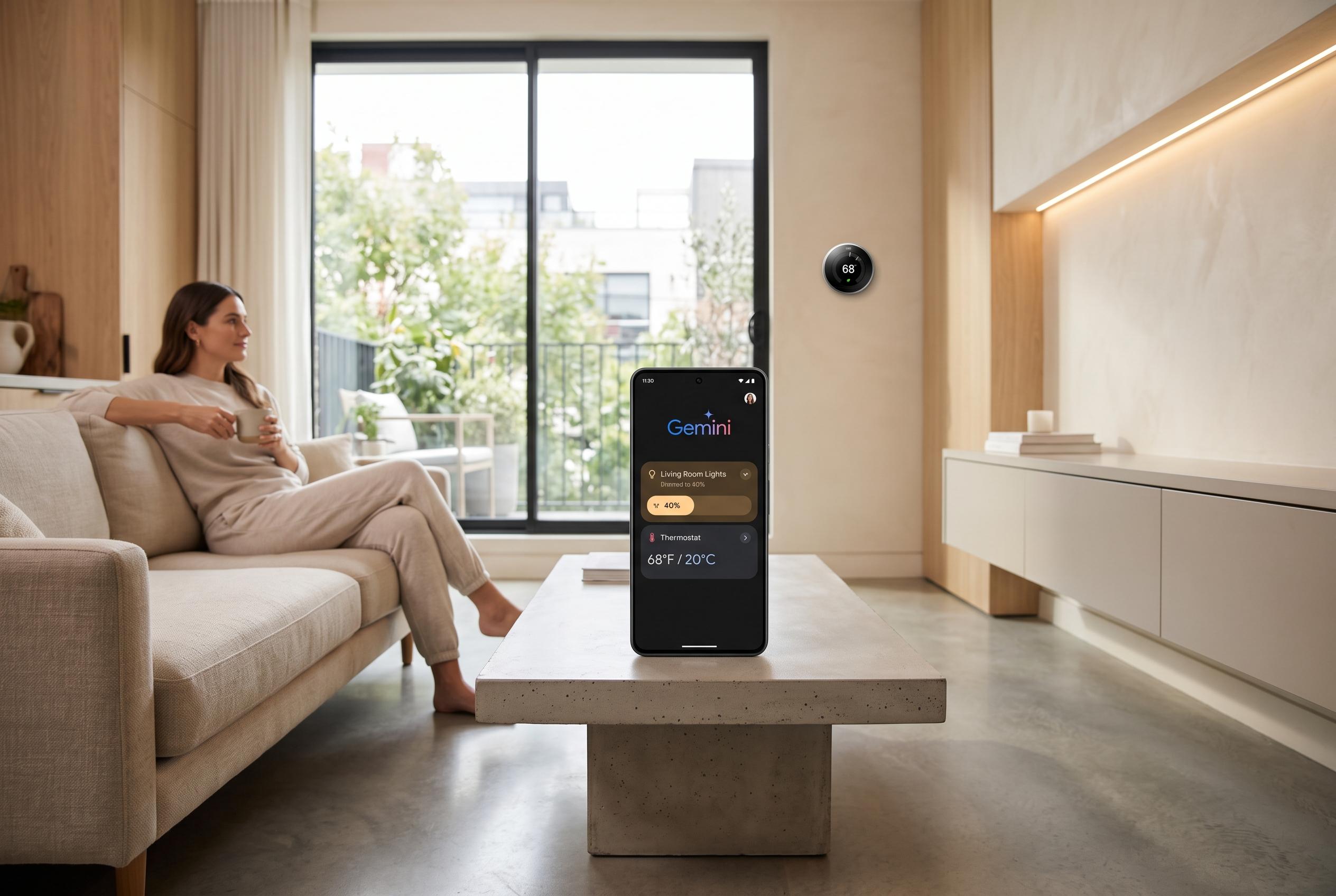

Google’s upcoming event on August 12 will reveal whether its AI platform Gemini can seamlessly become the central control layer for smart devices and homes, redefining user experience and privacy considerations ahead of the Pixel 11 launch.
Google’s annual Made by Google event on August 12 is likely to be judged less by the phones on stage than by whether the company can make Gemini feel like a dependable layer across the home. According to Forkast News, that is the real commercial question behind the launch: whether Google can turn its AI ambitions into something ambient, useful and routine, rather than a novelty confined to a handset. The event is scheduled for 6pm ET in New York, with the Pixel 11 family expected to take the spotlight, but the deeper test is whether Google can persuade users that Gemini is ready to replace Google Assistant without disrupting the habits built up over years.
That transition is already under way. Tom’s Guide reported that Google Assistant is due to be discontinued on mobile and Wear OS devices from September 4, with Gemini taking over more broadly across Google’s ecosystem. Google has previously removed Assistant features in stages, and Tom’s Guide said some of those functions have been folded into Gemini. The shift matters because the new assistant is being positioned not as a simple chatbot, but as the control layer for phones, watches, speakers and connected-home devices. If it works smoothly, Google can present Gemini as infrastructure. If it feels awkward, the company risks turning a convenience into a friction point.
The commercial logic is tied closely to Google One. Forkast News noted that the company already charges $19.99 a month for Google One AI Premium, which bundles Gemini Advanced with 2TB of storage. That subscription model depends on Gemini becoming genuinely useful in daily life: handling schedules, anticipating needs and responding to voice commands without repeated prompts. Google’s pitch is no longer just about answering questions faster. It is about making the assistant present enough to be helpful, but invisible enough not to feel intrusive.
Hardware remains central to that plan. Tom’s Guide said the Pixel 11 line is expected to include the Pixel 11, Pixel 11 Pro and Pixel 11 Pro Fold, with a Tensor G6 chip and possible changes to base storage and pricing. The same report said the Pixel Watch 5 is also likely to appear, alongside a Pixel Tag tracker that would compete with Apple’s AirTag. T3 reported that Google itself has teased the Pixel 11 Pro Fold, and that leaked marketing images suggest a wider camera bar and a new green colour option across parts of the product range. Those devices matter because they are the physical entry points for Gemini’s wider ecosystem, including on-device processing meant to reduce delays and cut reliance on the cloud.
Privacy remains the central risk. TechRadar recently reported concerns from an indie developer who believes Gemini may have surfaced details from a private Google Doc, although the cause was unclear and could not be reproduced. Google has said private documents are not used to train its foundational AI models, but the incident underlines a broader problem: the more deeply Gemini is woven into personal devices and services, the more users will ask what data it sees and how it uses it. That tension sits at the heart of Google’s challenge. It has the scale, the search data and years of voice-assistant experience, but it must still prove that an always-available AI layer can feel helpful rather than unsettling.
For Google, August 12 is therefore not just another product launch. It is an early public test of whether Gemini can move from promise to habit. If the company can show that its AI works naturally across the home, the subscription model becomes easier to defend. If not, the event may be remembered as a polished showcase for hardware wrapped around an assistant that still has not fully earned its place.
Disclaimer: This content is intended for informational purposes only. Readers are advised to exercise their own judgement, conduct due diligence, or consult a qualified expert before acting on any information provided.