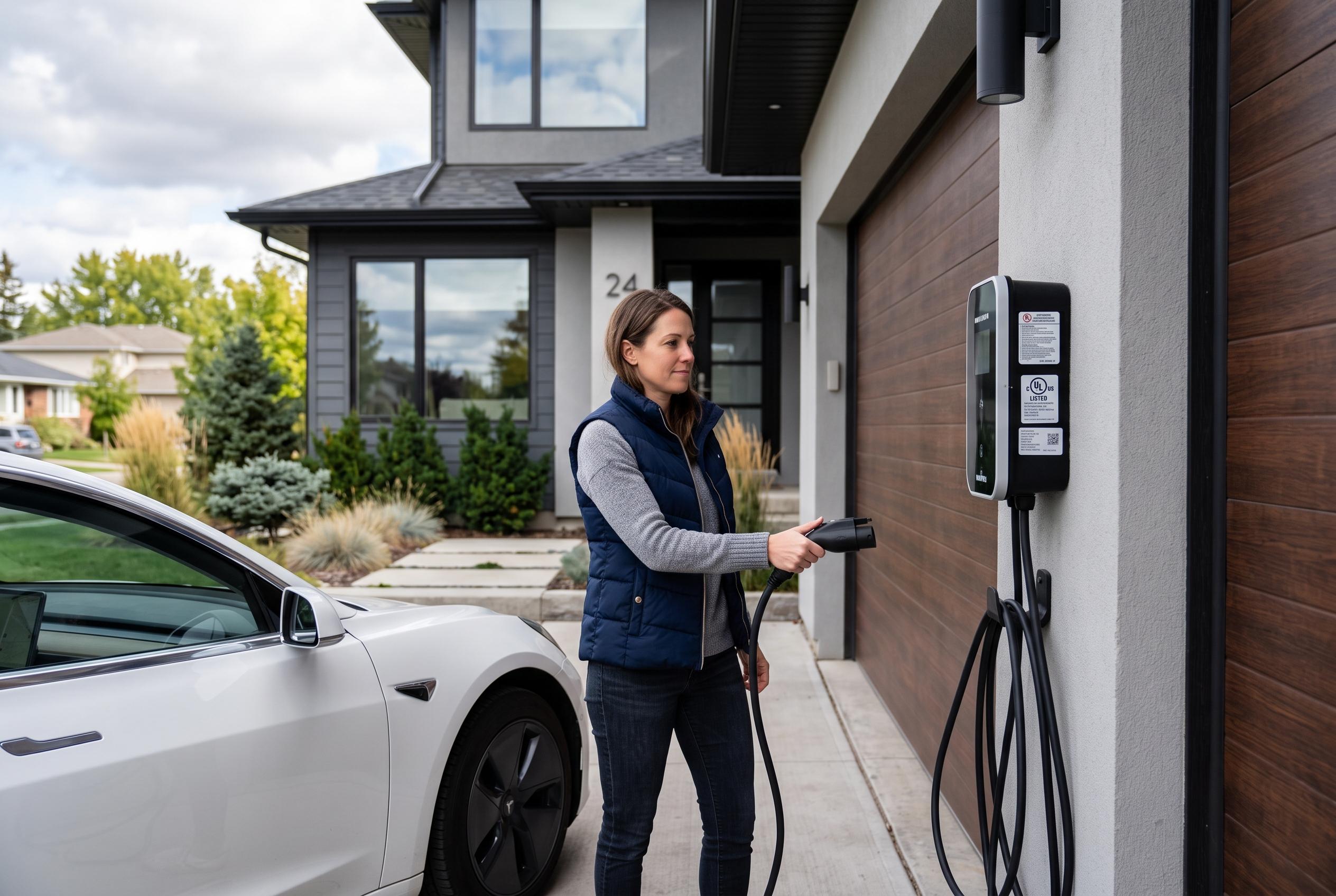

As US buyers select home electric vehicle chargers, industry experts emphasise the importance of verified safety certification, including UL standards, over merely considering power output or brand reputation, especially for outdoor and high-amperage units.
For US buyers weighing a home EV charger, the real issue is not only power output but whether the equipment has been tested against the right safety standards. According to UL Solutions and Intertek, UL 2594 is the core standard for AC electric vehicle supply equipment, covering Level 1 and Level 2 chargers used in residential and commercial settings. Safety guidance from UL Solutions also stresses ground-fault protection, isolation monitoring and routine inspection as part of safer charging installations.
That matters because home chargers work at sustained high load for long periods, often overnight. Industry guidance says certification by an OSHA-recognised Nationally Recognised Testing Laboratory, or NRTL, is the relevant consumer signal in the US market, not the brand name of the testing lab alone. The basic question for homeowners, inspectors and insurers is whether the exact product has been listed or certified to the applicable UL standard.
UL 2231 addresses personnel protection, which is the human-safety layer in EV charging. In practice, that means the charger must be able to detect fault current and interrupt power quickly enough to reduce the risk of electric shock. In wet driveways, exposed carports and humid garages, that protection is not optional; it is one of the main reasons certified equipment is treated differently from unverified hardware.
UL 2251 and UL 817 cover the parts of the system most likely to take physical abuse. UL 2251 applies to plugs, receptacles and couplers, including durability, crush resistance and insulation performance. UL 817 covers cord sets and power-supply cables, which must remain flexible in cold weather while still resisting abrasion, pulling and heat. Together, those standards help reduce failures at the connector, cable and charge-port interface.
The result is a layered safety approach rather than a single test. UL 2594 focuses on the charger housing and electrical design, UL 2231 on user protection, UL 2251 on the connector and UL 817 on the cable. For consumers comparing products, that combination is more useful than marketing claims about speed alone. It is also why certification language should be checked carefully before installation, especially for outdoor or high-amperage units.
Disclaimer: This content is intended for informational purposes only. Readers are advised to exercise their own judgement, conduct due diligence, or consult a qualified expert before acting on any information provided.