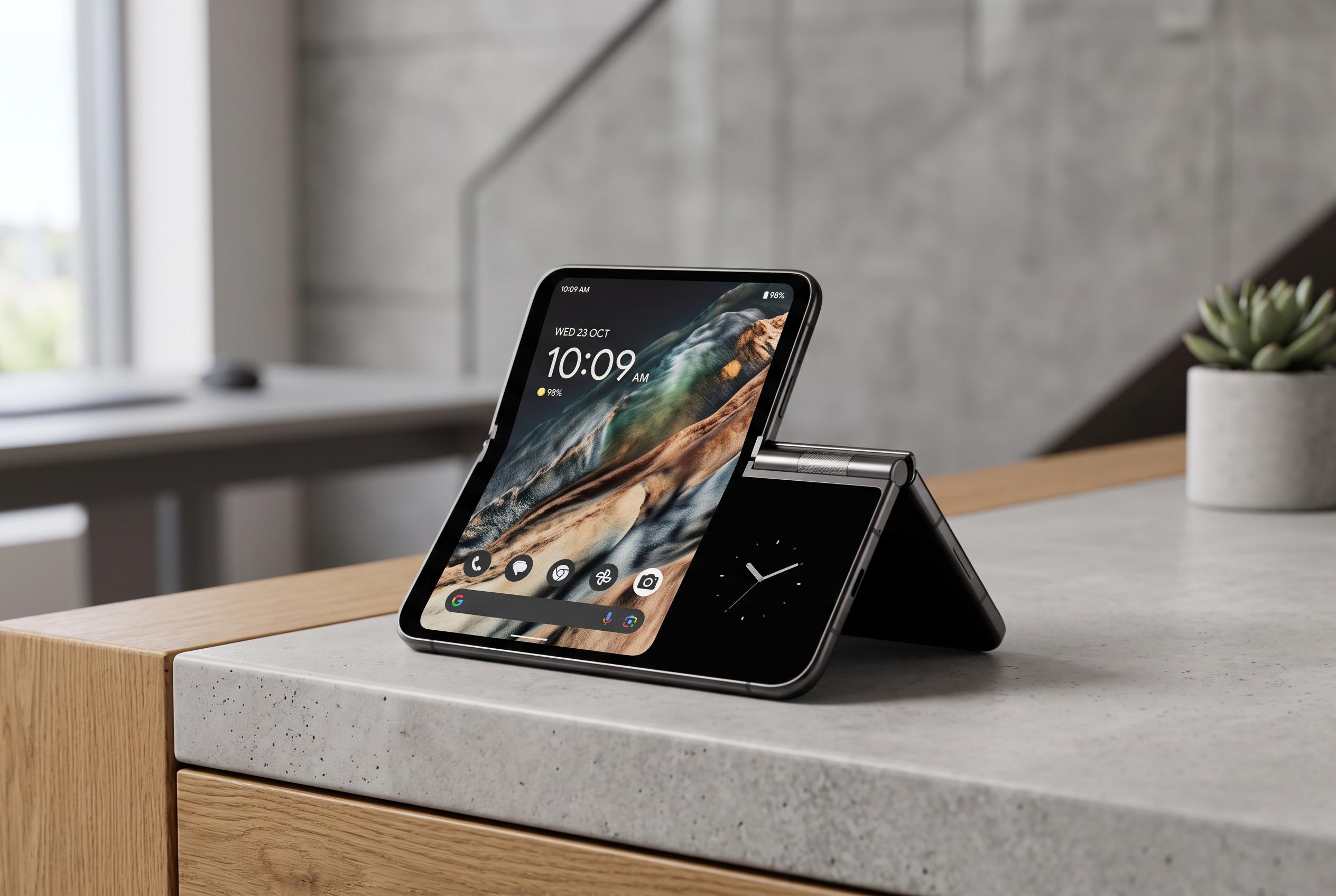

The upcoming Pixel 11 Pro Fold aims to balance advanced foldable design with software longevity, but concerns remain over its performance in a competitive market increasingly defined by speed and power.
Google’s Pixel 11 Pro Fold is shaping up to be one of the company’s most ambitious smartphones yet, but the latest reporting suggests its appeal may depend as much on software support and design as on raw speed. Geeky Gadgets says the foldable is expected to combine Google’s familiar Pixel software with a large inner display and a seven-year update commitment, while still leaving doubts over whether the Tensor G6 chip can match the kind of performance buyers expect at the top end of the market.
Those concerns are not new. Early analysis of the Tensor G6 points to a chip that may be more efficient than its predecessors, but still unlikely to challenge the fastest Snapdragon parts in sustained heavy use. PhoneArena reported that Google is planning to change a key component of Tensor G6, moving to a MediaTek modem based on an FCC filing, a shift that could improve connectivity efficiency and overall power use. Even so, the same reporting and other previews suggest the Pixel 11 Pro Fold is still likely to trail rivals in benchmark-heavy tasks and gaming.
The hardware package, at least on paper, is more promising than that verdict implies. PhoneArena and Android Central both say the device is expected in August 2026 with a Tensor G6 chip built on a 2nm process, around a 4,800mAh battery and a thinner, lighter frame than the current model. A separate preview from Findedition suggests configurations of up to 16GB of RAM and as much as 1TB of storage, plus an 8-inch OLED panel with a 120Hz refresh rate. That would place the handset firmly in ultra-premium territory, with pricing expected to begin around $1,899 to $1,999.
Camera upgrades are also expected to be part of the pitch. According to PhoneArena and Android Central, Google is working on new sensors that should improve image quality, while Findedition says the foldable may support 4K video capture at 30fps and 60fps. That matters because camera consistency remains one of the main reasons many buyers choose Pixel phones in the first place. But a camera system is only as good as the device’s ability to keep up under load, and the Tensor G6’s performance profile may remain the limiting factor.
That is where the product’s broader challenge becomes clear. The Pixel 11 Pro Fold appears designed to offer a polished Android experience, strong multitasking and long software support, yet the same qualities that make it appealing may not be enough to satisfy users who want the fastest possible foldable. Smartprix, citing leaked renders, says Google is pursuing a cautious redesign rather than a dramatic one, which suggests the company is prioritising continuity. For Google, the next step may be less about adding more features and more about proving that its own silicon can finally support them.
Disclaimer: This content is intended for informational purposes only. Readers are advised to exercise their own judgement, conduct due diligence, or consult a qualified expert before acting on any information provided.