
OpenAI gears up for its first consumer hardware product, a screenless, portable smart speaker developed with Jony Ive, that aims to bring ChatGPT into users’ homes through innovative design and enhanced voice interaction, with a potential launch in early 2027.
OpenAI is preparing to enter consumer hardware with a screenless smart speaker built around ChatGPT, according to Bloomberg and reporting carried by MacRumors and TechCrunch. The device would mark a cautious first step into a market that could later expand to more advanced products, including a smartphone and other AI-focused gadgets.
The speaker is said to have been developed with Jony Ive, the former head of design at Apple, whose team was brought into OpenAI through a multi-billion-dollar acquisition of his device start-up. Bloomberg reported in May 2025 that OpenAI agreed to buy the company in a deal valued at nearly $6.5 billion, a move that gave the company a dedicated hardware effort and a design group with deep consumer-electronics experience.
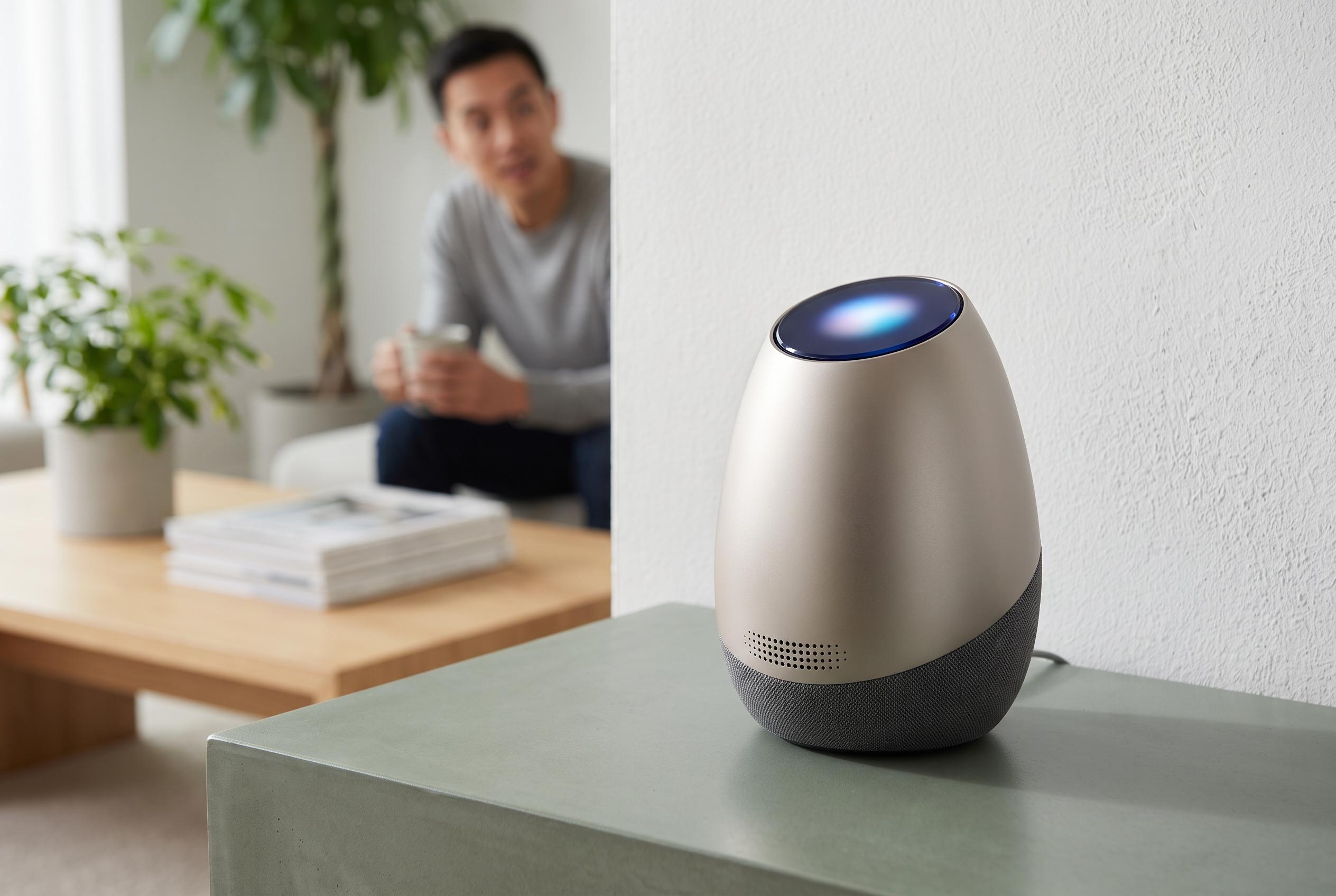
The device itself is expected to be distinctly unconventional. Reports describe a compact, portable speaker with no display, a built-in camera and moving parts meant to create a sense of presence and show when the assistant is active. It is also expected to rely on advanced voice interaction and contextual awareness, letting the system observe the user’s surroundings and respond more naturally to questions and commands.
Pricing is the biggest point of disagreement in the current reporting. MacRumors and earlier Bloomberg-linked coverage put the likely range at $200 to $300 and suggested a launch in early 2027, while Journal du Geek, citing a more recent Bloomberg report, says the retail price in the United States could land between $300 and $400. That higher figure would still position the product below many premium smartphones, but it also signals that OpenAI may be aiming for a device with stronger materials and a more ambitious design than a basic smart speaker.
The hardware push matters because OpenAI is still not profitable despite ChatGPT’s scale. Journal du Geek reports that the company sees advertising on the free version of ChatGPT and new hardware sales as possible revenue streams. If the speaker succeeds, it could give OpenAI a direct consumer product line and a way to test whether AI assistants can move from software into a dedicated place in the home.
Disclaimer: This content is intended for informational purposes only. Readers are advised to exercise their own judgement, conduct due diligence, or consult a qualified expert before acting on any information provided.