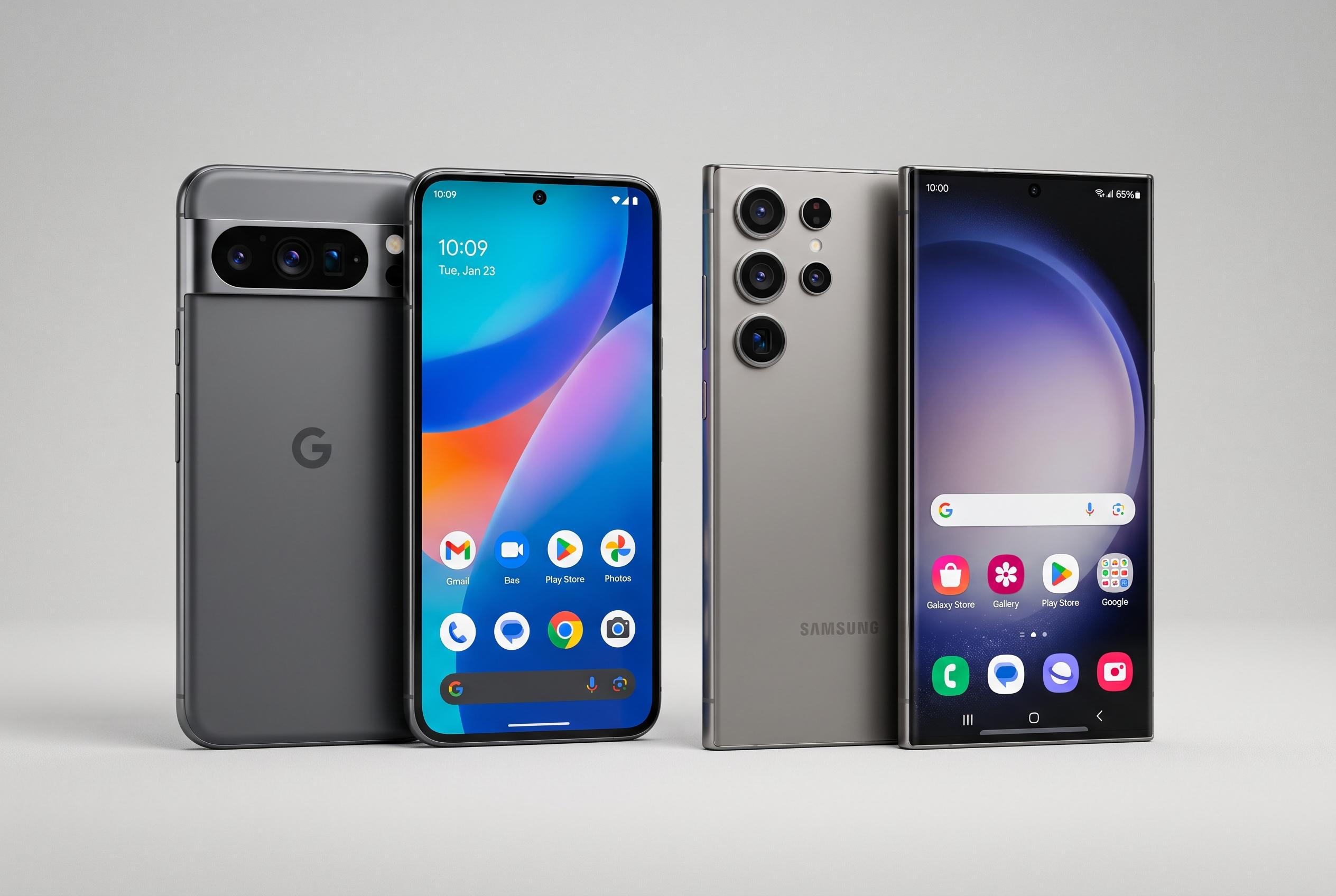

Google’s Pixel 11 Pro XL and Samsung’s Galaxy S26 Ultra, both priced at $1,299, vie for dominance with contrasting focuses on AI photography versus power and flexibility, offering buyers a choice between streamlined simplicity and feature-rich performance.
The Pixel 11 Pro XL and Samsung’s Galaxy S26 Ultra sit at the top end of the smartphone market, with both models rumoured to carry a $1,299 starting price. On paper, they look closely matched on cost, but the real distinction lies in how each phone is tuned: Google is leaning into AI, photography and software simplicity, while Samsung is aiming for power, flexibility and feature depth. According to Geeky Gadgets, that split defines the choice between them.
Memory and storage sharpen that contrast. Samsung’s own product page lists the Galaxy S26 Ultra in 256 GB, 512 GB and 1 TB versions, with 12 GB of RAM on the lower two trims and 16 GB on the top model. By contrast, PhoneArena says the Pixel 11 Pro XL is expected to ship with 16 GB of RAM, including at the 512 GB level, which gives Google an edge for heavy multitasking if those specifications hold. That could make the Pixel the more attractive option for buyers who want higher memory without moving to the largest storage tier.
The physical designs also point in different directions. Samsung’s handset is described by TechRadar and What Hi-Fi as a large but refined flagship, with a 6.9-inch Dynamic AMOLED screen and a 200-megapixel main camera, while Geeky Gadgets notes that the S26 Ultra remains the slimmer and lighter phone to hold. The same report says the Pixel’s horizontal camera bar gives it better stability on a table, and the Galaxy’s bundled S Pen adds a layer of productivity that will matter most to people who actually write or sketch on their phones.
Display behaviour is another area where the two phones diverge. Geeky Gadgets says the Pixel 11 Pro XL uses an M16 OLED panel that emphasises brightness and colour accuracy, which should suit streaming, photography and editing. Samsung’s older M13 panel is said to trade some of that raw brightness for an anti-reflective coating and a Privacy Display feature that limits side-angle viewing, making it better for outdoor use and for people who value screen confidentiality in public.
Camera strategy is equally distinct. Google’s approach, as described by Geeky Gadgets, centres on computational photography: natural colour, strong low-light performance and consistent skin tones without much manual intervention. Samsung’s camera setup is broader and more adjustable, with higher-resolution hardware and more lenses for users who want greater control. On processing, the Pixel is expected to use Google’s Tensor G6 chip, which points towards efficiency and on-device AI features, while the Galaxy S26 Ultra uses Qualcomm’s Snapdragon 8 Elite Gen 5, a processor aimed squarely at sustained performance for gaming and demanding workloads.
Software support is one of the few areas where the two appear closely aligned. Geeky Gadgets says both phones are promised seven years of updates, which is now a key buying factor at this price level. The difference lies in the experience: the Pixel is positioned as the cleaner, more streamlined handset with deeper Google AI integration, while Samsung’s One UI offers more customisation, split-screen tools and tighter stylus support. For most buyers, the decision comes down to whether they want a phone that feels simpler or one that does more. Given current discounts on the Samsung model and the expectation that a future Galaxy S27 Ultra could narrow the gap further, buyers who are not upgrading urgently may prefer to wait.
Disclaimer: This content is intended for informational purposes only. Readers are advised to exercise their own judgement, conduct due diligence, or consult a qualified expert before acting on any information provided.