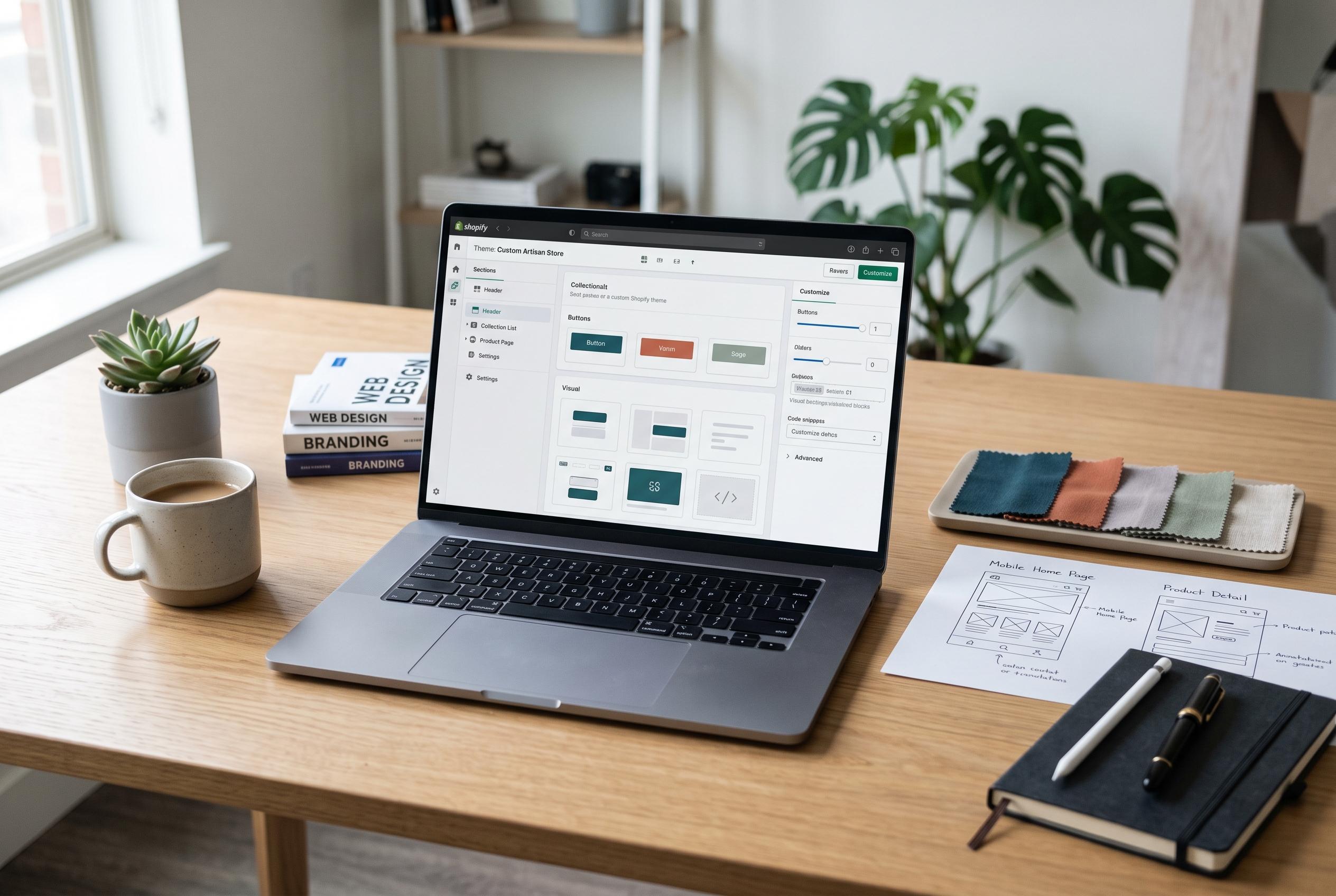

As the Shopify ecosystem expands, more merchants are turning to custom development to achieve unique branding, faster performance, and seamless integration, challenging the dominance of pre-built themes.
Shopify sits at the centre of a large and still-expanding e-commerce ecosystem, and the choice between a pre-built theme and custom development can shape how a store looks, performs and grows. The decision is not simply about design. It affects launch speed, technical flexibility, long-term maintenance and the amount of brand control a business can exert as it scales. For many merchants, the key question is whether a store needs to start quickly and efficiently or be built from day one as a distinct, highly tailored sales channel.
Shopify themes are pre-designed storefront templates that merchants can adapt through the platform’s editor. They are available in free and premium versions, with the official Theme Store offering options suited to a wide range of products and industries. Free themes such as Dawn, Refresh and Craft can give new stores a credible starting point, while premium themes typically come at a modest one-off cost. The appeal is obvious: merchants can launch in days, avoid heavy upfront spending and manage most changes without coding knowledge.
That convenience comes with limits. Themes are designed to work across many businesses, so they inevitably sacrifice precision for flexibility. Stores using the same template can end up looking similar, and brands with a strong visual identity may struggle to express it fully within a standard layout. As a store grows, the weaknesses often become more visible. Extra apps, theme features that are never used and workarounds for missing functionality can all add weight to the site and slow down performance.
Custom Shopify development takes the opposite approach. Rather than fitting a business into an existing framework, developers build the storefront around the brand, its products and its operating requirements. That usually means using Shopify’s Liquid language alongside HTML, CSS and JavaScript to create custom templates, features and integrations. The result is a store that can be designed for a specific customer journey, rather than a generic one, and shaped to match internal systems, specialist workflows or a more ambitious conversion strategy.
The growing interest in bespoke builds is not just anecdotal. A 2026 report from CommerceRank, based on 72,769 Shopify stores, found that 46% were using custom themes as of March 2026, suggesting that merchants are increasingly willing to trade simplicity for differentiation and performance. Other industry studies point in the same direction. StoreInspect’s 2026 theme trends analysis found that custom-built themes are gaining market share, while PageFly’s theme detector data suggested that custom-built themes account for about 18% of the market. Together, those figures indicate a clear movement towards more tailored storefronts, especially among brands trying to stand out in crowded categories.
The business case for custom development is strongest where branding, speed and scale matter most. A bespoke store can remove unnecessary code, reduce reliance on third-party apps and support more advanced features such as product configurators, loyalty systems or connections to enterprise software. FactoryJet’s guide for US brands argues that off-the-shelf themes can carry businesses up to roughly $500,000 in annual revenue, but that custom work becomes more attractive when a brand needs sharper differentiation or more sophisticated functionality than a standard theme can deliver.
Cost remains the main barrier. A theme may cost nothing or a few hundred dollars, with premium options commonly priced between $150 and $400. Even then, merchants often spend more on design tweaks and app subscriptions over time. Custom development usually starts in the low thousands and can rise into the tens of thousands for larger, feature-rich projects. That higher initial outlay buys control, but it also brings a longer build time and the need for professional developers to maintain the site after launch.
For most merchants, the right choice depends on stage, budget and ambition. A theme is usually the better fit for a new store, a limited budget or a simple product catalogue that needs to go live quickly. Custom development makes more sense for businesses that treat e-commerce as a core growth engine, need deeper integrations or want a store experience that is difficult to replicate. The practical test is not which option is better in theory, but which one is likely to support the business most effectively over the next few years.
Disclaimer: This content is intended for informational purposes only. Readers are advised to exercise their own judgement, conduct due diligence, or consult a qualified expert before acting on any information provided.