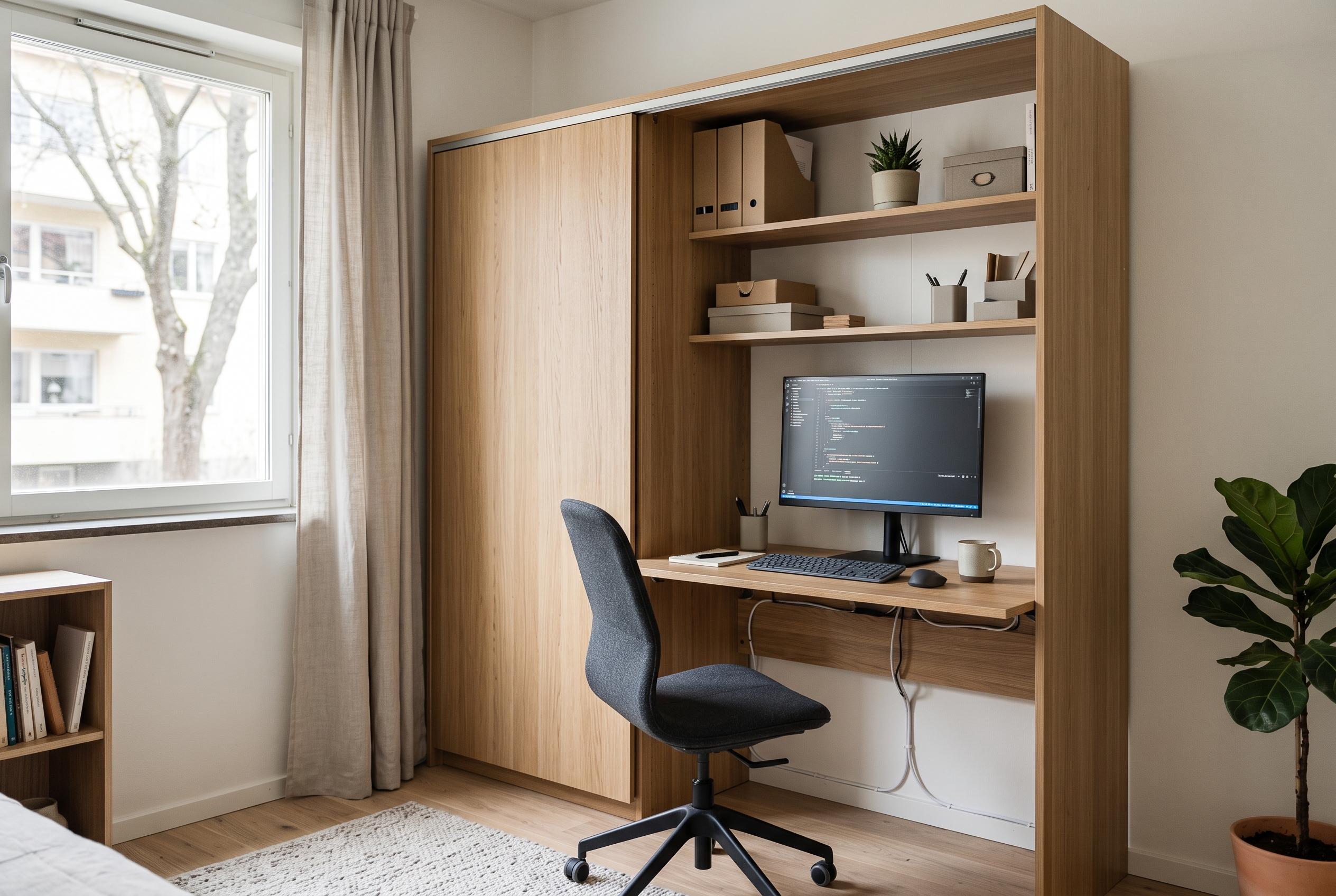

With small homes and remote work thriving, IKEA offers practical, adaptable ideas to transform awkward spaces into efficient, concealed home offices, emphasising flexibility, organisation, and smart design.
Working from home can be convenient, but it also exposes a basic design problem: many homes do not have room for a proper office. IKEA’s own Life at Home reporting has suggested that remote workers often value the arrangement, yet comfort and concentration still depend on having a space that feels separate from the rest of daily life. In practice, that means finding a work zone that is compact, organised and easy to conceal when the working day ends. According to IKEA’s home office guides, even awkward areas such as hallways and bedrooms can be adapted into useful workspaces with the right mix of scale, storage and lighting.
For homes with very little spare floor area, flexibility is the first requirement. IKEA’s compact workspace advice points towards narrow desks, wall-mounted storage and folding furniture as the most practical starting points, while other design round-ups highlight modular pieces that combine a work surface with drawers or shelving. The point is not to build a separate room, but to create a workstation that can perform more than one role. A slim desk behind a sofa, a fold-away surface in a corner or a wall-mounted unit in a hallway can all serve as a temporary office without dominating the room.
Privacy is the next issue. IKEA’s bedroom workspace guidance recommends using wardrobes, curtains and other concealment methods to separate work from relaxation, especially where a desk must share space with a bed or seating area. Other small-space ideas use dividers, screens and built-in partitions to keep equipment and paperwork out of view. The advantage is not only visual order. In a shared home, a partial barrier can also reduce interruptions and make a work area feel more intentional, even when it sits inside a living room, bedroom or passageway.
Storage matters just as much. Compact office layouts depend on keeping supplies close at hand without letting them spread across the room. IKEA’s suggestions and third-party design round-ups both point to vertical shelving, baskets, drawer units and carts on wheels as practical ways to do that. Mobile storage is particularly useful in multipurpose rooms, because it allows a workspace to be packed away or shifted elsewhere without dismantling the entire setup. A rolling trolley, a portable organiser or a drawer unit with casters can turn one part of a home into a workstation in minutes.
Cable control is another detail that quickly separates a workable office from a cluttered one. Desk surfaces become crowded once chargers, monitors, lamps and laptops are added, so cable trays, holders and under-desk organisers can make a noticeable difference. TechRadar’s overview of IKEA storage solutions makes the broader point that smart accessories can extend usable space without any remodelling. That same logic applies to wires: once they are hidden and routed properly, the whole area looks calmer and is easier to clean and reset.
Lighting also deserves attention. IKEA’s workspace guides recommend adjustable and task-focused lamps for small rooms, and other home office round-ups suggest combining ambient and direct light to reduce eye strain. A slim desk lamp, a clamp light or a lamp with an integrated charger can preserve precious space while still giving enough brightness for reading and screen work. In a small office, the goal is not decorative excess but steady, even illumination that supports long periods of concentration.
There is also a stronger argument for using underused architectural spaces. IKEA’s hallway and bedroom ideas show how a niche, landing or wardrobe can become a compact office with the right fit-out. That may mean a fold-down desk, a cupboard converted into a cloffice or a wall-mounted workstation paired with vertical storage. The common thread across the ideas is simple: a home office does not need to be large to be effective. It needs to be clearly defined, easy to tidy and designed around the way the room is actually used.
Disclaimer: This content is intended for informational purposes only. Readers are advised to exercise their own judgement, conduct due diligence, or consult a qualified expert before acting on any information provided.