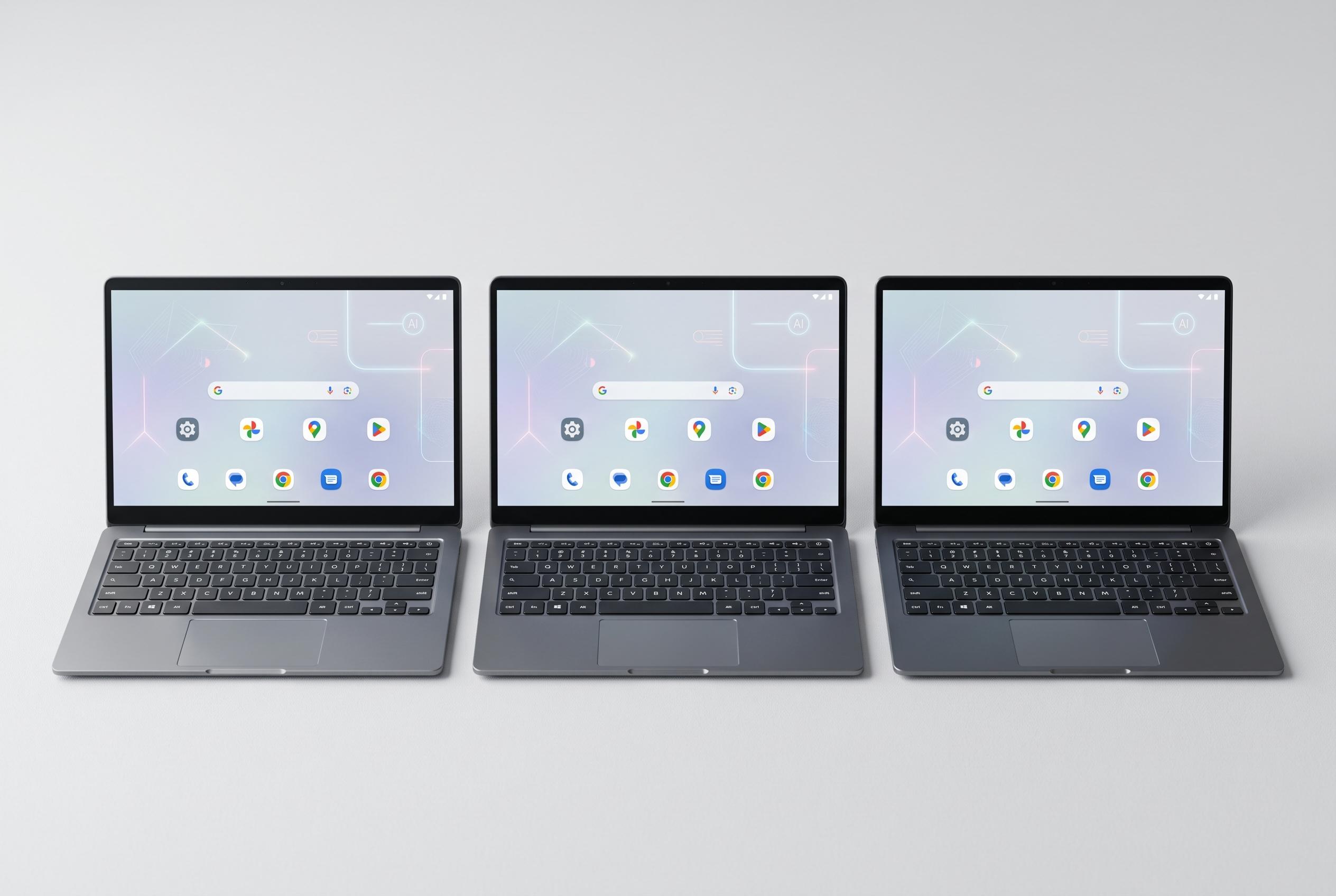

Leaked details suggest Google is preparing to launch a new family of Android laptops under the Googlebook name, signalling a move beyond mobile devices to challenge traditional PCs with AI-enhanced hardware and software integration.
Google’s Android laptop push appears to be moving from rumour to product planning, with leaked details pointing to a new family of machines under the Googlebook name. The line is said to include models from Lenovo, Asus, HP and Dell, signalling that Google wants to extend Android beyond phones and tablets into full-size personal computers. According to reports from Geeky Gadgets and Android Central, the pitch is straightforward: more capable hardware, tighter Gemini AI integration and a computing experience that sits somewhere between a Chromebook and a conventional laptop.
Lenovo seems set to play one of the largest roles in the effort. Leaks described by Geeky Gadgets point to three Lenovo models, including the Google Book 15 and the Google Book Duet. The 15.3-inch model is said to use an Intel Core Ultra 5 325 chip, 16GB of RAM and Dolby Atmos audio, with Android-specific navigation keys that suggest a customised interface. The Duet, by contrast, is expected to take a more flexible route, with a 13-inch OLED display, MediaTek Companio Ultra 910 processor, Immortalis G925 graphics, a magnetic keyboard and stylus support.
Asus appears to be targeting the premium end of the market. One model, the Google Book CX9406, is reported to use a lightweight ceramic alloy chassis, Intel Core Ultra 5 or Ultra 7 processors and up to 64GB of RAM. A second device, the Google Book 14, is said to aim lower in the range with a 14-inch 2.8K display at 120Hz and Panther Lake processors. That spread suggests Google and its partners are trying to cover both high-performance and mainstream buyers from the outset.
HP and Dell are also part of the plan. Android Central and TechCrunch reported that HP’s Google 14C is expected to use Qualcomm’s Snapdragon X Elite X1E8100 chip with up to 32GB of RAM, while Dell may be preparing an Android-based version of the XPS 13, also with Snapdragon X Elite silicon. Google is also said to be working with Acer. The broader list of partners indicates that this is not a single reference device but an ecosystem play.
Software support will be the decisive issue. The new laptops are being built around Gemini AI models and features such as Magic Pointer, an AI-powered cursor that can suggest actions based on what is on screen. Google also plans direct support for Android phone apps and easier file access without emulation or manual transfer. The company says the devices will arrive this autumn, but Lenovo’s own Q&A, as reported by Windows Central, suggests caution: Android PCs may be well suited to browsing, document work and streaming, yet still face limits in desktop features, app compatibility, multitasking and gaming.
That tension between promise and maturity will shape the category. If Google can solve the app problem and keep prices competitive, Googlebooks could offer a credible alternative for users who want long battery life, lighter hardware and AI-assisted workflows. If not, they may remain an interesting experiment in a market still dominated by Apple’s MacBook Air and Windows laptops.
Disclaimer: This content is intended for informational purposes only. Readers are advised to exercise their own judgement, conduct due diligence, or consult a qualified expert before acting on any information provided.