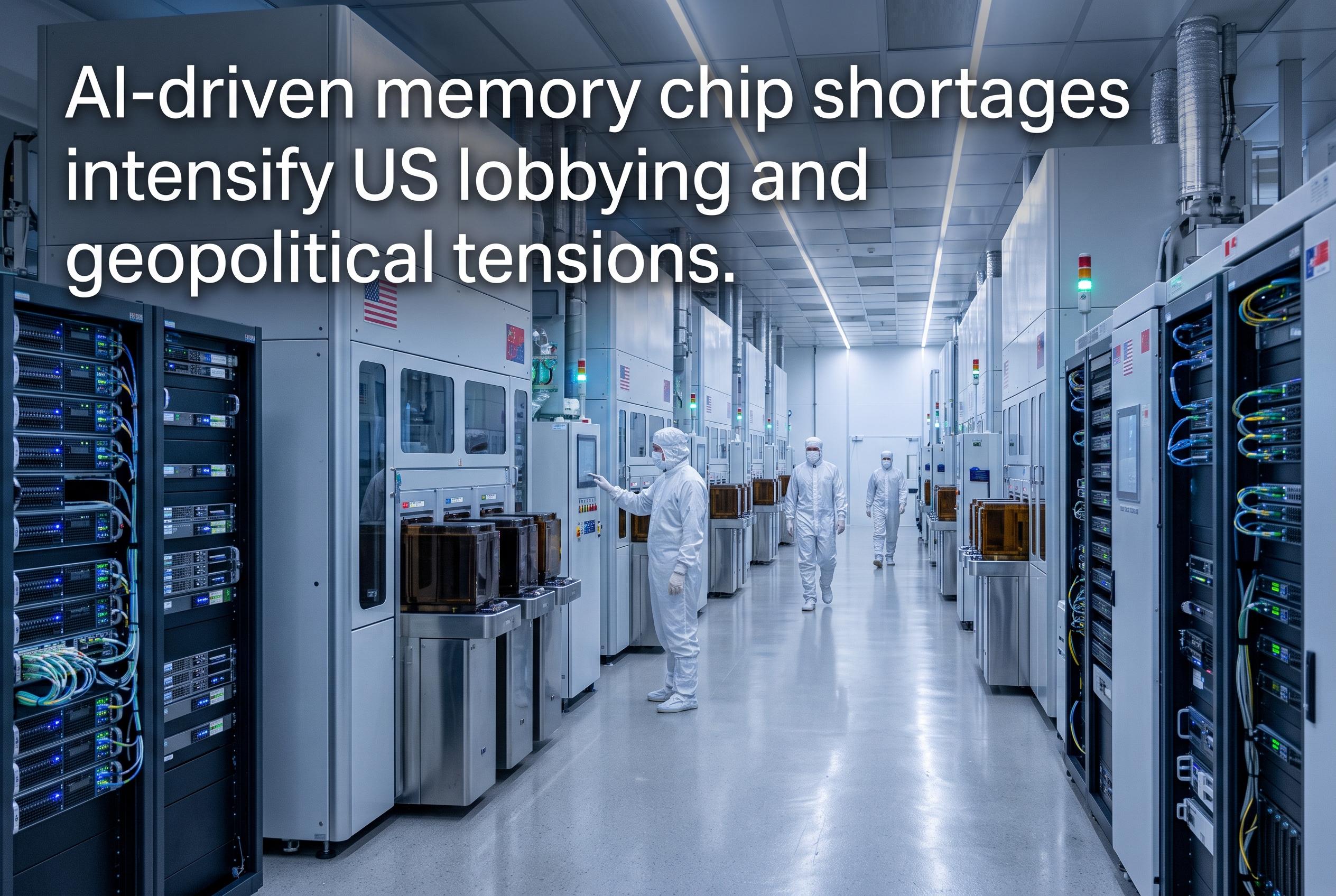

The surge in demand for AI-related memory chips is causing prices to quadruple, prompting fierce lobbying in Washington and raising concerns over supply security and international rivalry.
A sharp rise in memory-chip prices, driven by artificial intelligence demand, is turning Washington into a new battleground for corporate lobbying. The New York Times reported on August 10 that the cost of these components, which are used in products ranging from smartphones to cars, has quadrupled over the past year as AI operators bulk up data-centre capacity and absorb a growing share of supply.
That shift is now being felt well beyond the technology sector. According to the Times, medical device makers, car manufacturers and consumer electronics groups, including Apple, are pressing the government for help in securing supply. Their proposals range from familiar trade and industrial-policy measures to more aggressive intervention, including steps that would force chipmakers to reserve output for non-AI customers.
The pressure reflects a broader market distortion. Axios reported on August 11 that memory-chip inflation is lifting the cost of electronics, cloud storage and related hardware, while also pushing semiconductor shares higher. It said major technology companies, including Meta, Microsoft and Alphabet, are locking in long-term supply deals, which is tightening the market further. Apple, Axios added, has even been testing memory chips from Chinese supplier CXMT as it looks for lower-cost options.
Industry warnings suggest the squeeze may last well beyond this year. Samsung and SK hynix have cautioned that AI-driven shortages could continue into 2027 and beyond, with demand for high-bandwidth memory growing so quickly that supply may never fully catch up. Reuters-style reporting is not available in the source set, but a July letter from SEMI warned Washington that intervention in pricing or production could make matters worse, even as automotive, broadband, medical-device and consumer-electronics firms fear being crowded out by AI data-centre buyers.
The political stakes are rising as well. House Select Committee ranking member Ro Khanna has sought answers from the Commerce Department over how the administration is handling the shortage and whether uncertainty around CHIPS Act funding is adding to the problem. The concern is that if U.S. and allied suppliers cannot meet demand, manufacturers may turn more heavily to Chinese chipmakers, deepening both economic and national-security risks.
Disclaimer: This content is intended for informational purposes only. Readers are advised to exercise their own judgement, conduct due diligence, or consult a qualified expert before acting on any information provided.