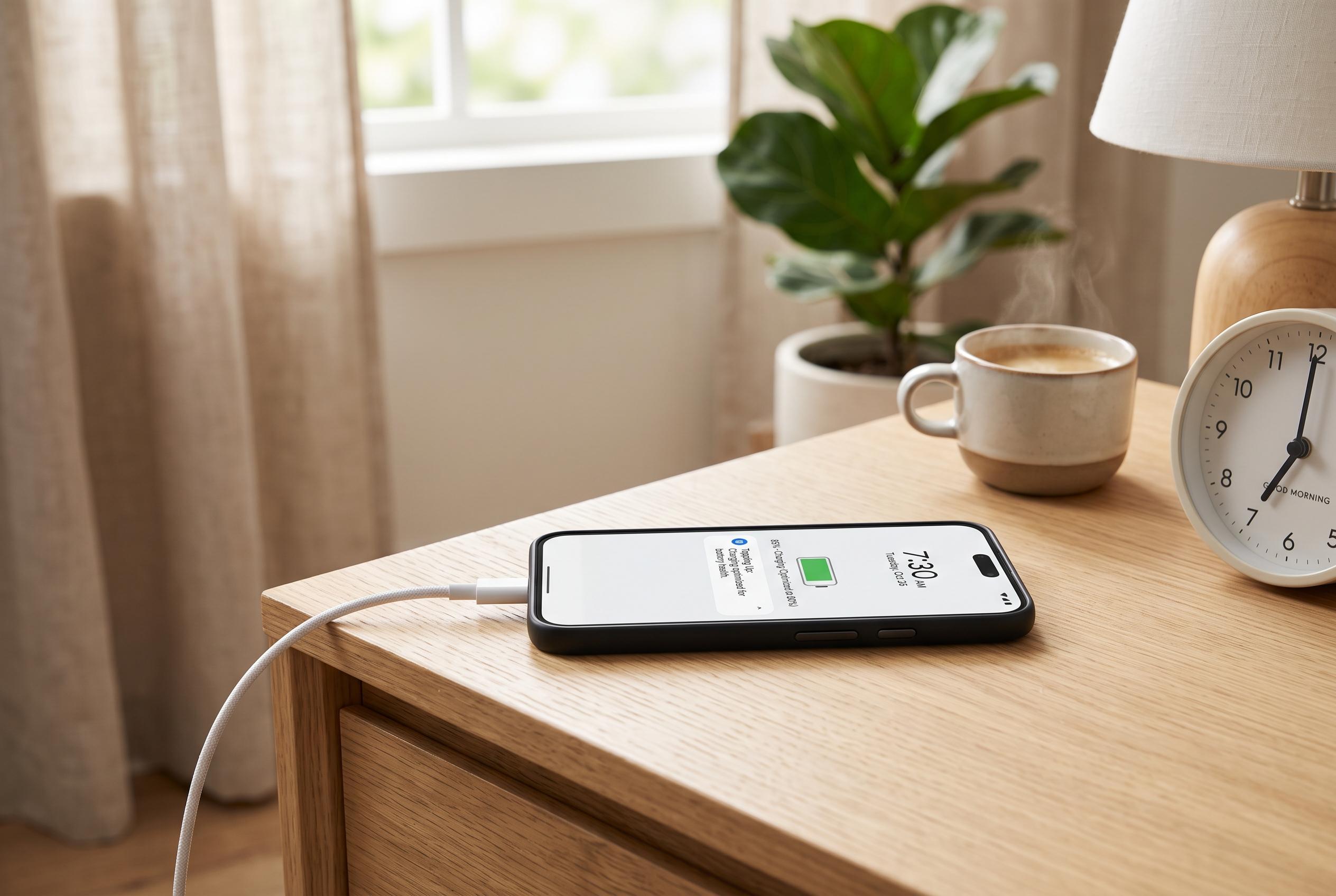

While overnight charging remains common, experts suggest that morning topping up could better preserve long-term battery health by reducing heat stress and unnecessary full charges, highlighting the importance of flexible charging habits in modern smartphones.
Charging a smartphone overnight is still the easiest habit for most people, but it is not always the best one for long-term battery health. The real issue is less about the electricity bill than the way lithium-ion cells age when they spend long periods at a full charge, especially if the device warms up on a bedside table or under bedding. Modern Android phones and iPhones now manage charging more intelligently than older handsets, but the basic chemistry has not changed: heat and prolonged time at 100% still add stress.
That is why morning charging can be a better option for users who can manage it. A short top-up while getting ready tends to keep the battery in a healthier range and reduces the hours spent sitting at full charge. Battery specialists generally recommend avoiding both deep discharges and constant full charges where possible, with a practical target of roughly 20% to 80% for everyday use. The aim is not perfection, but less strain over time.
The technical reason is straightforward. Lithium-ion batteries do not like extremes. Their charging process slows as they approach full capacity, and the battery management system inside a phone works to limit damage, but it cannot remove all wear. Keeping a device plugged in for many hours can still cause small cycles of maintenance charging, and that repeated topping-up can contribute to heat and gradual capacity loss. Technical guides on lithium-ion charging describe this as a normal consequence of how the chemistry works, not as a fault in the handset.
The practical cost of overnight charging is usually small in financial terms. The standby draw of a charger left in the wall and the tiny maintenance charges used to keep a phone at 100% are unlikely to move a household energy bill in any meaningful way. But when a home has several devices on charge every night, the small losses add up. Even so, battery longevity remains the more important concern for most users.
For that reason, the most sensible approach is flexible rather than absolute. If a full battery is needed for a long day, a journey or heavy use, charging to 100% is fine. If not, partial charging is generally kinder to the battery. Many recent phones also include optimised charging features that learn routine usage and delay the final move to full charge until closer to the time the device is usually unplugged. Combined with certified chargers, undamaged cables and a cool charging environment, that is often the best balance between convenience and durability.
Disclaimer: This content is intended for informational purposes only. Readers are advised to exercise their own judgement, conduct due diligence, or consult a qualified expert before acting on any information provided.