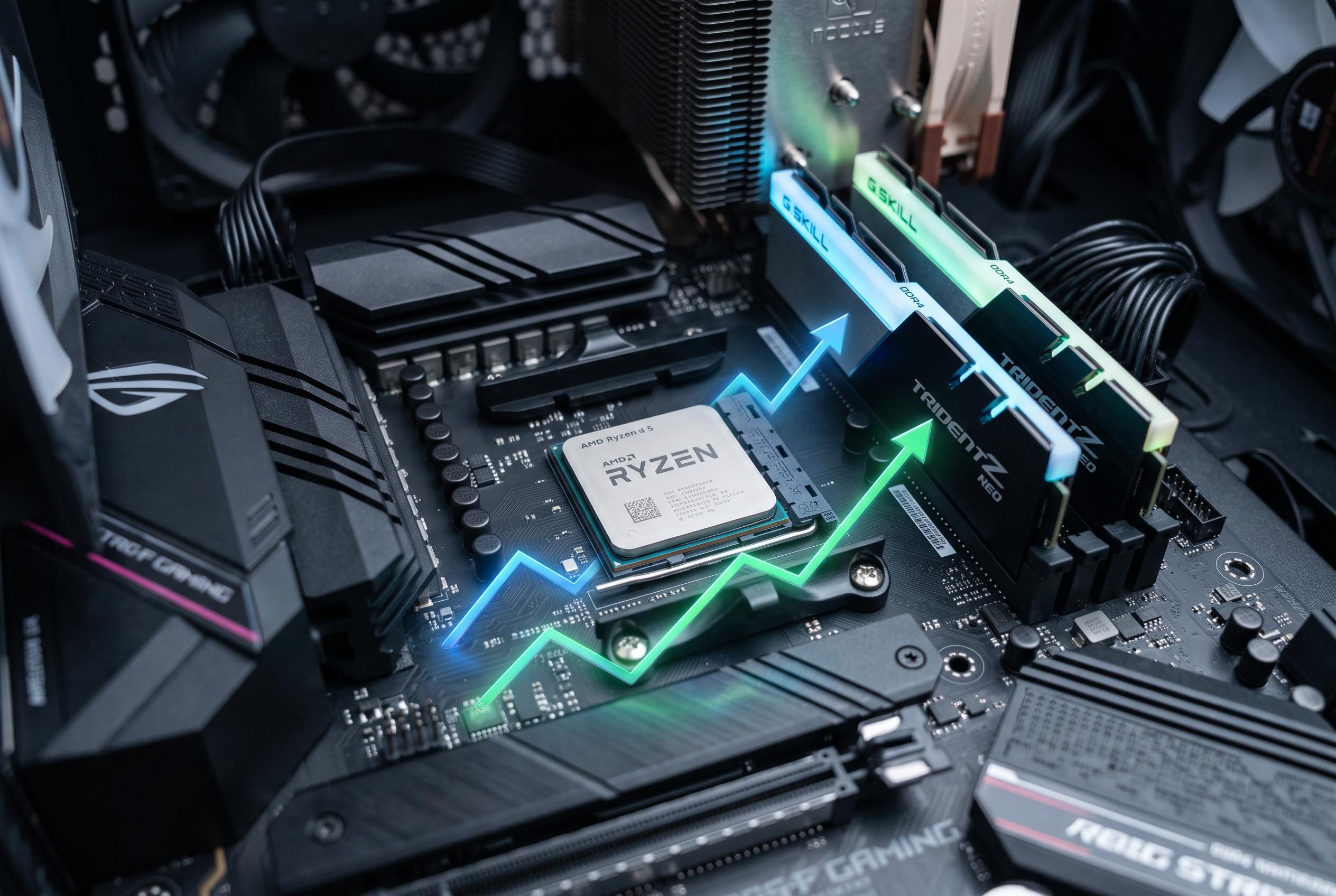

AMD’s decision to highlight the Ryzen 5 5500’s popularity has shed light on how affordability and existing platform familiarity are reshaping consumer preferences in a market still heavily influenced by DDR4 memory prices.
AMD’s decision to point to Amazon’s CPU best-sellers list has drawn attention to an awkward detail: the processor sitting at the top of the chart was not one of its newest flagship chips, but the far cheaper Ryzen 5 5500. Saša Marinković, AMD’s senior marketing director, posted a screenshot showing Ryzen models dominating the list, yet the image also underlined how much demand remains for older, DDR4-based systems at a time when memory prices are still shaping buying decisions.
The Ryzen 5 5500 is a six-core, 12-thread Zen 3 chip that launched as a budget part and is now widely sold for about $80. It includes AMD’s Wraith Stealth cooler and uses the AM4 platform, which keeps total build costs down for buyers trying to avoid the premium attached to newer DDR5 systems. Its appeal is straightforward: it is cheap, easy to drop into an existing AM4 build and does not require the more expensive memory and motherboard combination that comes with newer platforms.
That does not make it a technical standout. Tom’s Hardware’s recent budget CPU comparison found that the Ryzen 5 5500 lagged behind Intel’s Core i3-14100F in gaming, particularly when both were paired with DDR4. The chip’s trimmed 16MB L3 cache and PCIe 3.0 limit its headroom compared with more modern designs, even if those compromises matter less to shoppers looking mainly for the lowest possible platform cost.
The broader Amazon rankings tell a similar story. Tom’s Hardware reported that AMD’s share of the chart was heavily split between DDR4-era Zen 3 parts and newer DDR5-based Zen 4 and Zen 5 chips, while other coverage from the site and from TweakTown noted that older AM4 processors have also been climbing in both the US and UK as buyers react to elevated DDR5 pricing. Tom’s Hardware has previously argued that DDR4 still makes practical sense for many budget builds, even though DDR5 offers higher bandwidth and better long-term scaling. For now, the market appears to be rewarding value and platform affordability more than raw performance.
Disclaimer: This content is intended for informational purposes only. Readers are advised to exercise their own judgement, conduct due diligence, or consult a qualified expert before acting on any information provided.