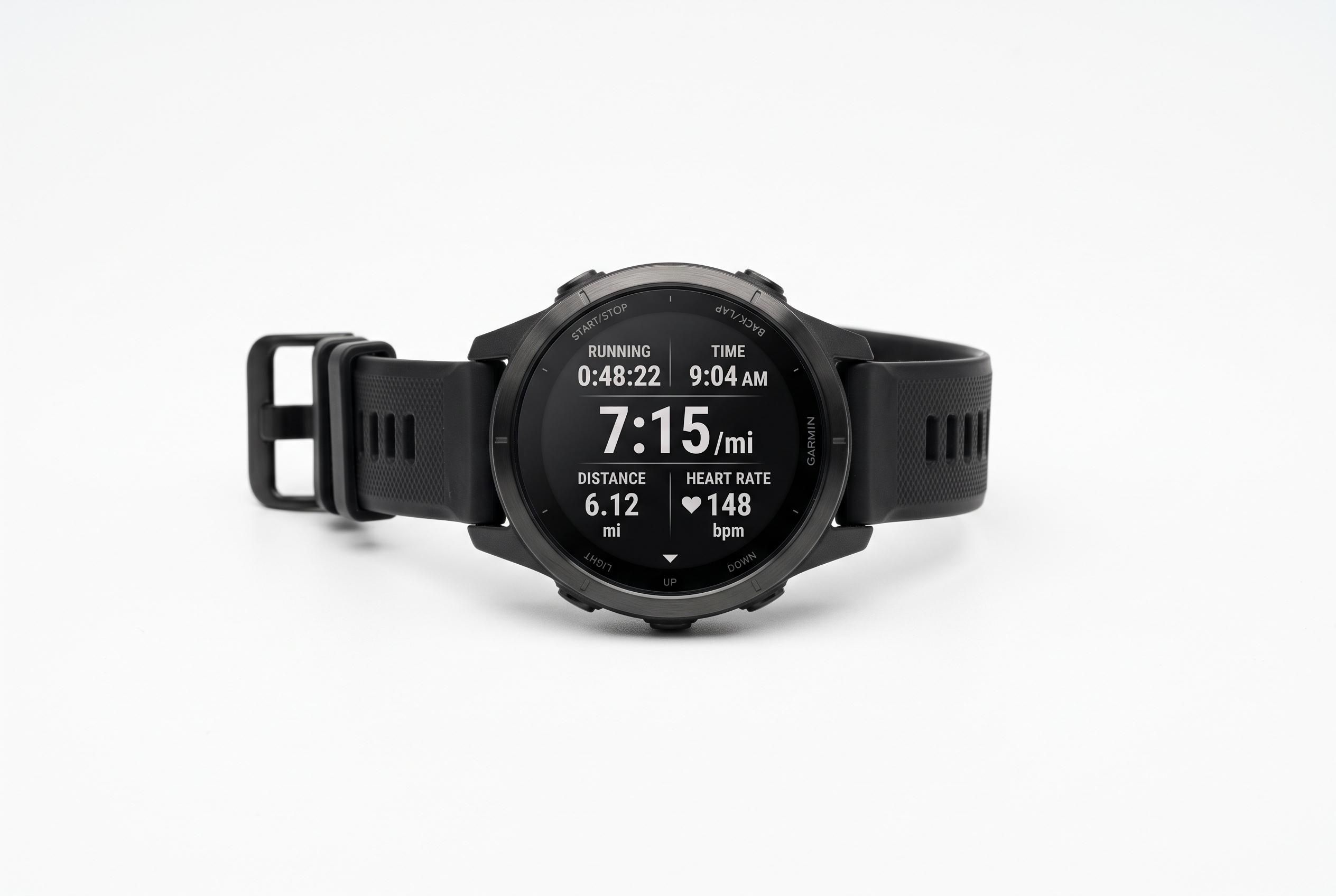

Garmin’s Forerunner 70 offers a modernised, lightweight design with a vivid AMOLED display and improved training tools, targeting entry-level runners seeking value and versatility without the premium price tag.
Garmin’s Forerunner 70 is a clearer sign than its predecessor that the company wants its entry-level running line to feel more modern without drifting into premium territory. The watch replaces the ageing Forerunner 55 with a brighter AMOLED screen, a more compact and lighter case, broader sport support and a software overhaul that makes it easier to live with day to day. Trusted Reviews said those changes make it a strong choice for runners who want a capable training watch without paying for Garmin’s more advanced models, though the jump in price is hard to ignore. Tom’s Guide and Runner’s World reached broadly similar conclusions, describing it as a polished, runner-focused watch that stays approachable for beginners while still offering enough depth for more experienced users.
The design is deliberately modest. Garmin has kept the case small at 42.6mm and light at 40g, which makes the watch easier to wear for long runs and less noticeable the rest of the day. It is also waterproof to 5ATM, meaning it can handle swimming and showering. The 1.2-inch AMOLED display is the most obvious upgrade over the old Forerunner 55, giving the watch a sharper and more vivid look, while Garmin’s decision to retain physical buttons alongside the touchscreen should make it easier to use during exercise. That combination of a bright display, compact body and button-based control is one of the watch’s most consistent strengths, according to Trusted Reviews, Tom’s Guide and TechRadar.
Software is where the Forerunner 70 moves furthest ahead of its predecessor. According to Trusted Reviews and TechRadar, the watch now offers full access to the Garmin Connect IQ Store, rather than limiting users to watch faces, and adds practical daily summaries such as morning and evening reports. Garmin also brings over training tools that used to sit higher up the range, including Training Readiness, training load analysis, VO2 Max estimates and Garmin Coach guidance. Breadcrumb navigation for uploaded routes is another useful addition. That said, the watch still lacks some features common on more expensive Garmin models, including NFC payments, onboard music storage and an altimeter for elevation tracking.
For exercise tracking, the Forerunner 70 appears to strike a sensible balance between capability and cost. It uses multi-GNSS positioning rather than Garmin’s more advanced multiband system, so it is not the brand’s most precise option in difficult urban environments. Even so, Trusted Reviews said accuracy was strong in testing, and Tom’s Guide described the GPS performance as dependable for a watch at this level. The device supports more than 80 sports modes, including running, cycling, indoor training, yoga, hiking and pool swimming, but it does not add open-water swim tracking or triathlon modes. Health monitoring covers heart rate, blood oxygen and sleep, while reviewers noted that Garmin’s sleep tracking has become more convincing in recent generations.
Battery life is another area where the Forerunner 70 remains practical rather than class-leading. Garmin claims up to 13 days in smartwatch mode, around five days with the always-on display enabled and up to 28 days in battery-saver mode. GPS use is rated at 16 to 23 hours, depending on settings. Reviewers found those figures broadly credible, with the watch easily lasting more than a week in lighter use and dropping much faster when the display is always on or when GPS and continuous health tracking are used heavily. It is a reasonable compromise for a watch with an AMOLED screen, but buyers looking for the fullest set of smartwatch features or Garmin’s best endurance will need to spend more. In the end, the Forerunner 70 looks like a sensible, well-rounded running watch that improves on the 55 in most of the ways that matter, even if the higher price makes it less obviously good value than before.
Disclaimer: This content is intended for informational purposes only. Readers are advised to exercise their own judgement, conduct due diligence, or consult a qualified expert before acting on any information provided.