
Motorola’s Moto Watch 2026 impresses with its design and battery life but struggles with software limitations and inconsistent tracking, raising questions about its place in the smartwatch market.
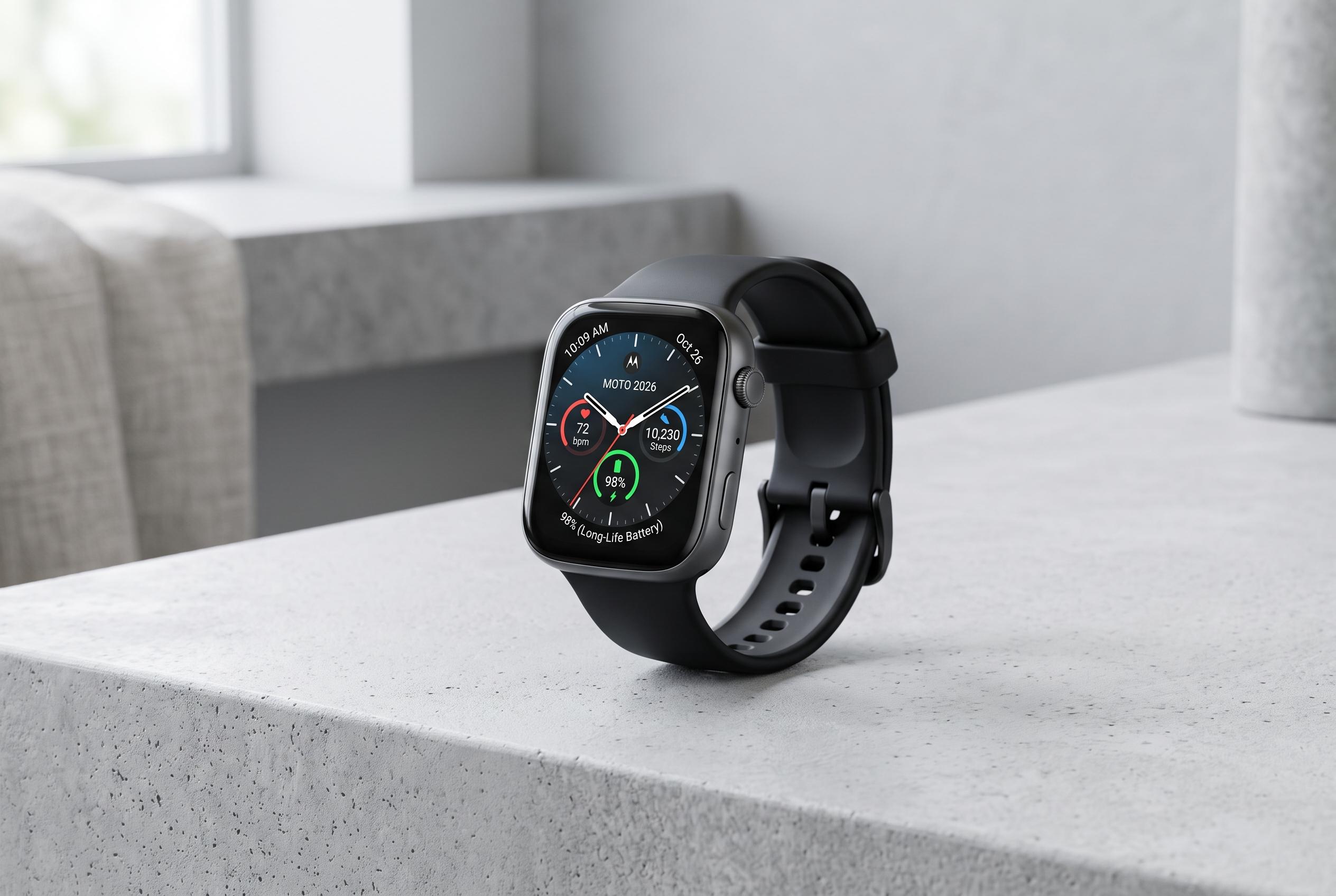
Motorola’s Moto Watch 2026 looks close enough to a Wear OS watch to raise expectations it cannot meet. That is the core problem identified by Engadget, whose review says the device borrows the familiar visual language of Google’s platform while relying on a proprietary real-time operating system that quickly exposes its limits. Other reviews from Android Central and AndroidGuys reach the same conclusion: the hardware is attractive, but the software layer makes the watch feel narrower and less capable than rivals in the same price range.
That gap becomes obvious during setup. Engadget reported repeated restarts, a mandatory Motorola account login and a tutorial that stuttered badly on the way in. Notification control is also awkward, because users must manually choose which alerts may reach the wrist rather than starting from a sensible default and refining it later. In practice, that makes it easier to miss useful reminders such as calendar alerts. Android Central likewise found notification handling weak, with little room for interaction.
On paper, the Moto Watch 2026 covers the basics. It can tell the time, track steps, heart rate, calories and sleep, and it includes a stopwatch, timer, compass, remote camera control and the ability to place calls when linked to a phone. The watch also adds a large set of exercise modes, from running and cycling to less common activities such as judo, kabaddi, darts and hula-hooping. But the broad exercise list does not compensate for missing automation. Engadget said the watch does not reliably detect activity on its own, while Android Central and AndroidGuys both reported inconsistent fitness readings and software instability during workouts.
The health and fitness pitch is built partly on Motorola’s partnership with Polar, which is visible in the packaging and the companion app rather than on the watch itself. That collaboration seems designed to strengthen the product’s credibility in a crowded market, especially after Motorola positioned the watch as a modern, affordable option with a premium feel. Cadena SER reported in April that the device was introduced at CES 2026 and sold for under €100 in Europe, with emphasis on Polar features such as sleep monitoring and dual-frequency GPS. Yet the same report noted the limits of Motorola’s own operating system, including the lack of an app store and NFC payments. Android Central similarly described Moto AI features such as notification summaries and custom watch faces as restricted to selected Motorola phones.
Battery life is the one area where the watch draws consistent praise. Engadget said the battery lasted eight days even with always-on display enabled, while Android Central reported up to 13 days and TechRadar has described a related Moto Watch Fit model as reaching up to 16 days. That endurance is a clear advantage over many full-featured smartwatches. But the trade-off is severe: there is no Wear OS app ecosystem, no Google apps, no mobile payments and little in the way of third-party software support. As a result, the Moto Watch 2026 ends up looking less like a modern smartwatch with compromises and more like a fitness-focused device trying to pass as one.
Disclaimer: This content is intended for informational purposes only. Readers are advised to exercise their own judgement, conduct due diligence, or consult a qualified expert before acting on any information provided.