
Modern smartphones are evolving into versatile household assistants, offering tools like digital spirit levels, document scanners, and flashlight functions, reducing the need for specialised devices and streamlining everyday household tasks.
Smartphones now cover a surprising amount of everyday domestic work, from hanging a picture straight to scanning a contract. The result is not that specialist tools have become obsolete, but that many routine tasks can be handled with sensors and software already built into the device. For most users, that means fewer impulse purchases and fewer trips back to the drawer for an item that is already on hand.
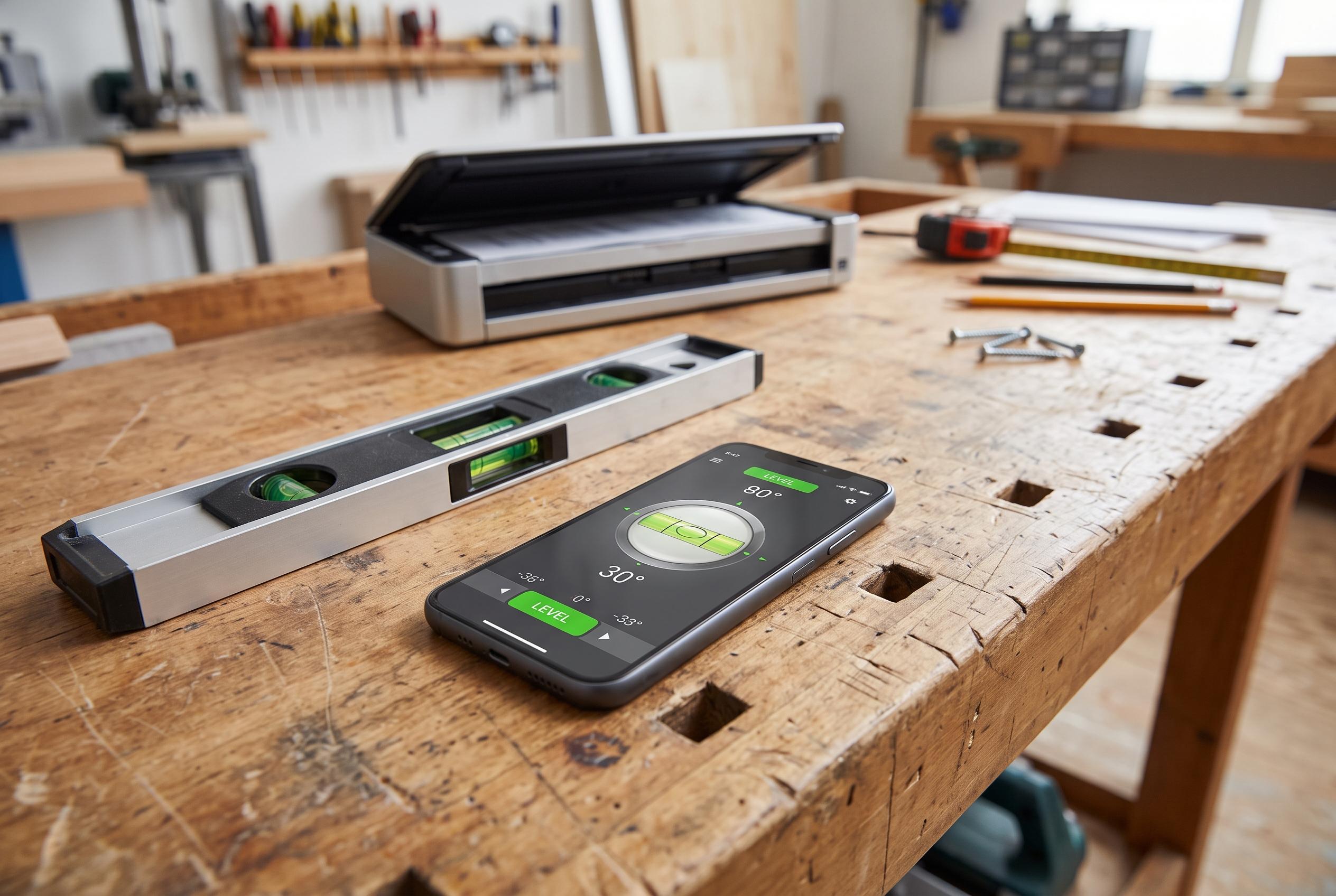
One of the most useful examples is the digital spirit level. On many phones, a quick Google search for a level tool is enough to open a browser-based version that uses motion permissions to turn the screen into a basic inclinometer. On iPhone, The Measure app includes a built-in level, while Android users can also download dedicated apps such as Bubble Level: AR, Angle Finder, which offer angle and slope readings for jobs such as hanging pictures or aligning furniture. For household tasks, that is often sufficient, even if it is not a substitute for a professional-grade tool. According to Tom’s Guide, the iPhone version can be surprisingly accurate when tested against a traditional level.
Document scanning is another area where the phone has largely replaced a separate device. Google Drive already includes a scan function on Android, and the process is simple: open the app, tap the plus sign and choose scan. The phone can detect the page, adjust the borders, flatten the image and save the result as a PDF. Third-party apps such as CamScanner and VoxScan go further, with automatic edge detection, shadow removal, OCR and export options for Word, Excel and other formats. For receipts, signed forms or invoices, that is usually fast enough for everyday use.
The same is true of the torch. Most smartphones include a flashlight, and some models allow the brightness to be adjusted from the quick settings panel. That can be useful in small but common situations, such as looking for keys under a car seat or finding something in a dark cupboard without flooding the area with light. It is a small convenience, but one that saves time and avoids carrying yet another object.
Other built-in sensors extend the phone’s usefulness even further. The accelerometer and gyroscope help power the level tool and support screen rotation, while the magnetometer enables the digital compass. In Google Maps, that means the phone can orient itself and point users in the right direction, which is handy when leaving a station in an unfamiliar city. Google’s own maps guidance also notes that calibration may be needed, often by moving the handset in an figure-eight motion. Metal cases, nearby steel structures and magnetic interference can distort readings, so the result is practical rather than perfect.
There are limits, of course. A real spirit level remains the better choice for precision work, a dedicated office scanner is faster for high-volume digitisation and the phone’s battery can become a constraint. Compatibility also varies: not every Android handset offers the same torch controls and iPhone users may need different menus or apps for similar functions. Even so, the broader point is clear. A device most people already carry can now cover a range of small but useful tasks, from measuring and scanning to navigation and reading fine print.
Disclaimer: This content is intended for informational purposes only. Readers are advised to exercise their own judgement, conduct due diligence, or consult a qualified expert before acting on any information provided.