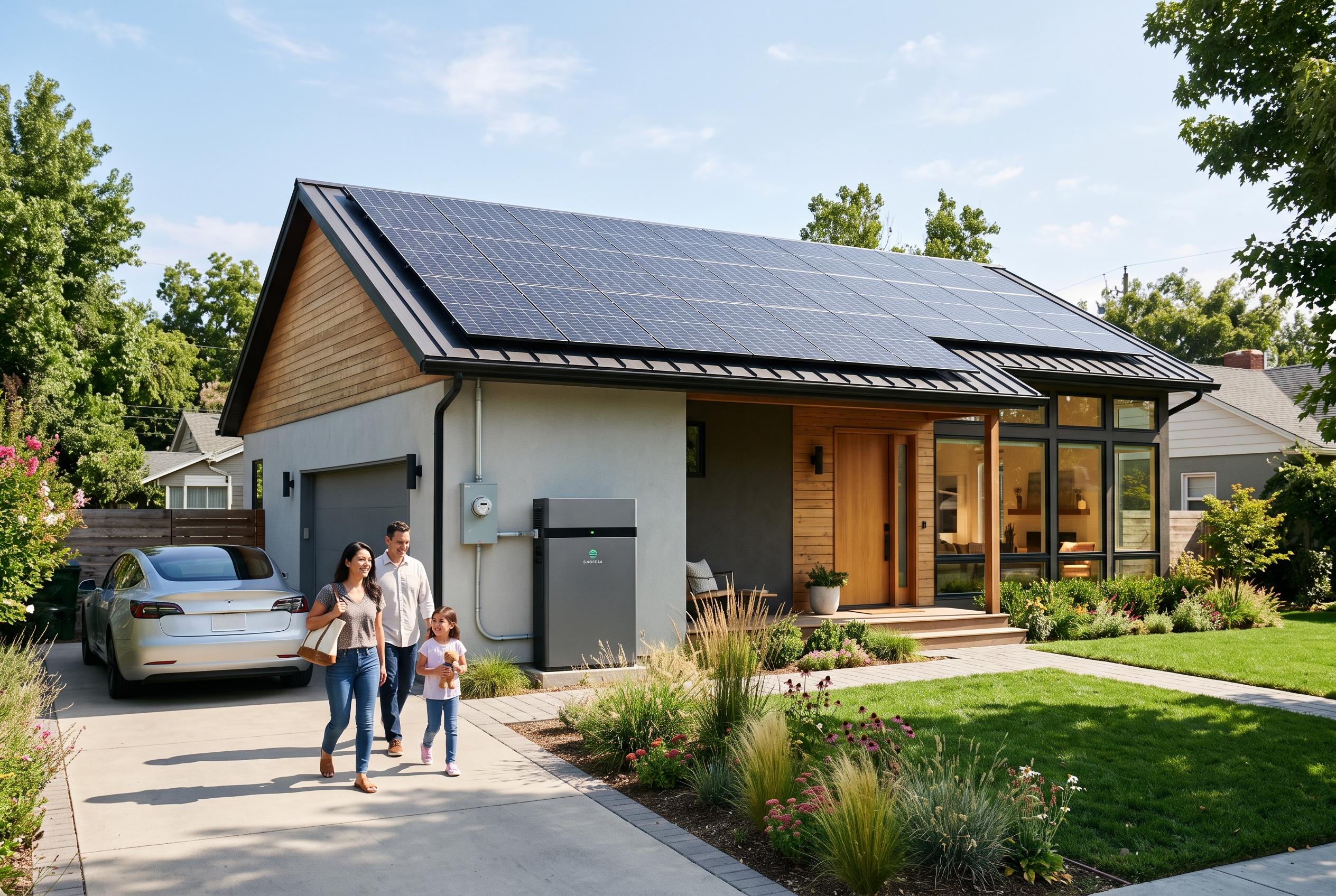

The market for residential battery systems is rapidly evolving, shifting from backup solutions to crucial components that enhance solar independence, reduce bills, and improve household resilience amidst increasing power outage risks.
Home battery storage has moved from a niche add-on to a core part of many residential solar systems. For years, most homes drew all their electricity from the grid and relied on noisy, fuel-burning generators for backup during outages. Solar panels changed that equation, but they also exposed a limitation: generation happens mainly in daylight, while household demand often peaks in the evening. Battery systems now bridge that gap by storing surplus solar power for later use, which can improve resilience and raise the share of self-generated electricity a home can consume.
The market is maturing quickly. Manufacturers increasingly package the battery, inverter and energy-management software into integrated units that are easier to install and monitor. Many newer systems also use lithium iron phosphate chemistry, or LiFePO4, which is widely favoured for residential storage because of its durability and thermal stability. According to guides from GSL Energy and IntegrateSun, the shift is no longer just about backup power; it is also about lowering electricity bills, improving grid independence and making solar installations more flexible for different household needs.
Tesla has said the main reasons homeowners add storage are outage protection, bill savings through time-of-use optimisation and greater use of their own solar generation. That logic is increasingly supported by reliability concerns. Tesla cited U.S. customer data showing that electricity interruptions averaged 11 hours in 2024, almost twice the 2023 average. For many households, that makes whole-home backup, rather than partial backup, a more practical benchmark than it once was.
Choice still depends heavily on the home itself. A solar-only system remains common in the United States, but Solar.com notes that such setups do not keep the lights on during a blackout. Adding a battery changes the economics as well as the functionality, because homeowners must weigh higher upfront costs against longer-term savings and resilience. Sizing also matters. Installers typically match storage capacity to a family’s nightly usage, the amount of solar generation available and whether the aim is to cover essential loads or the entire house.
Recent product guides from HVAC Base point to a competitive field that includes systems such as Tesla Powerwall 3, Enphase IQ 5P, Franklin WH and Sonnen. The newest offerings increasingly compete on integration, software control and installation flexibility rather than battery cells alone. Tesla has also said that 2026 incentives are more fragmented than before: the federal Residential Clean Energy Credit ended at the close of 2025, but state programmes, utility rebates, grid-services payments and leasing options may still help offset costs. For homeowners, that means the best system is less about the most powerful brand name and more about the installer network, the local incentive structure and how much backup the household actually needs.
Disclaimer: This content is intended for informational purposes only. Readers are advised to exercise their own judgement, conduct due diligence, or consult a qualified expert before acting on any information provided.