
Industry leaders debate whether prioritising scalable, lossless wireless audio is feasible or whether convenience and compatibility should remain the focus, amid ongoing technological and practical challenges.
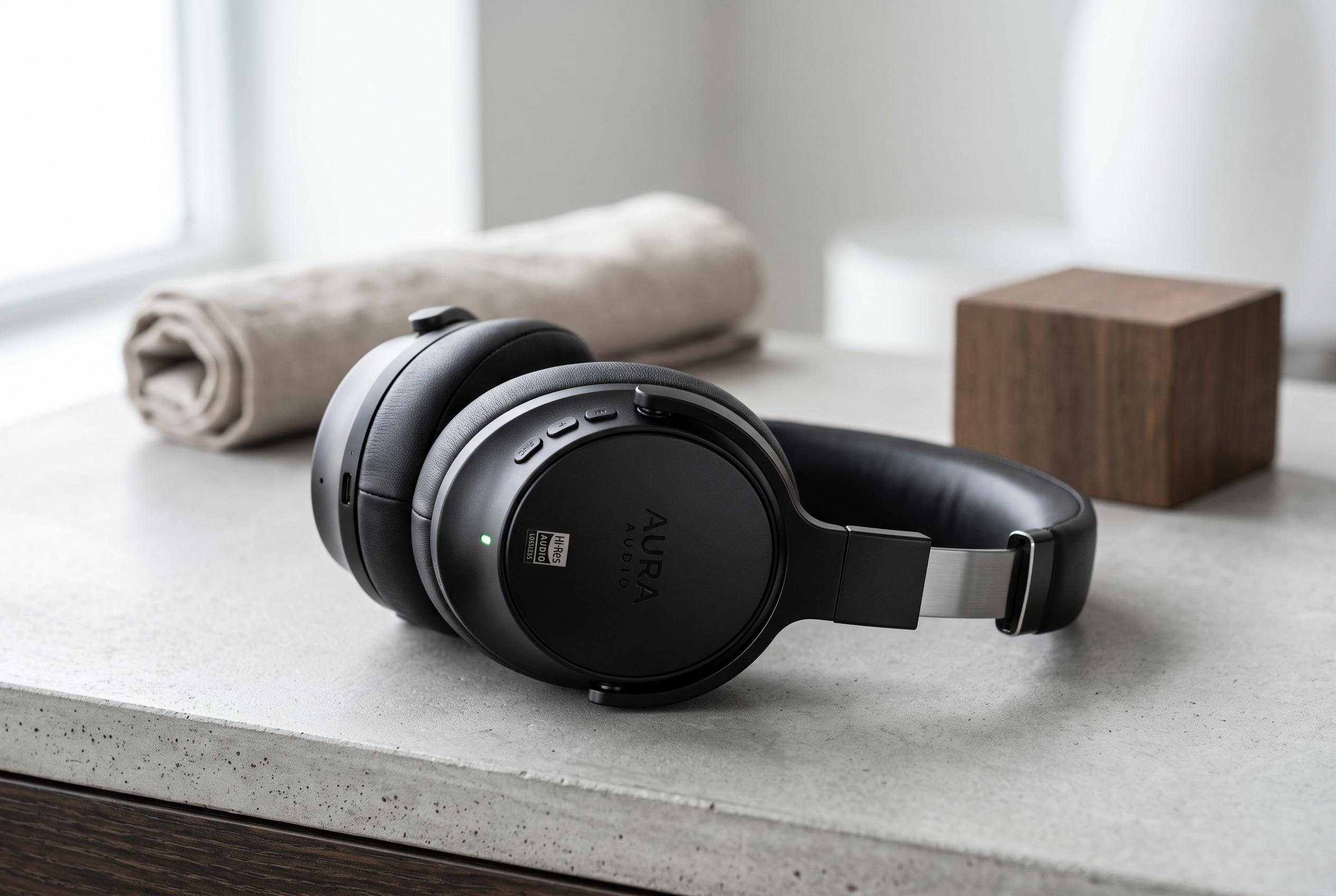
Wireless headphones have improved sharply in recent years, with better drivers, stronger amplification, more advanced digital signal processing, improved active noise cancellation and more capable wireless links all lifting performance. But the next step is less settled: whether the industry should prioritise fully scalable, lossless 24-bit/192kHz playback over the more familiar trade-offs of convenience, battery life and compatibility. According to What Hi-Fi?, that question is now dividing some of the biggest names in premium audio.
The split is not simply technical; it is philosophical. What Hi-Fi? reported that Sennheiser, Bowers & Wilkins and Technics all see mainstream users as more concerned with comfort, noise cancellation and day-to-day usability than with chasing a resolution figure. That view is reinforced by real-world products such as the Focal Bathys, which support aptX Adaptive over Bluetooth and offer a USB-DAC mode for up to 24-bit/192kHz playback when wired, showing that high-end wireless headphones can already deliver strong sound without making resolution the only selling point. TechHive and RTINGS both note that the Bathys pair high audio fidelity with active noise cancellation, though at a premium price.
The obstacle is not a lack of ambition so much as the complexity of the chain. Qualcomm’s XPAN is designed to move dynamically between Bluetooth and Wi-Fi and can support lossless streaming up to 24-bit/192kHz over Wi-Fi, but industry coverage from Android Central says the technology remains niche because it demands extra hardware, more power and close device integration. HiFiMAN has already used a Wi-Fi approach in models such as the HE1000 WiFi, yet testing has shown the battery trade-off can be severe, with roughly five hours of use over Wi-Fi compared with about 12 hours over Bluetooth.
Compatibility is the deeper problem. Sennheiser has tried to work around it with the BTD 700 USB-C transmitter, which lets users on Android, iPhone and computers access aptX Adaptive and higher-resolution playback when their source device cannot do so natively. That is effective, but it also underlines the awkward reality of modern wireless audio: in many cases, a supposedly cable-free experience still depends on a separate dongle. Apple adds another layer of friction, since Apple Music supports Lossless and Hi-Res Lossless, yet Apple says Bluetooth itself is not lossless and compatible AirPods Max models need a USB-C cable for lossless playback.
Mark Levinson is taking the opposite view. HARMAN Luxury Audio’s Matt Dever has said the company sees lossless 24-bit/192kHz wireless playback as a meaningful goal and is looking at technologies including XPAN, Airia, LDAC and LHDC to get there. That puts it at odds with Bowers & Wilkins, but neither stance is unreasonable. One side is asking whether the extra complexity improves the user experience enough today, while the other argues that high-end audio should keep raising the ceiling. For consumers, the practical answer is simpler: the best current wireless headphones already sound very good, but the industry still has not made lossless wireless audio effortless.
Disclaimer: This content is intended for informational purposes only. Readers are advised to exercise their own judgement, conduct due diligence, or consult a qualified expert before acting on any information provided.