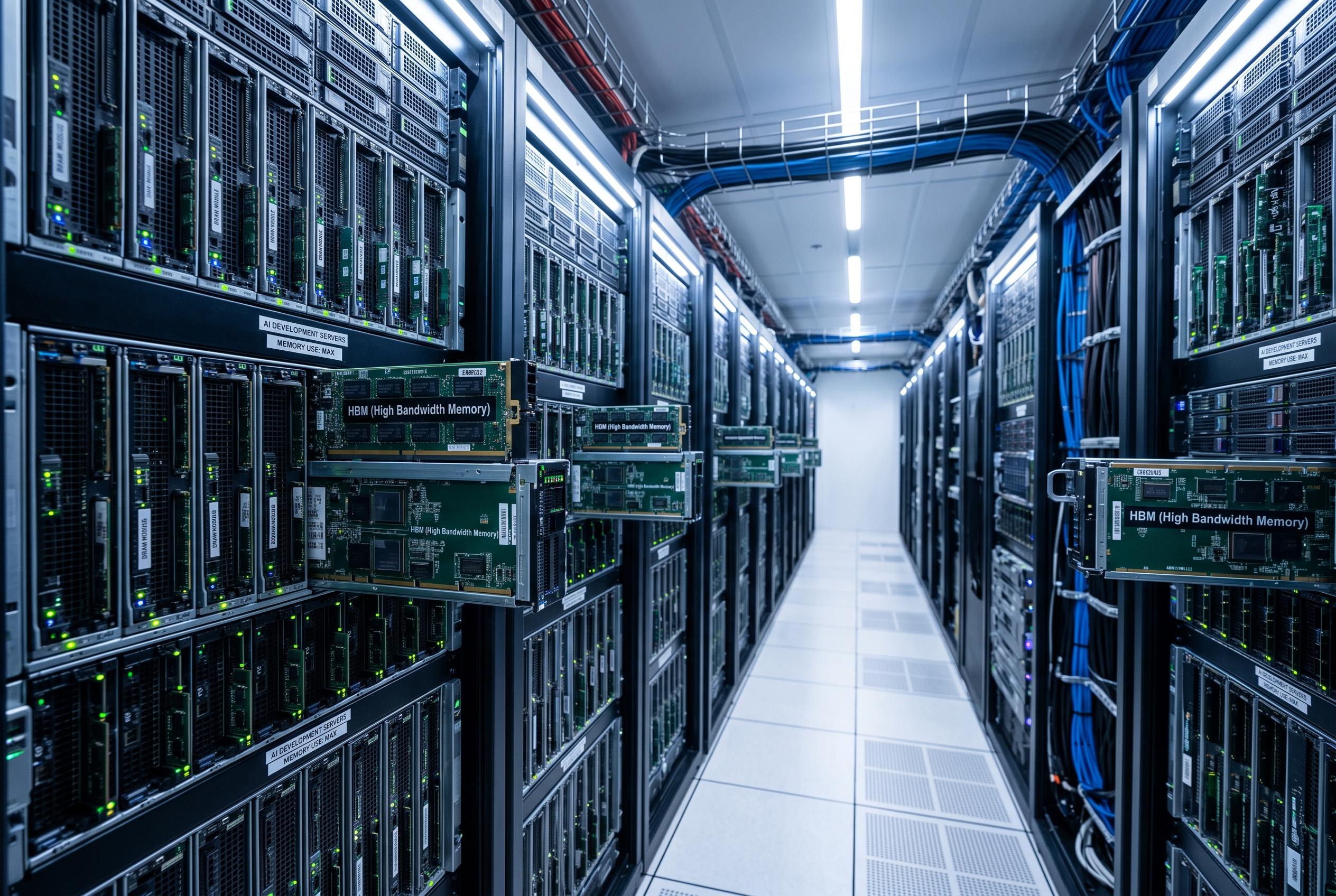

Major memory producers have committed their entire DRAM and HBM capacity for 2027, signalling a seismic shift in supply dynamics driven by booming AI memory needs, with consumer markets already feeling the impact.
The artificial intelligence boom is increasingly being defined by memory rather than processors alone. According to reporting from DigiTimes cited by Xataka, Samsung, SK hynix and Micron have already allocated their entire DRAM and HBM production capacity for 2027, a sign that demand is being locked in well before the chips reach the market. That shift matters because memory is now one of the most contested parts of the semiconductor supply chain, not just for data centres but for everyday devices too.
DRAM is the main working memory used in servers, PCs and smartphones. HBM, or high-bandwidth memory, is a stacked form of DRAM built to move data much faster, which makes it especially valuable for AI accelerators and advanced graphics hardware. Tom’s Hardware reports that the rapid rise in HBM demand is forcing manufacturers to divert more of their factories towards AI-related products, tightening supply for conventional DRAM across server, PC and mobile markets.
The pressure on supply is already changing how the industry buys memory. DigiTimes says major customers are signing contracts three to five years ahead and, in some cases, placing deposits early to secure future allocation. Even then, they are not always getting all they ask for. Industry sources cited in the same report suggest many orders are being covered only partially, with allocations often reaching roughly 60% to 70% of requested volumes. That makes memory procurement less a matter of spot buying and more a long-term reservation exercise.
The imbalance is also reshaping priorities within the industry. Tom’s Hardware reports that SK hynix chief executive Kwak Noh-jung has described 2027 as the worst year for the shortage, while other industry figures have warned that the crunch could last well beyond that. Micron has also acknowledged that HBM’s growing share of production is constraining non-HBM DRAM output. TrendForce estimates that by the end of 2027, HBM could account for nearly 30% of total DRAM wafers processed by the three biggest makers, underscoring how much capacity AI is absorbing.
That leaves consumer electronics lower down the queue. With cloud providers and AI firms being prioritised, smartphone and PC makers may receive less DRAM in 2027 than they do in 2026, according to the reporting. The broader implication is that the memory market for next year is already being decided now, because expanding capacity requires new fabs, clean rooms and equipment, while HBM also depends on advanced packaging. Micron has said some of its new facilities are still expected to add capacity during 2027, but for many buyers the next cycle is already effectively sold out.
Disclaimer: This content is intended for informational purposes only. Readers are advised to exercise their own judgement, conduct due diligence, or consult a qualified expert before acting on any information provided.